Fresh violence along the Thailand-Cambodia border has once again drawn attention to one of Southeast Asia’s longest-running territorial disputes. What began as a disagreement over colonial-era maps has evolved into a recurring source of military tension, diplomatic friction, and uncertainty for communities living near the border.
The latest confrontation in September 2025 showed just how fragile the situation remains, despite repeated ceasefires and international mediation efforts.
How Colonial Era Borders Created Modern Problems
The roots of the dispute stretch back more than a century. In the early 1900s, agreements between Siam now Thailand and French Indochina, which included modern day Cambodia, attempted to define the border between the two territories.
Treaties signed in 1904 and 1907 were supposed to settle the issue. However, unclear wording and disputed maps created lasting confusion over several border areas, especially around the ancient Preah Vihear temple.
French surveyors later mapped the temple as part of Cambodian territory. Cambodia accepted the decision, but Thailand continued to question parts of the surrounding border. Since then, both countries have repeatedly accused each other of encroachment.
Over the decades, the disagreement has become more than just a legal dispute. It has also become deeply tied to national identity, sovereignty, and historical pride.
Preah Vihear Temple Remains at the Center of the Conflict
At the heart of the dispute stands the Preah Vihear temple, a centuries old Hindu structure located high in the Dângrêk Mountains along the border.
The temple is recognized as a UNESCO World Heritage site and holds enormous cultural and spiritual value for Cambodia. Thailand also considers the area historically significant, making the surrounding territory highly sensitive for both nations.
In 1962, the International Court of Justice ruled that the temple belonged to Cambodia. While Cambodia viewed the ruling as final, Thailand continued disputing nearby land surrounding the site.
Because of its elevated position and strategic location, the area has remained heavily contested for decades.
Border Violence Returned in 2025
Although tensions have existed for years, the conflict intensified again in 2025.
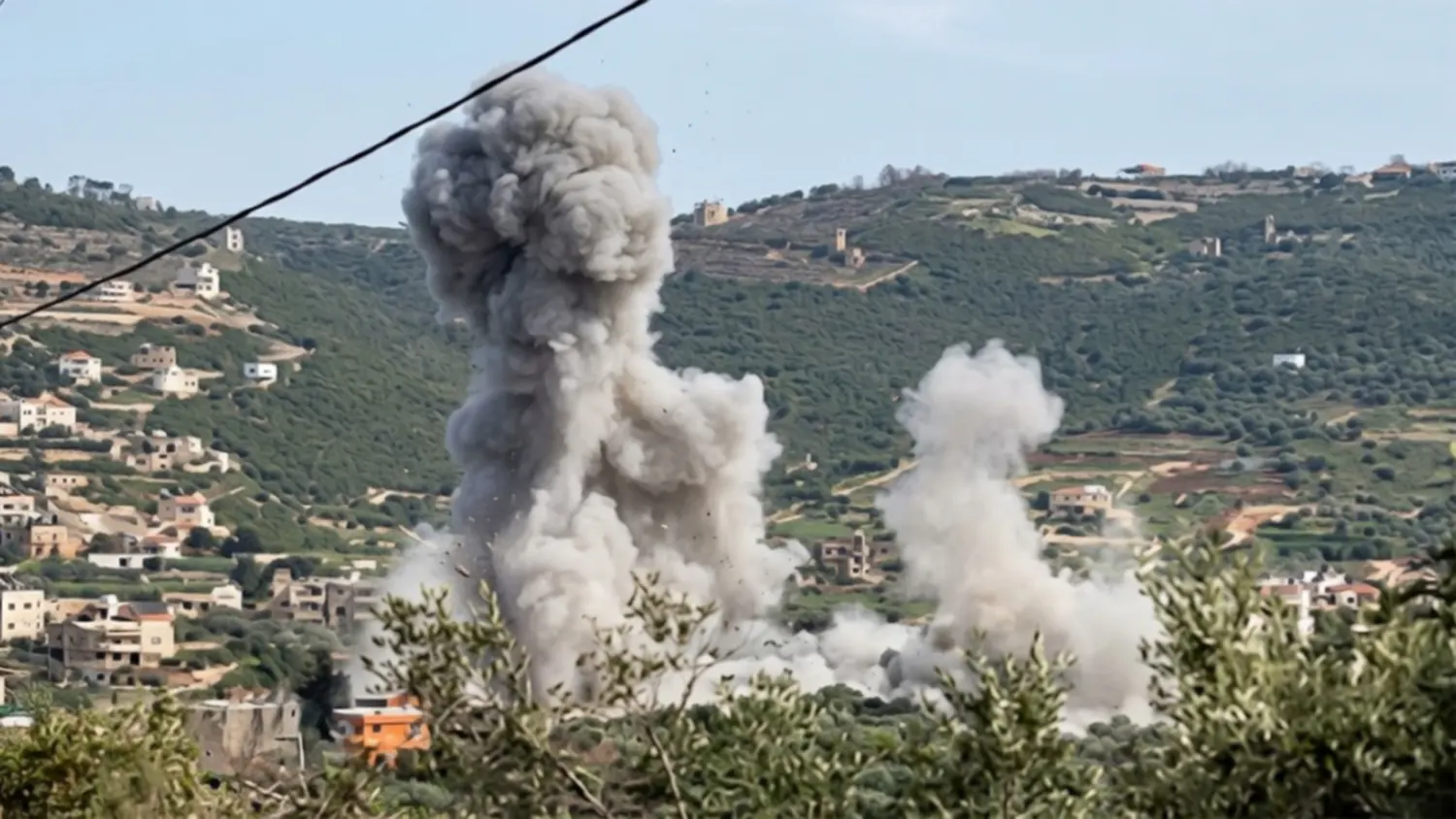
Earlier clashes in July involved exchanges of fire between military forces from both countries. Reports of casualties and civilian displacement quickly raised concerns across the region. Malaysia later helped broker a ceasefire, while major powers including the United States and China encouraged both sides to avoid further escalation.
For a short period, the ceasefire appeared to hold.
However, the calm did not last long.
September Clash Triggered by Border Fence Dispute
Violence erupted again on September 17, 2025, in a disputed border area claimed by both countries.
Thailand refers to the area as Ban Nong Ya Kaeo in Sa Kaeo province, while Cambodia calls it Prey Chan village in Banteay Meanchey province.
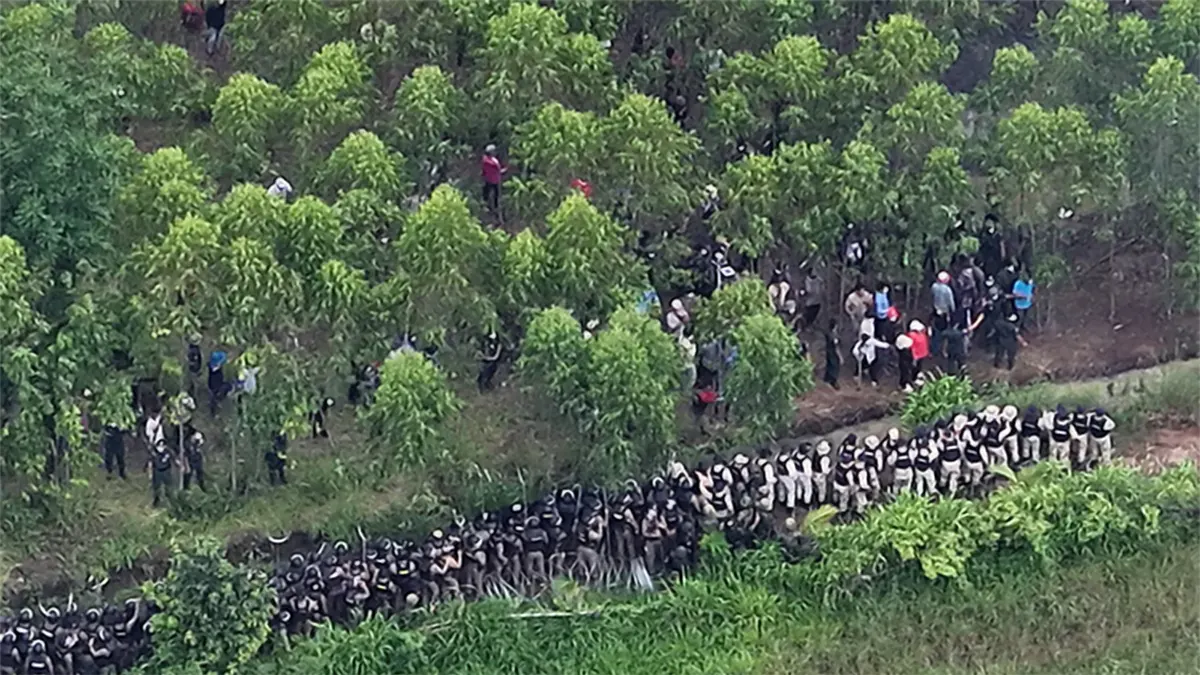
According to reports, around 200 Cambodian villagers gathered near the border to remove barbed-wire fencing installed by Thai security forces. The villagers argued the fence had been built on Cambodian land.
Thai forces responded using rubber bullets, tear gas, and long-range acoustic devices in an attempt to disperse the crowd.
Cambodian officials reported that 28 villagers, including monks, were injured during the incident. Thailand stated that five soldiers were also hurt and claimed some protesters carried sticks, stones, and slingshots.
The clash quickly reignited political tensions between the two governments.
Thailand and Cambodia Offer Conflicting Narratives
Both sides presented sharply different versions of the incident.
Cambodia described the confrontation as military aggression and accused Thailand of violating Cambodian sovereignty. Prime Minister Hun Manet reportedly sought diplomatic backing from international partners following the incident.
Thailand, meanwhile, defended its actions by saying security forces were operating within Thai territory and following international crowd-control standards. Thai officials argued the protesters intentionally provoked the confrontation.
These opposing narratives reflect the deeper challenge facing both countries: there is still no fully accepted agreement over the disputed border itself.
ASEAN Faces Another Regional Test
The renewed conflict has also become a major test for Association of Southeast Asian Nations, commonly known as ASEAN.
Malaysia has played a leading role in mediation efforts, pushing both sides to maintain dialogue and prevent the violence from spreading further. Regional leaders remain concerned that continued instability could damage trade, tourism, and diplomatic relations across Southeast Asia.
Outside powers are also closely monitoring the situation. Both the United States and China have expressed support for maintaining stability in the region, highlighting the dispute’s wider geopolitical importance.
Border Communities Continue Paying the Highest Price
While governments exchange diplomatic statements, local communities near the border continue facing the most immediate consequences.
Residents living in disputed areas deal with uncertainty, security risks, and occasional displacement whenever tensions escalate. Farmers, traders, and families often see their daily lives disrupted by military activity and restricted movement.
Religious figures and cultural custodians connected to the Preah Vihear temple also face increasing pressure as the historic site becomes tied to modern political disputes.
For many civilians, the conflict is no longer just about maps or legal rulings, it directly affects livelihoods and personal safety.
Can Thailand and Cambodia Find a Long-Term Solution?
Despite repeated ceasefires, the latest clashes show that temporary agreements alone are not enough to resolve the dispute.
Analysts say both countries will likely need a combination of clear border demarcation, diplomatic engagement, and local cooperation to prevent future violence.
Several possible solutions have been discussed over the years, including:
- Joint border monitoring efforts
- Neutral international observers
- Better communication between military forces
- Shared tourism and cultural projects around Preah Vihear
- Continued ASEAN-led mediation
However, progress remains slow because the issue is closely connected to national pride and domestic politics in both countries.
Fragile Peace Along a Historic Border
The Thailand-Cambodia border dispute remains one of Southeast Asia’s most sensitive territorial conflicts. More than a century after colonial agreements first drew uncertain borders, the same unresolved tensions continue to trigger violence today.
The September 2025 clashes serve as another reminder that peace in the region remains fragile. While international mediation can reduce immediate tensions, long-term stability will depend on whether both nations can move beyond historical grievances and build lasting trust.
Until then, the border around Preah Vihear is likely to remain a flashpoint watched closely by both Southeast Asia and the wider international community.