A major emergency unfolded in Hong Kong after construction workers uncovered a live World War II bomb buried beneath a busy urban neighborhood in Quarry Bay.
The discovery triggered a large-scale evacuation operation involving nearly 6,000 residents, as bomb disposal experts worked overnight to safely neutralize the decades-old explosive.
Authorities later confirmed the operation ended successfully without injuries or damage, but the incident served as a dramatic reminder that remnants of World War II still remain hidden beneath modern cities.
Construction Site Discovery Sparks Alarm
The unexploded bomb was discovered late Friday at a construction site on Pan Hoi Street in Quarry Bay, one of Hong Kong’s densely populated districts.
Officials said the device was a U.S.-made 1,000 pound aerial bomb, measuring roughly 1.5 meters long and weighing more than 450 kilograms.
What made the situation especially dangerous was the condition of the bomb itself. According to police, its explosive material remained largely intact, meaning it still posed a serious threat despite being buried for more than 75 years.
The surrounding area includes residential buildings, businesses, and public facilities, making the discovery an immediate public safety concern.
Thousands Evacuated During Overnight Operation
Following the discovery, authorities quickly launched an emergency response.
More than 1,900 households were ordered to evacuate while police secured the area and blocked access to nearby streets. Temporary shelters were also arranged for affected residents.
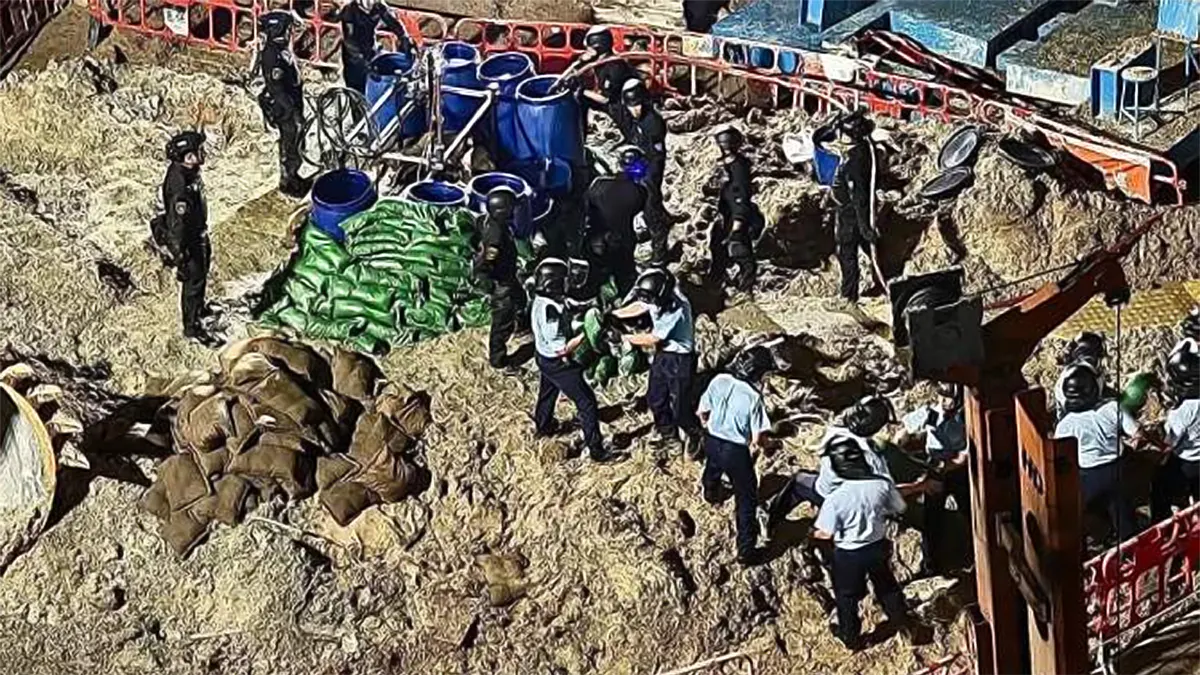
Specialists from Hong Kong’s Explosive Ordnance Disposal (EOD) Bureau worked through the night to safely deactivate the bomb.
To reduce potential blast damage, teams placed sandbags and protective barriers around the device before beginning the delicate defusal process.
After hours of careful work, officials confirmed the bomb was safely neutralized by Saturday morning at around 11:30 a.m.
No injuries or structural damage were reported.
A Hidden Reminder of World War II
Historians believe the bomb dates back to the final months of World War II.
Military experts say it was likely dropped by the U.S. Army Air Forces during an air raid on April 2, 1945, when Allied forces targeted industrial sites in Hong Kong under Japanese occupation.
One likely target was the nearby Taikoo Dockyard, which was considered an important wartime industrial facility at the time.
According to historical records, several large bombs were dropped across the surrounding area during the raid, and some may never have exploded upon impact.
Why WWII Bombs Still Pose a Threat Today
Although decades have passed since World War II ended, unexploded bombs continue to be discovered in cities across Asia and Europe.
Experts say these old explosives remain dangerous for several reasons.
Explosives Can Stay Active for Decades
Even if the outer metal casing becomes heavily corroded over time, the explosive materials and triggering systems inside can remain unstable and highly sensitive.
In some cases, aging bombs become even more unpredictable as their components deteriorate.
Urban Construction Can Trigger Discoveries
Modern construction projects often involve deep excavation and drilling, increasing the chances of disturbing buried wartime explosives.
As cities continue to expand and redevelop older districts, more unexploded ordnance may surface unexpectedly.
Dense Populations Increase the Risk
In highly populated urban centers like Hong Kong, even a single unexploded bomb can pose a major danger to thousands of people nearby.
That reality was reflected in the massive evacuation effort carried out in Quarry Bay.
A Successful Operation With a Powerful Warning
The successful bomb disposal operation prevented what could have become a major disaster in one of Hong Kong’s busiest neighborhoods.
At the same time, the incident highlighted how the effects of World War II can still be felt generations later.
For many residents, the discovery was a shocking reminder that history is sometimes hidden just beneath the surface — waiting to be uncovered unexpectedly.