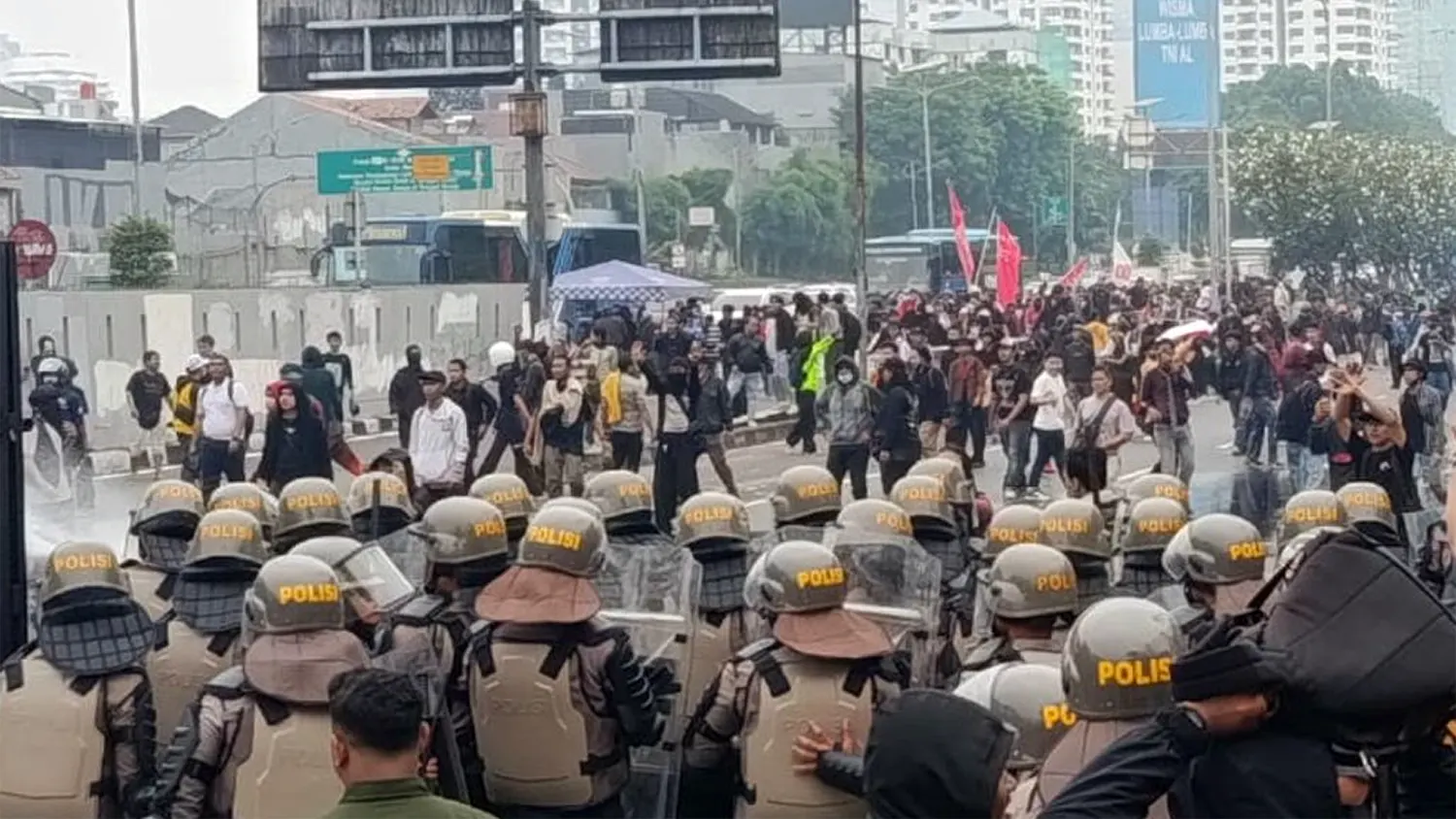
Jakarta erupted in one of its most charged protests in recent years on Monday, as thousands of students, workers, and activists flooded the area outside the national parliament the DPR to push back against a housing allowance handed to lawmakers that many say is impossible to justify.
A Number That’s Hard to Stomach
Each of Indonesia’s 580 MPs now receives Rp 50 million roughly $3,000 every month, just for housing. To put that into perspective, that’s nearly ten times the highest regional minimum wage, and more than sixteen times the national average income of Rp 3.1 million. Factor in salary and other perks, and total monthly compensation per lawmaker could exceed Rp 100 million.
For millions of Indonesians struggling with rising prices, that figure landed like a slap in the face.
“Giving such a massive allowance in the middle of a cost of living crisis shows lawmakers are completely out of touch,” said one student protester near the DPR building.
From Peaceful March to Tear Gas
The demonstration started calmly, but the mood shifted fast. Protesters dressed in black flooded the streets, many waving an unexpected banner the skull wearing a straw hat “Jolly Roger” flag from the manga series One Piece. As crowds pressed toward police barricades, rocks were thrown, fireworks went off, and officers responded with tear gas and water cannons. A police post was destroyed, a motorcycle set ablaze.
By the end of the day, at least 15 people had been arrested, including four high school students. No official casualties were reported, though bystanders said several people needed treatment for respiratory issues caused by the tear gas.
Why a Pirate Flag Became the Face of the Protest
The One Piece Jolly Roger wasn’t just a quirky prop, it carried real meaning. Students and even truckers had been adopting it as a symbol of defiance against what they see as an elite political class running the country for its own benefit.
“The pirate flag has become an expressive tool for political commentary, particularly among youth,” said Ubedilah Badrun, a sociologist from Jakarta State University.
Indonesia’s National Human Rights Commission backed the protesters’ right to use it, saying it’s protected expression under the Constitution. But the symbol also drew sharp criticism. Coordinating Minister Budi Gunawan warned that displaying it risked undermining national symbols especially ahead of independence celebrations. Some went further, calling it outright treasonous. Opposition figures, on the other hand, defended it as legitimate civic expression.
This Isn’t Just About the Allowance Anymore
As rain poured down and the night stretched on, the protests showed no sign of cooling. The demands had grown beyond reversing the housing perk. Demonstrators were now calling for the dissolution of parliament itself and the cancellation of reform bills they believe are designed to entrench the power of the privileged few.
This protest didn’t emerge from a vacuum. Over recent months, Indonesians have taken to the streets over austerity measures, budget cuts, and fears that the military is creeping back into civilian life. In Pati, residents staged massive demonstrations against local tax hikes of up to 250% and won, forcing a policy reversal and an official investigation.
Echoes of 1998
Observers aren’t just watching this as a one off flare up. The anti elitism, the symbolic imagery, the student-led energy, it’s drawing comparisons to the 1998 reform movement that brought down Suharto after three decades in power.
Whether this moment follows that same arc remains to be seen. But one thing is clear: the Jolly Roger flying outside Indonesia’s parliament isn’t just a pop culture reference. For a growing number of Indonesians, it’s a mirror held up to a political class they feel has stopped listening.