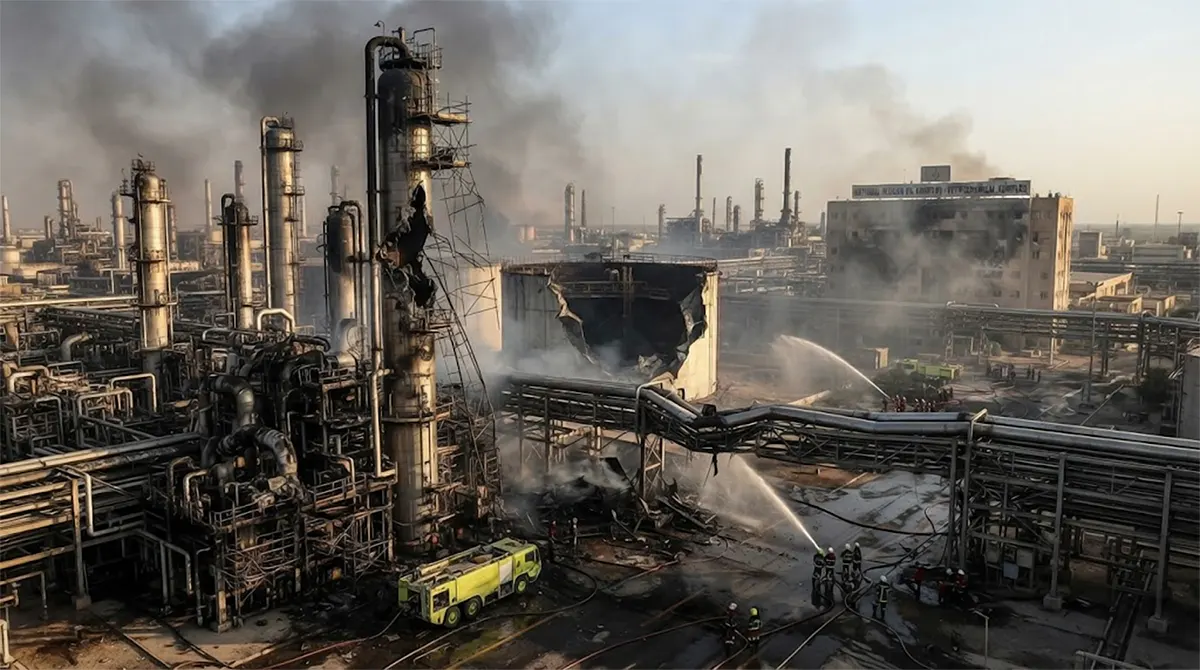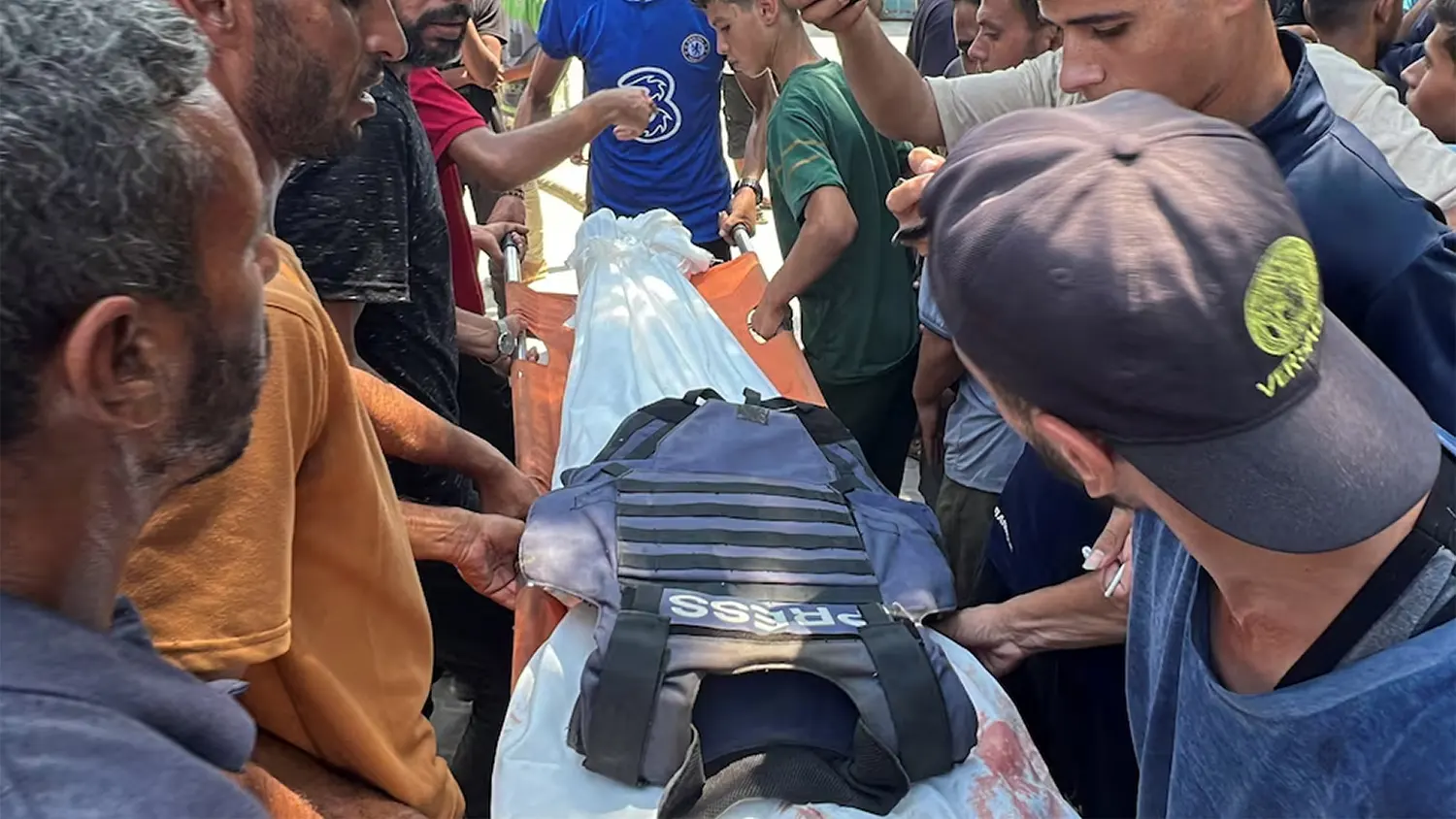
A double missile strike on Nasser Hospital in Khan Yunis has killed at least 20 people, among them five journalists and several medical workers. The second explosion hit as rescue teams were still pulling survivors from the first. The world watched part of it happen live on television.
How It Unfolded
The attack came in two waves on Monday. The first missile struck the hospital’s fourth floor. Within minutes, as journalists, medics, and rescue workers rushed toward the wounded, a second blast tore through the same area.
The timing of the second strike hitting precisely when responders had converged drew immediate and sharp condemnation. Video footage captured during a live broadcast showed the moment of the explosion, the chaos that followed, and the scale of the destruction left behind.
Local health officials and eyewitnesses confirmed the death toll at 20, though the full picture was still emerging as rescue efforts continued.
The Journalists Who Didn’t Make It Out
Among the dead were members of the international press who had been covering the conflict at enormous personal risk. Mohammad Salama, a cameraman for Al Jazeera, was killed. So was Hussam al-Masri, a Reuters contractor, and Mariam Abu Dagga, a freelance journalist contributing to The Associated Press.
Press freedom organisations described Monday’s strike as one of the single deadliest attacks on journalists since the war began. The Committee to Protect Journalists said the death toll for reporters killed in Gaza has now surpassed 190, a number it called part of “one of the most dangerous crises for press freedom in modern history.”
These weren’t combatants. They were people doing the work of documenting what is happening and that work cost them their lives.
Israel’s Explanation and the Questions It Leaves Open
Israel’s government acknowledged the incident, describing it as a “tragic mishap.” Prime Minister Benjamin Netanyahu’s office confirmed that an internal investigation has been launched. Israeli media reported that troops may have believed the hospital’s roof was being used to house a Hamas surveillance device, though no official target has been confirmed.
That explanation has done little to quiet the international response.
The World Reacts
Condemnation came quickly and from multiple directions. The United Nations, Britain, France, and other governments all spoke out. UN Secretary General António Guterres called attention to the “extreme risks faced by medical staff and journalists” and renewed his push for a permanent ceasefire. The Foreign Press Association went further, urging Israel to “immediately end its attacks on media professionals.”
Even from Washington, the tone was uncomfortable. President Donald Trump said he was unhappy with what happened. “I don’t want to see it,” he told reporters, a rare moment of public friction from one of Israel’s closest allies.
A Pattern That’s Becoming Impossible to Ignore
This strike didn’t occur in isolation. Throughout the Gaza conflict, hospitals, press teams, and humanitarian workers have repeatedly found themselves in the line of fire often in circumstances that raise serious questions about who or what was being targeted, and why.
With more than 190 journalists now confirmed dead and medical infrastructure across Gaza severely degraded, Monday’s attack on Nasser Hospital adds another devastating chapter to a conflict where the people most needed to heal, to document, to bear witness keep paying the highest price.