In one of the most significant foreign policy moves in decades, Australia has thrown out Iran’s ambassador and cut key diplomatic ties after its intelligence agency linked Tehran to two anti-Semitic arson attacks carried out on Australian soil.
The Attacks That Triggered It All
Two incidents set this in motion. In October 2024, a kosher food business in Sydney was firebombed. Two months later, the Adass Israel Synagogue in Melbourne suffered the same fate. Both were treated as hate crimes at the time but Australian intelligence quietly kept digging.
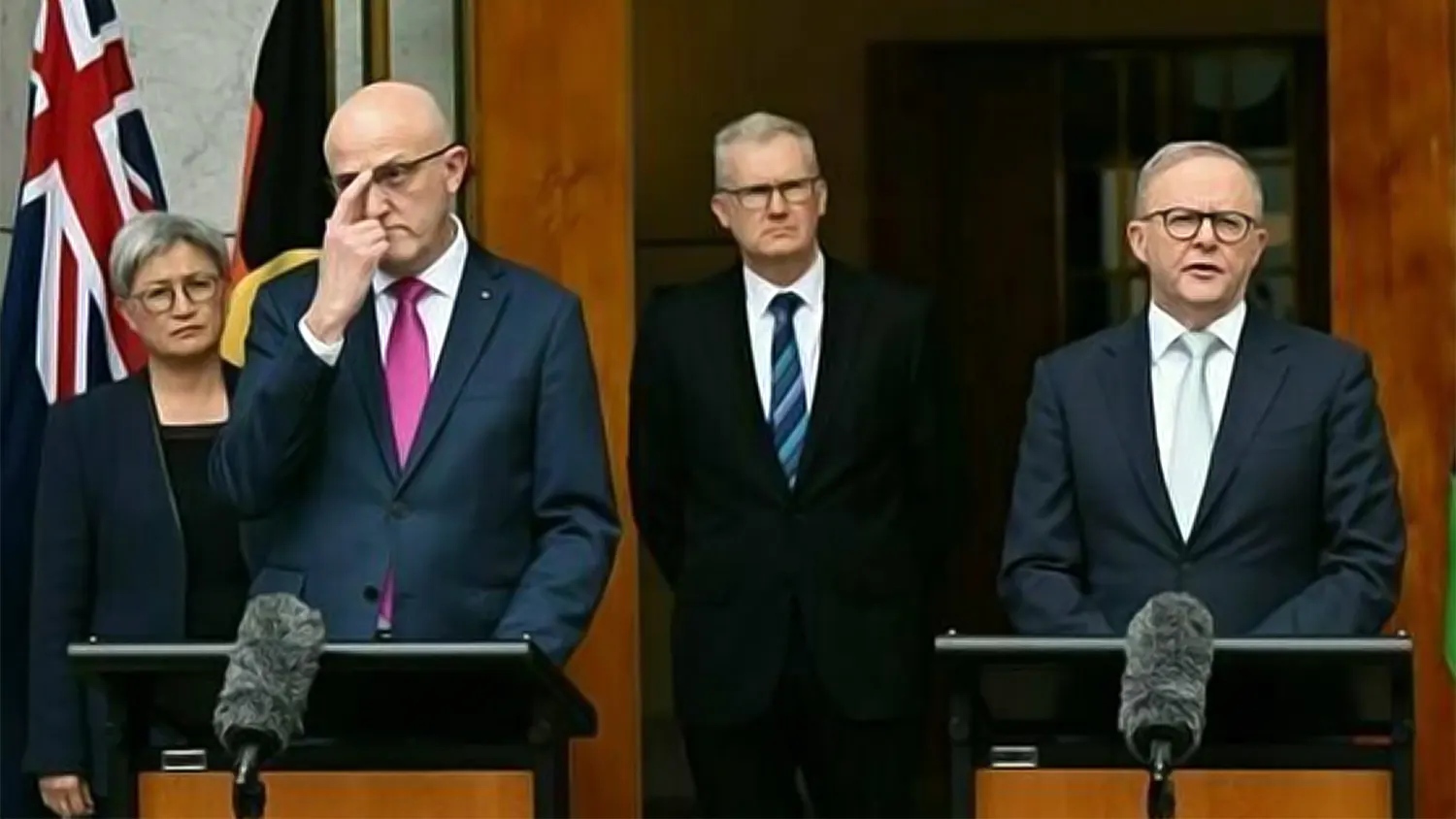
What the Australian Security Intelligence Organisation (ASIO) eventually uncovered changed the nature of the investigation entirely. According to Prime Minister Anthony Albanese, ASIO found “credible intelligence” pointing directly at Iran as the orchestrating force behind both attacks.
“These were extraordinary and dangerous acts of aggression orchestrated by a foreign nation on Australian soil,” Albanese said at a press conference Tuesday. The attacks, he added, were deliberately designed to “undermine social cohesion and sow discord” and Australia would not let that go unanswered.
A Response Unlike Anything Australia Has Done in 80 Years
The government’s answer was swift and sweeping. Iran’s ambassador, Ahmad Sadeghi, along with three officials, was declared persona non grata and given seven days to leave. It marks the first time Australia has expelled a foreign ambassador since World War II a fact that underscores just how seriously Canberra is treating this.
That wasn’t the only measure. Australia has also suspended operations at its embassy in Tehran, relocating its diplomats to a third country for their safety. Meanwhile, the government announced it will introduce legislation to formally designate Iran’s Islamic Revolutionary Guard Corps, the IRGC as a terrorist organisation, a step Australia’s Jewish community has pushed for over many years. Australians currently in Iran are being urged to “strongly consider leaving” amid fears of arbitrary detention.
Iran Didn’t Do This Directly. It Used Proxies.
ASIO Director-General Mike Burgess was careful to clarify one important detail: Iranian diplomats didn’t carry out the attacks themselves. Instead, intelligence points to the IRGC running “a complex network of proxies” to pull it off keeping Tehran’s fingerprints at arm’s length while still calling the shots.
Burgess also made clear that not every anti-Semitic act in Australia is tied to Iran. But in these two cases, the evidence was compelling enough for Australia to take action it hasn’t taken since the 1940s.
The Bigger Picture
This didn’t happen in a vacuum. Anti-Semitic incidents across Australia have surged since the Israel-Hamas conflict broke out in late 2023. At the same time, Australia’s recent recognition of a Palestinian state had already added friction to its relationship with Israel making Tuesday’s announcement a notable turn.
Israel’s embassy in Canberra welcomed the IRGC designation without hesitation. “Iran’s regime is not only a threat to Jews or Israel,” the embassy said. “It endangers the entire free world, including Australia.”
Canberra confirmed it will keep a bare minimum of diplomatic channels open to protect national interests, but the message behind the expulsion was unambiguous: foreign interference on Australian soil whoever is behind it carries real consequences.
A Line in the Sand
Analysts are calling this a turning point in Australia’s foreign policy. For years, governments have navigated Iran carefully, balancing concern over its behaviour with the practical need to keep lines of communication open. That calculus has now shifted.
Expelling an ambassador is not a symbolic gesture. It is one of the strongest tools a country has short of breaking off relations entirely. Australia just used it and in doing so, sent a message not just to Tehran, but to any government that might consider using Australian soil as a stage for foreign aggression.