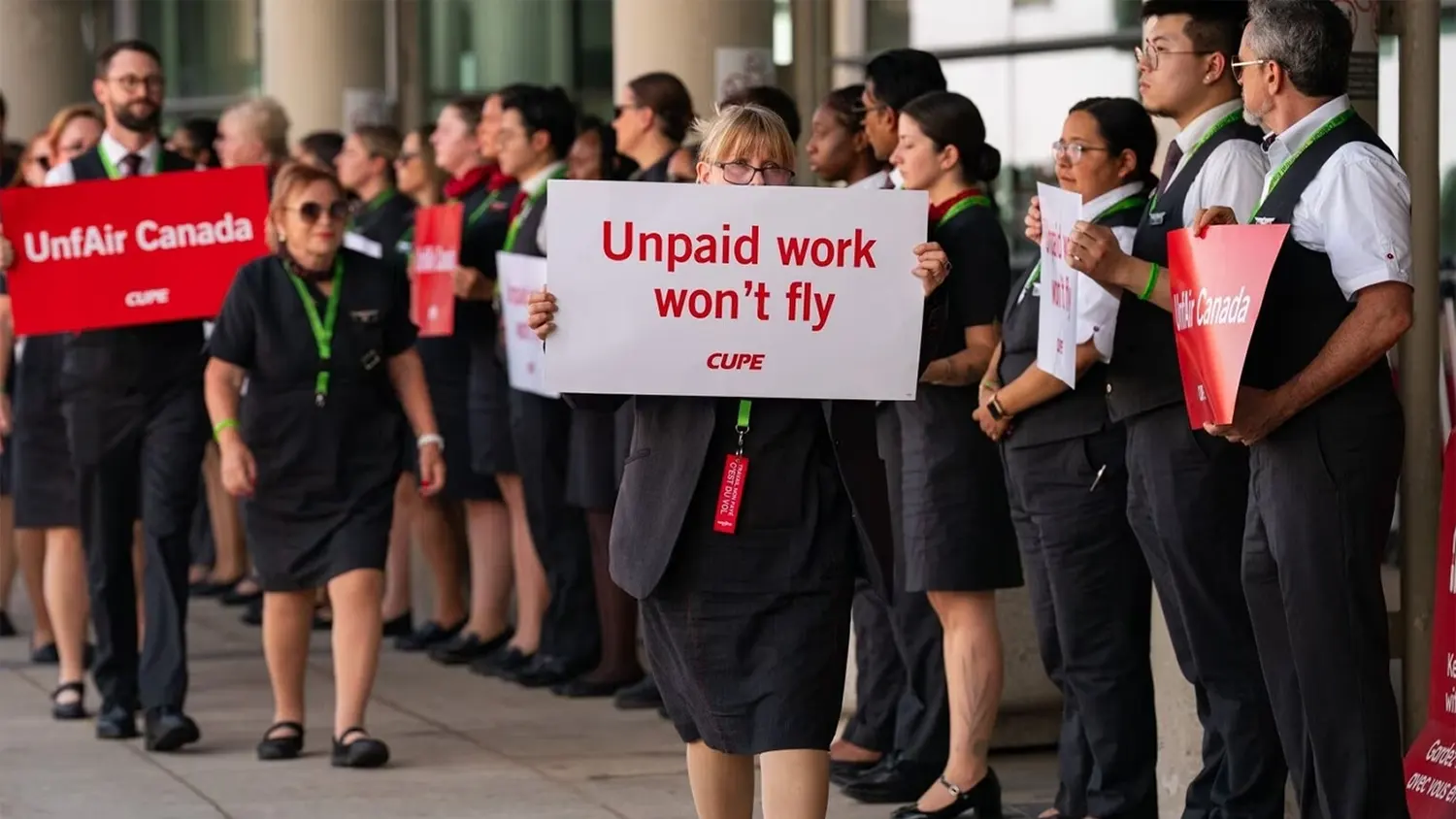
A nationwide travel disruption is unfolding in Canada. Air Canada has suspended all operations after a flight attendant strike forced the airline to ground its entire fleet, stranding thousands of passengers.
The walkout, led by the Canadian Union of Public Employees (CUPE), comes at the height of the summer travel season turning a labor dispute into a major aviation crisis.
Why Flight Attendants Went on Strike
The strike follows months of failed negotiations between the airline and its cabin crew.
At the center of the dispute are wages, unpaid work, and working conditions. Union representatives argue that current pay levels are “barely livable” and have not kept up with inflation.
A key issue is compensation for time spent on the ground. Flight attendants say they are not paid for critical duties such as:
- Boarding and deplaning passengers
- Conducting safety checks
- Preparing the cabin before takeoff
The union describes this as “unpaid work”, a longstanding industry practice now under intense scrutiny.
Although Air Canada offered a 38% compensation increase over four years, the proposal was rejected, with union leaders saying it still falls below inflation adjusted expectations.
Immediate Impact on Travelers
The effects of the strike were felt almost instantly.
Air Canada, which typically carries around 130,000 passengers daily, began canceling flights ahead of the strike in a controlled shutdown. Now, with operations fully halted, the disruption has escalated.
Key impacts include:
- Hundreds of canceled flights across domestic and international routes
- Up to 25,000 Canadians stranded abroad
- Limited availability on alternative airlines due to peak season demand
Passengers have been advised not to travel to airports without confirmed rebookings, as capacity across the system is already stretched.
What Options Are Available for Passengers
To manage the fallout, Air Canada has introduced several support measures:
- Full refunds for canceled flights
- Free rebooking for travel between August 21 and September 12
- Limited rebooking on partner airlines, subject to availability
While these options offer some relief, the scale of disruption means many travelers are still facing significant delays and uncertainty.
Government Response and Ongoing Negotiations
The Canadian government is urging both sides to return to negotiations.
Jobs Minister Patty Hajdu has emphasized that mutual agreement not forced arbitration is the preferred solution. However, tensions remain.
Air Canada had requested binding arbitration to end the dispute quickly, but the union rejected the proposal, insisting on a deal that members can vote on.
This standoff suggests the strike could continue, prolonging the disruption.
Final Thoughts
The Air Canada strike is more than a labor dispute, it’s a reminder of how fragile the travel system can be during peak demand.
With operations fully suspended and negotiations unresolved, the ripple effects are spreading across the aviation sector.
Even if a deal is reached soon, experts warn it could take up to a week to fully restore operations, leaving thousands of travelers in limbo.
For now, the focus remains on one question: how quickly can both sides reach an agreement and get Canada’s skies moving again?