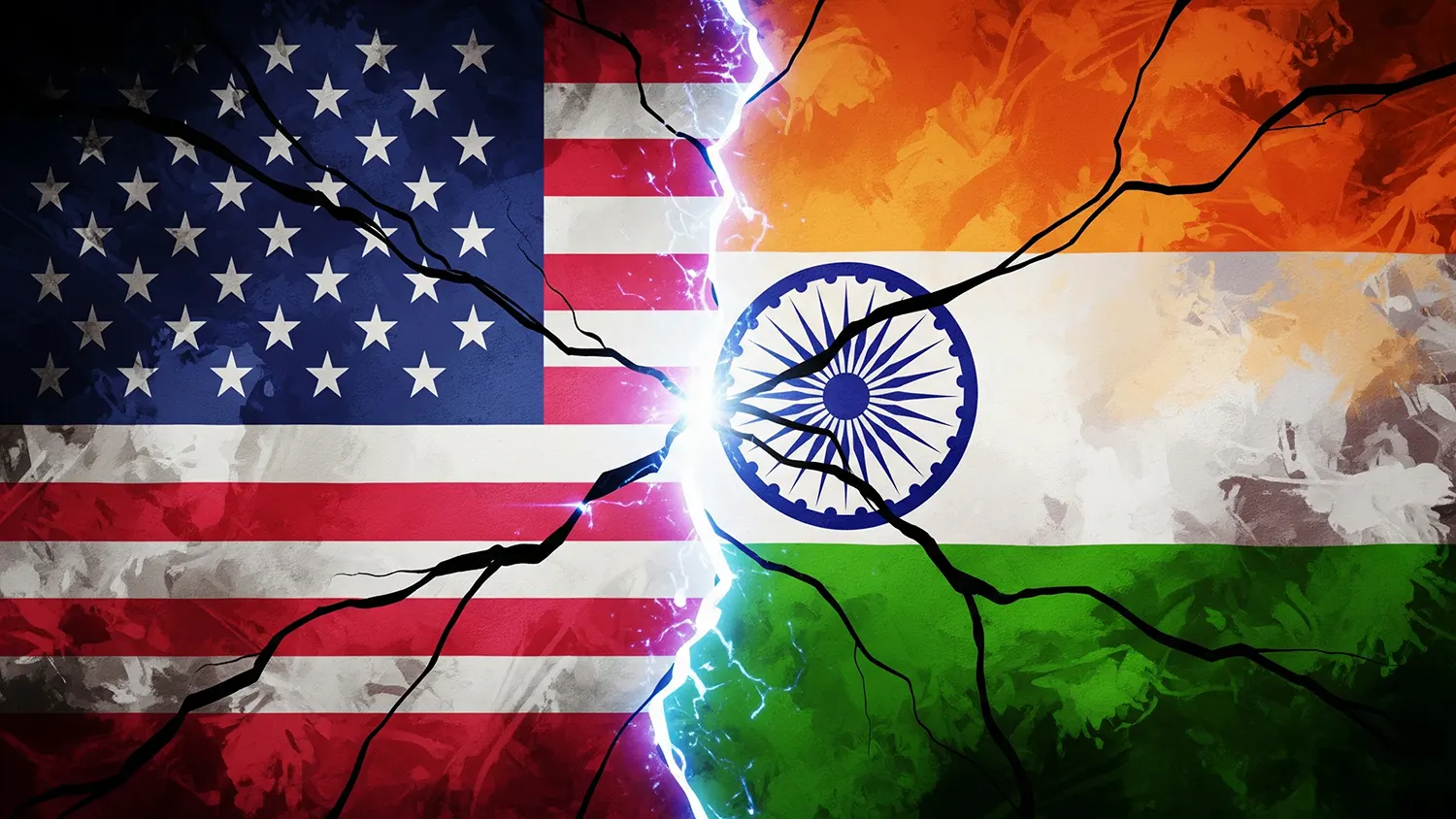
The relationship between the United States and India long seen as a strategic partnership between two major democracies is now facing serious strain. At the center of the dispute is India’s growing reliance on discounted Russian oil, a move that has drawn sharp criticism and tariff threats from U.S. President Donald Trump.
What began as a policy disagreement is quickly evolving into a high stakes economic and diplomatic conflict with global implications.
Why Russian Oil Is at the Center of the Dispute
The crisis stems from India’s decision to significantly increase its imports of Russian crude oil following the Ukraine war.
The numbers tell the story:
- Russian oil now makes up around 40% of India’s total imports
- Before 2022, that figure was less than 2%
- India has secured discounts of $15–$25 per barrel
- Total estimated savings exceed $17 billion
For India, the shift is a practical economic decision. For the U.S., it raises concerns about undermining global efforts to isolate Russia.
Donald Trump has openly criticized India’s approach, accusing it of benefiting from the conflict. In response, he has proposed punitive tariffs of up to 500% on Indian goods, signaling a dramatic escalation in trade tensions.
The Legal Loophole: Refined Oil Exports
One of the most contentious aspects of the issue involves refined petroleum products.
India imports crude oil from Russia, refines it into products like diesel and jet fuel, and then exports it globally including to Western markets.
This practice is technically legal due to the “substantial transformation” rule. Once crude oil is refined, it is considered a new product of Indian origin, meaning it does not violate current sanctions.
Still, critics argue that this system allows countries to indirectly benefit from restricted resources, fueling ongoing debate.
India’s Response: Energy Needs Come First
India has firmly rejected U.S. criticism, calling the pressure “unjustified and unreasonable.”
Officials emphasize that the country’s decisions are based on:
- Energy security
- Market conditions
- Domestic economic stability
As one of the world’s largest energy importers relying on imports for nearly 90% of its needs, India argues that affordable oil is essential to control inflation and support economic growth.
Indian leaders have also pointed to double standards, noting that Western nations continue to import other Russian commodities such as uranium and fertilizers.
At the core of India’s stance is a long standing principle: strategic autonomy the ability to make independent economic and foreign policy decisions.
Economic Fallout and Trade Risks
The tension is no longer just political, it is already impacting trade.
The U.S. has imposed tariffs totaling 50% on certain Indian exports, putting up to $37 billion in trade at risk.
Key industries under threat include:
- Pharmaceuticals
- Textiles
- Technology services
Meanwhile, research from the Global Trade Research Initiative (GTRI) highlights a critical point: China remains the largest importer of Russian oil, yet has faced less direct pressure.
This has intensified concerns in India that the country is being unfairly targeted.
A Strategic Partnership Under Pressure
The Crisis comes at a sensitive time for global geopolitics.
The U.S. and India have been strengthening ties in recent years, particularly in the Indo Pacific region, where cooperation is seen as crucial to balancing China’s growing influence.
Escalating trade tensions risk:
- Weakening diplomatic trust
- Disrupting economic cooperation
- Undermining broader strategic goals
For both nations, the stakes extend far beyond oil, they touch on the future of a key global partnership.
What Happens Next?
The situation remains fluid, but the path forward is uncertain.
If tariff threats escalate further, India may be forced to:
- Rethink its trade strategy
- Diversify export markets
- Strengthen alternative alliances
At the same time, there is still room for diplomatic negotiation, which could ease tensions and prevent a full scale trade conflict.
Conclusion
The growing friction between the U.S. and India over Russian oil highlights the complex intersection of economics, politics, and global security.
For India, the issue is about energy security and economic survival. For the U.S., it is about geopolitical strategy and sanctions enforcement.
As both sides navigate this challenge, one thing is clear:
the outcome will shape not only their relationship but also the broader global trade landscape.