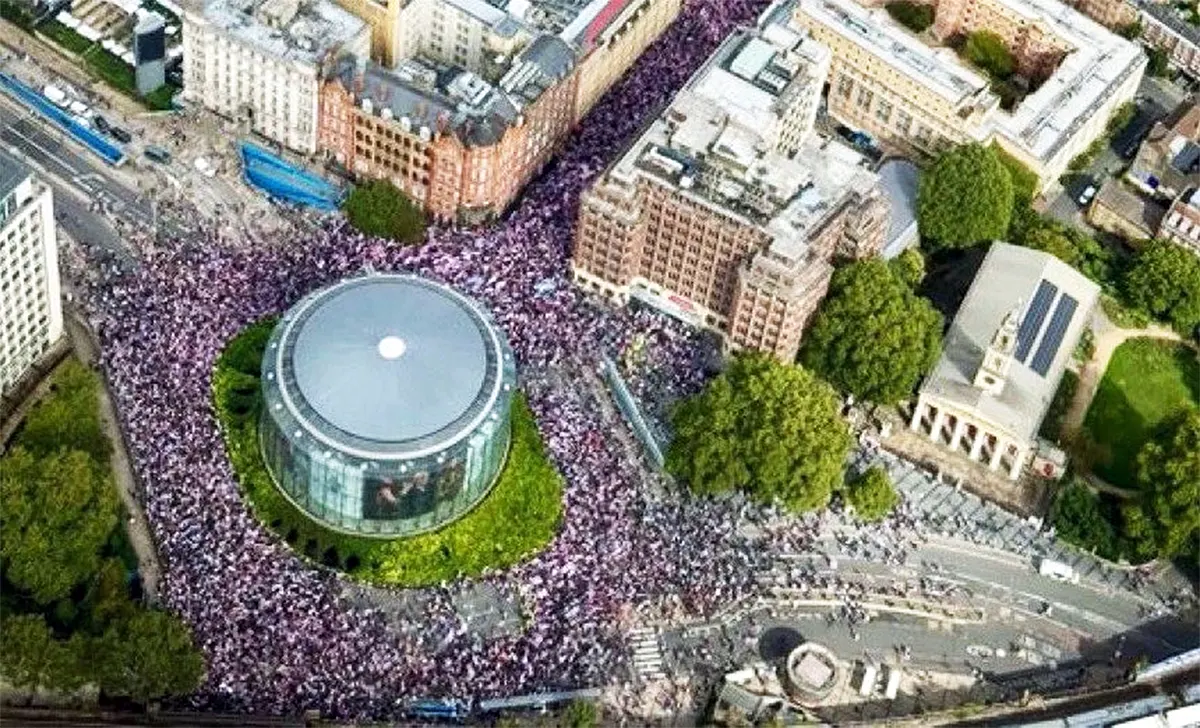
Tens of thousands of people filled the streets of London on September 13, 2025, for the controversial “Unite the Kingdom” rally, one of the largest immigration-focused demonstrations seen in the UK in recent years.
Organized by political activist Tommy Robinson, the event drew an estimated 110,000 to 150,000 participants, according to the Metropolitan Police.
While much of the rally remained peaceful, clashes with police, injuries, and a large counter-protest highlighted the growing tension surrounding immigration, national identity, and political polarization in Britain.
Central London Becomes the Focus of a National Debate
The demonstration began near Westminster Bridge before crowds moved toward Whitehall carrying Union Jack and St. George’s flags.
Supporters chanted slogans including:
- “We want our country back”
- “Stop the boats”
- “Defend free speech”
For many attendees, the rally was presented as a call for stricter border controls and stronger immigration policies.
Others described it as a broader protest about cultural change, economic pressure, and public frustration over government handling of migration issues.
The event quickly became one of the most discussed political gatherings in the UK this year.
Tommy Robinson Leads the Rally
Tommy Robinson, whose real name is Stephen Yaxley-Lennon, has long been one of Britain’s most controversial political figures.
Known for his outspoken views on immigration and free speech, Robinson promoted the rally as a movement to defend British identity and challenge government immigration policy.
His involvement drew both strong support and fierce criticism.
Supporters viewed the demonstration as an example of democratic protest and public frustration finally being heard.
Critics argued the event risked inflaming social division and encouraging extremist rhetoric.
International Voices Add Global Attention
The rally gained additional international attention due to appearances from several high-profile figures.
Eric Zemmour, the French political commentator and former presidential candidate, addressed the crowd with warnings about demographic change in Europe.
Meanwhile, Elon Musk appeared through a pre-recorded video message.
Musk spoke about the importance of “controlled and legal immigration” while warning against unmanaged migration challenges.
The involvement of international personalities helped push the event into global headlines and intensified online discussion surrounding immigration policies in Europe.
Heavy Police Presence as Clashes Break Out
The Metropolitan Police deployed more than 1,000 officers across central London to separate rally participants from counter-protesters and maintain order.
Despite efforts to keep demonstrations apart, tensions escalated during parts of the day.
Reported Incidents Included:
- Bottles and flares thrown toward officers
- Attempts to breach police security zones
- Physical confrontations near protest barriers
According to police:
- 26 officers were injured
- 4 officers suffered serious injuries
- 25 arrests were made for offenses including public order violations
Police officials stated that the majority of participants remained peaceful, but condemned the violent actions of a smaller group.
Counter Protesters Rally Against Nationalism
At the same time, around 5,000 counter-protesters gathered nearby under the banner of “March Against Fascism,” organized by the anti-racism coalition Stand Up to Racism.
Demonstrators carried signs reading:
- “Refugees Welcome”
- “No to Hate”
- “Smash the Far Right”
Speakers included Labour MPs Diane Abbott and John McDonnell, who warned about rising political extremism and deepening social division.
The simultaneous demonstrations reflected just how polarized the immigration debate has become in modern Britain.
Immigration Remains a Defining Political Issue
The rally comes during a period of intense national debate over asylum seekers crossing the English Channel in small boats.
The UK government has introduced multiple policies aimed at reducing illegal migration, including deportation proposals and tougher asylum measures.
Many of those policies have faced legal challenges and public protests.
Recent demonstrations outside hotels housing asylum seekers have further intensified political tensions across the country.
The “Unite the Kingdom” rally now adds another major chapter to that ongoing debate.
Britain’s Immigration Debate Continues to Divide Opinion
The event highlighted several issues now dominating political discussions across the UK:
- Border security versus humanitarian responsibility
- National identity versus multiculturalism
- Freedom of speech versus hate speech concerns
Supporters of the rally argued that immigration pressures are affecting housing, public services, and social cohesion.
Opponents warned that nationalist messaging risks increasing hostility toward migrants and minority communities.
The strong turnout from both sides suggests immigration will remain one of the UK’s most powerful political issues heading into future elections.
Social Media Explodes as Debate Intensifies
Online reaction to the rally was immediate and intense.
Hashtags including:
- #UniteTheKingdom
- #StopTheBoats
- #RefugeesWelcome
trended throughout the day across multiple social media platforms.
Supporters praised the scale of the demonstration, while critics focused on the clashes and accusations of extremist involvement.
The event quickly became one of the most talked-about political stories in Britain.
Police Review Security Response
Following the rally, the Metropolitan Police confirmed they are reviewing crowd-control operations and security measures used during the demonstrations.
In an official statement, police said they remain committed to protecting the public’s right to peaceful protest while condemning acts of violence against officers and civilians.
Investigations into several incidents are ongoing.
A Defining Moment in Britain’s Political Climate
The “Unite the Kingdom” rally was more than a single protest.
It reflected a country deeply divided over immigration, identity, and the future direction of British society.
For supporters, it was a demand for stronger borders and political accountability.
For opponents, it was a warning sign about rising nationalism and growing polarization.
What happens next politically and socially may shape Britain’s public debate for years to come.