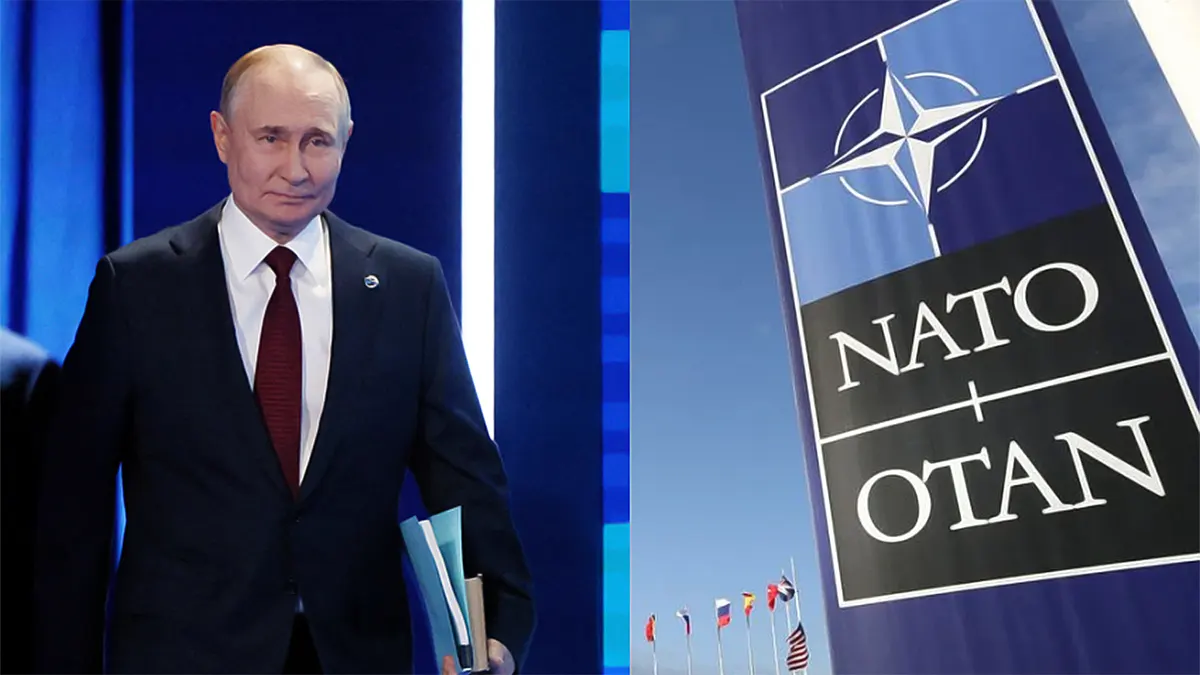
Russian President Vladimir Putin used a major international forum to dismiss allegations that Russia intends to attack NATO countries while simultaneously warning that any U.S. decision to provide Tomahawk cruise missiles to Ukraine would mark a significant escalation in tensions between Moscow and Washington.
Speaking at the annual Valdai Discussion Club in the Black Sea resort city of Sochi on October 3, 2025, Putin accused Western leaders of promoting fear about Russia to justify increased military spending and defense expansion across Europe.
His remarks come as the war in Ukraine continues and debates intensify among Western governments over future military assistance to Kyiv.
Putin Dismisses NATO Threat Allegations
During his address, Putin strongly rejected suggestions that Russia is preparing military action against NATO member states.
He argued that repeated warnings from Western officials about a possible Russian attack are unfounded and designed to support higher defense budgets rather than address genuine security concerns.
According to Putin, narratives portraying Russia as an imminent threat are being used to divert attention from political and economic challenges facing European governments.
The Russian leader described such claims as exaggerated and disconnected from reality, insisting that Moscow has no plans for aggression against the military alliance.
Kremlin Pushes Back Against Western Rhetoric
Putin also responded to recent criticism from U.S. President Donald Trump, who reportedly referred to Russia as a “paper tiger.”
The Russian president used the comment to challenge NATO’s image as the world’s most powerful military alliance.
Putin argued that if Russia is portrayed as weak while simultaneously being described as a major threat to NATO, the two narratives contradict one another.
His comments were part of a broader effort to project confidence in Russia’s military capabilities and strategic position amid ongoing tensions with the West.
Tomahawk Missiles Identified as a Major Escalation Risk
While downplaying concerns about a conflict with NATO, Putin drew a clear line regarding the possible transfer of Tomahawk cruise missiles to Ukraine.
The long-range missiles, capable of striking targets at considerable distances, have been discussed as a potential option for strengthening Ukraine’s ability to conduct deep-strike operations.
Putin argued that supplying such weapons would go beyond a standard military aid package and represent a new phase in U.S. involvement in the conflict.
According to the Russian leader, operating Tomahawk missiles would require a level of technical support and participation that Moscow would view as direct engagement.
He warned that such a move would create what he described as a “qualitatively new stage of escalation” in relations between Russia and the United States.
Russia Claims Continued Battlefield Gains
Beyond discussing NATO and Western military aid, Putin also addressed developments on the battlefield in Ukraine.
He claimed Russian forces continue to advance in several areas and suggested that Ukrainian troops have suffered significant losses during recent fighting.
Putin reiterated Moscow’s position that negotiations remain possible, while indicating that Kyiv should reconsider its current approach and engage in diplomatic talks.
Ukraine has consistently maintained that any future negotiations must respect its sovereignty and territorial integrity.
Washington Weighs Military Options
The debate over long-range missile support remains a sensitive issue in Washington and among U.S. allies.
Reports have suggested that American officials face inventory limitations regarding Tomahawk missiles, with many already allocated to naval operations and strategic military planning.
As a result, policymakers are reportedly evaluating alternative long-range systems and exploring options that could involve greater contributions from European partners.
Any decision involving advanced missile transfers is expected to carry significant diplomatic and military implications, particularly as relations between Russia and Western nations remain strained.
Global Attention Focuses on Next Steps
Putin’s comments at the Valdai forum underscore the continuing tensions surrounding military support for Ukraine and the broader relationship between Russia and NATO.
While Moscow dismisses claims that it poses a threat to alliance members, Russian officials continue to warn that certain weapons transfers could trigger a more dangerous phase of confrontation.
With Western governments considering future military assistance packages and Ukraine seeking additional long-range capabilities, the issue remains one of the most closely watched aspects of the ongoing conflict.
The coming months may prove critical in determining whether diplomatic efforts gain momentum or whether escalating military support leads to further deterioration in relations between Russia and the West.