Three years into one of the most sustained economic campaigns in modern history, the European Union isn’t letting up. If anything, it’s widening the net reaching into corners of the Russian economy that had, until now, been left completely untouched.
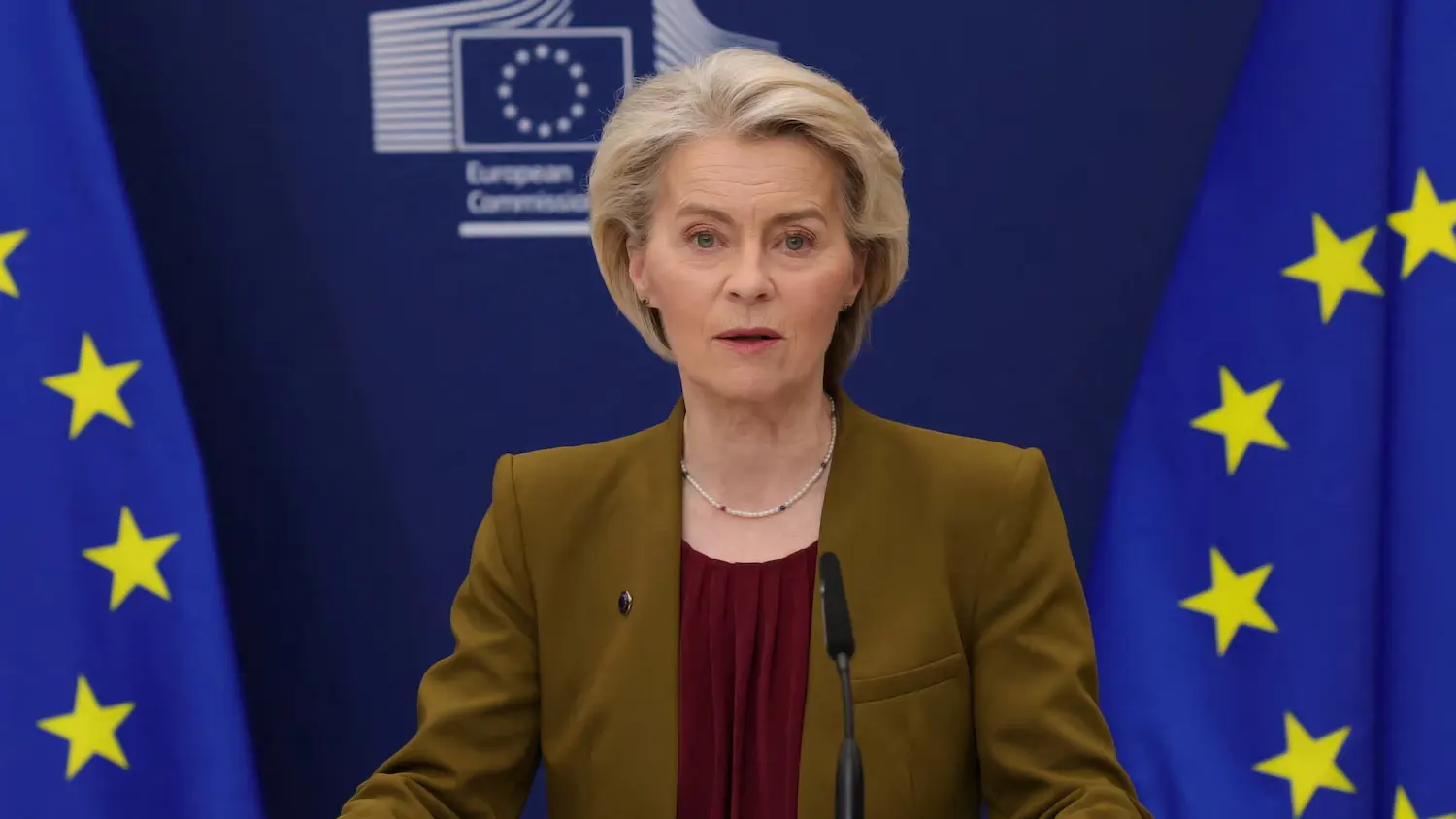
EU Commission President Ursula von der Leyen has presented the 21st package of sanctions against Russia, and what makes this one different isn’t just the number of new measures. It’s the shift in strategy from targeting obvious military and financial pipelines to hunting down every remaining revenue stream, every workaround, and every third party quietly helping Moscow keep the money flowing.
Before the full details, one number puts everything in context: Russia is now the most sanctioned country on Earth surpassing Iran, North Korea, and Syria combined. More than 31,500 individual restrictions have been imposed by the Western coalition since the full-scale invasion of Ukraine began. This 21st package, if unanimously approved by EU member states, adds to that mountain in several significant ways.
The Industry That Sanctions Forgot Until Now
One of the most striking moves in this package is also one of the most overdue. For the first time since the conflict began, the EU is targeting Russia’s fishing industry introducing substantial restrictions and outright bans on Russian fishery products, with major exports like cod specifically in the crosshairs.
It sounds unglamorous compared to oil price caps and SWIFT bans, but the fishing sector represents a multi-billion dollar revenue stream that had remained completely untouched across all 20 previous packages. Closing it off isn’t just a symbolic move, it’s a genuine hit to export income that Russia had been counting on remaining intact.
Attacking the Shadow Fleet at Its Source
Russia’s workaround for Western oil sanctions has been an aging, murky network of tankers unregistered, obscured, or quietly transferred between owners operating outside the reach of conventional enforcement. This “shadow fleet” has been the single biggest loophole in the West’s oil price cap strategy, allowing Russian crude to keep flowing to global markets without triggering restrictions.
The EU has been chipping away at this for several packages now. The 21st goes further by attacking not just the ships, but the entire ecosystem around them:
30 more vessels are being added to the sanctions list, bringing the EU’s total of blacklisted ships to 662 up from 632 already on the list. But the more significant move is targeting the enablers for the first time: third-party vessels providing auxiliary services to the shadow fleet, the ships doing the refueling, towing, and ship to ship oil transfers that keep the whole operation running are now subject to sanctions.
The package also bans ports, airports, and refineries that trade or process Russian oil, and severely restricts the sale of Liquefied Natural Gas tankers to Russian entities, tightening the squeeze on energy infrastructure directly.
On the oil price cap itself, the EU is making a pragmatic adjustment: the automatic adjustment mechanism has been paused until January 2027 to prevent market volatility during a period of heightened global geopolitical tension. The revenue pressure on Moscow stays, the mechanism for recalibrating it does not.
Following the Money Into Crypto and Third Countries
If there’s a theme running through this package beyond new sector targets, it’s the aggressive pursuit of sanctions evasion particularly through financial systems that didn’t exist or weren’t widely used when these measures were first built.
31 additional Russian banks are being hit with a total transaction ban. That alone would push the total number of sanctioned banks past 100, cutting off more than 50% of all Russian credit institutions that still maintained international ties.
But the more forward-looking measures target the digital layer. Transaction bans are being extended to 20 banks, crypto firms, and oil traders based in third countries meaning countries outside the EU, that have been caught helping Russia route around existing restrictions. This is a direct response to one of the most persistent structural problems with sanction regimes: friendly intermediaries in neutral or sympathetic countries doing the work that Russian entities can no longer do themselves.
The EU is also introducing what it calls a deterrent mechanism essentially a tripwire that would trigger a full, blanket ban on third country crypto asset service providers if their host nations are shown to be facilitating sanctions-busting for Russian entities. The message to those governments is clear: tolerate this, and your financial sector loses access to the European market.
Closing the Borders to Anyone Who Fought
In a move that’s both practical and deeply symbolic, the package introduces a blanket entry ban on any individual who has served in the Russian Armed Forces since the start of the full-scale invasion of Ukraine. No exceptions, no case by case review if you served, European borders are closed to you.
This is a significant expansion beyond the existing travel bans on named individuals, oligarchs, and officials. It shifts the logic from targeting specific people to categorically barring an entire class of participants in the conflict.
The Other Restrictions: Tech, Metals, and Belarus
Beyond the headline measures, the package fills in additional gaps across several sectors. New export bans cover aerospace and defense alloys, drone ground-support equipment, jamming technology, and launch systems, all materials with direct military applications. A new €60 million import cap targets raw metal ores and specific automotive parts, forcing further diversification away from Russian supply chains.
Importantly, the package mirrors its trade and crypto restrictions onto Belarus, a move designed to close one of the most frequently exploited backdoors into the European market. Without this, goods and money restricted from flowing directly through Russia can often be rerouted through Minsk. That route gets significantly harder now.
How Big Has This Actually Gotten?
To understand the cumulative weight of what’s been built, it helps to step back from this single package and look at the full picture.
Before Russia’s full-scale invasion of Ukraine, roughly 2,700 sanctions existed against the country globally. Since February 2022, the Western coalition the EU, US, UK, Canada, Japan, and others has added more than 28,000 additional restrictions on top of that, bringing the total past 31,500.
That number includes asset freezes and travel bans covering more than 2,200 individuals and entities within the EU’s framework alone, Vladimir Putin, oligarchs, military commanders, and technology companies with the 21st package adding drone manufacturers, weapons suppliers, and a new category of former combatants to that list.
And sitting above all of it: roughly $300 billion in Russian sovereign central bank assets remain frozen globally, a financial constraint that dwarfs every other measure combined and one that Russia has no near-term path to recovering.
What Happens Next
The European Commission has put this proposal forward. It does not become law automatically. To pass, it must be reviewed and unanimously approved by all EU member states through the Council of the European Union meaning every single country in the bloc must agree.
That requirement for unanimity has occasionally slowed or watered down previous packages, particularly on energy-related measures where member states have different levels of dependency on Russian supply. Whether this 21st package passes intact, passes with modifications, or stalls on specific provisions remains to be seen.
What’s not in question is the direction of travel. Each package has reached further than the last into new sectors, new financial networks, new geographies. The 21st is no exception. The question for Moscow isn’t whether the pressure is real. It’s whether there’s any part of the economy left that the EU hasn’t looked at yet.