The relationship between the United States and Venezuela has never been warm. But the arrival of three American guided-missile destroyers in international waters near the Venezuelan coast has pushed things into uncomfortably new territory.
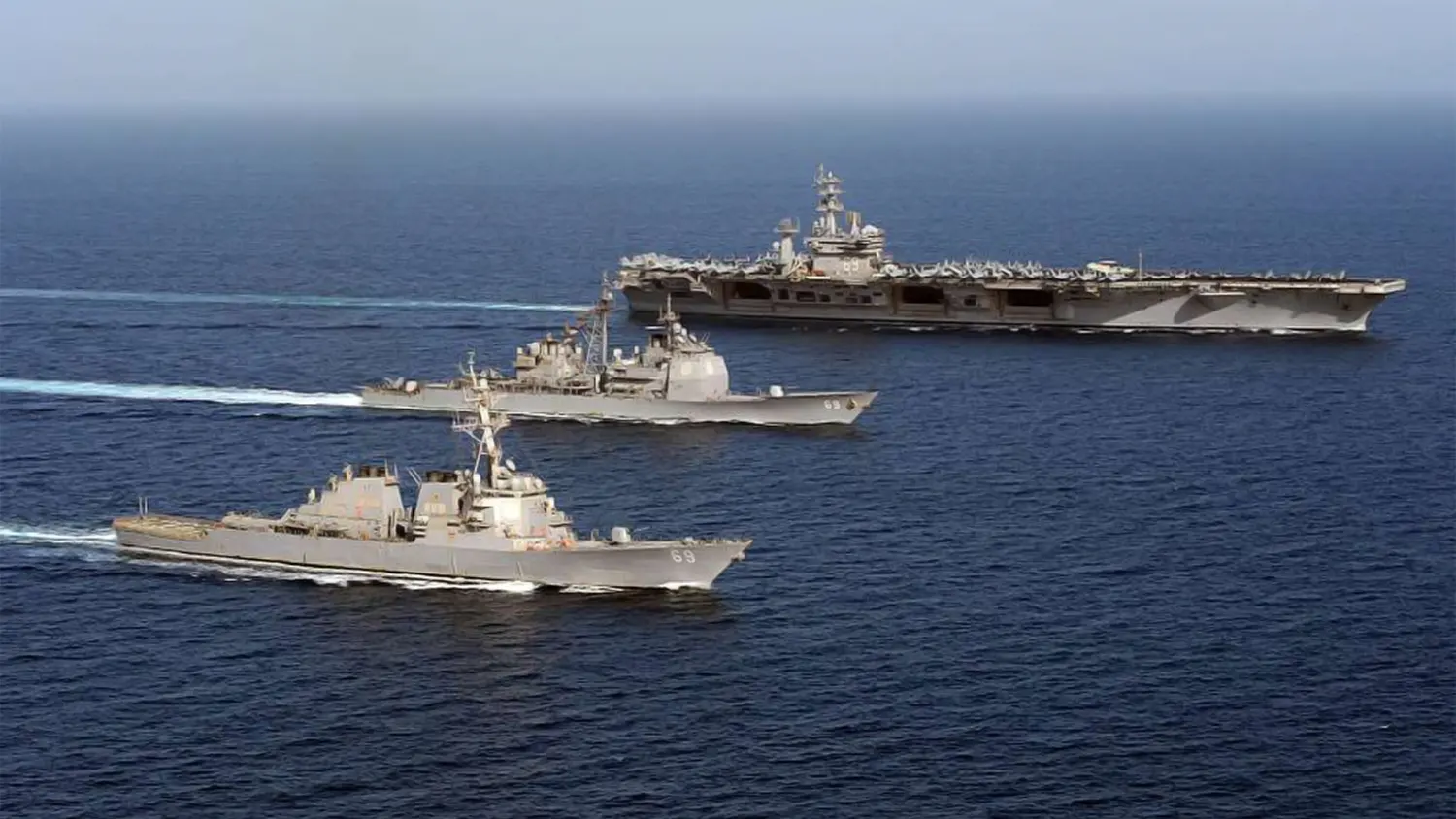
The USS Gravely, USS Jason Dunham, and USS Sampson are now positioned off Venezuela’s shores. The Trump administration says it’s about drugs. Critics say it’s about power. And Nicolás Maduro is treating it like an act of war.
Washington’s Explanation: Cartels, Fentanyl, and a $50 Million Bounty
US officials have framed the deployment as part of a broader counternarcotics campaign targeting what the administration calls a “narco-terror cartel” operating out of Caracas. The warships are reportedly accompanied by P-8 Poseidon surveillance aircraft and an attack submarine, a level of firepower that goes well beyond what a standard drug interdiction mission typically requires.
Adding fuel to the fire, the US recently doubled the bounty on Maduro’s arrest to $50 million. The message from Washington is clear: this isn’t just about stopping fentanyl shipments. The Maduro government itself is the target.
Maduro’s Response: 4.5 Million Militia Members on Standby
Maduro wasted no time firing back not with weapons, but with words and a mass mobilization. He called the deployment “illegal” and framed it as a direct attempt at regime change, ordering more than 4.5 million members of Venezuela’s national militia to prepare to “defend our seas, our skies, and our lands.”
His government also moved to ban all drone activity in Venezuelan airspace, a small but telling measure that signals Caracas is taking the threat of aerial surveillance seriously. Whether the militia mobilization is a genuine defensive posture or a show of domestic strength, it has meaningfully raised the temperature on both sides.
The World Is Watching and Picking Sides
The deployment hasn’t gone unnoticed beyond Caracas and Washington. China, one of Venezuela’s closest allies, condemned the move as a violation of national sovereignty and a threat to regional stability. A Foreign Ministry spokesperson made clear that Beijing opposes the use or threat of force in international relations, a pointed statement directed squarely at the US.
Several Latin American nations have also expressed unease, with calls for diplomacy rather than military posturing. The concern isn’t just about Venezuela, it’s about what kind of precedent this sets for the region.
More Than a Drug Operation
Analysts are largely skeptical that this is purely about narcotics. The scale of the deployment destroyers, submarines, spy planes suggests a mission with broader ambitions. The military presence gives Washington significant leverage over Maduro, but it also creates a dangerous margin for error.
In a region already dealing with political instability and economic pressure, the risk of a miscalculation, a vessel straying too close, a drone getting shot down, a skirmish that neither side intended is real. Venezuela also sits atop some of the world’s largest oil reserves, meaning any escalation carries consequences that extend far beyond the Caribbean.
For now, the ships are holding their position. Maduro is holding his ground. And the space between them is getting smaller.