A Crisis Reaching Breaking Point
The situation in Gaza is rapidly deteriorating. What was already a severe humanitarian emergency is now edging closer to something even more alarming, a potential famine.
Aid organizations and global observers warn that the Gaza humanitarian crisis has reached a critical stage. With food supplies shrinking, healthcare systems collapsing, and displacement increasing, millions of civilians are facing an increasingly desperate reality.
The question is no longer whether conditions are severe but how much worse they could become without immediate action.
Famine Indicators Signal a Dangerous Threshold
Recent data from the Integrated Food Security Phase Classification (IPC) system paints a stark picture.
Two of the three key famine indicators have already been met across large parts of Gaza:
- Severely reduced food consumption
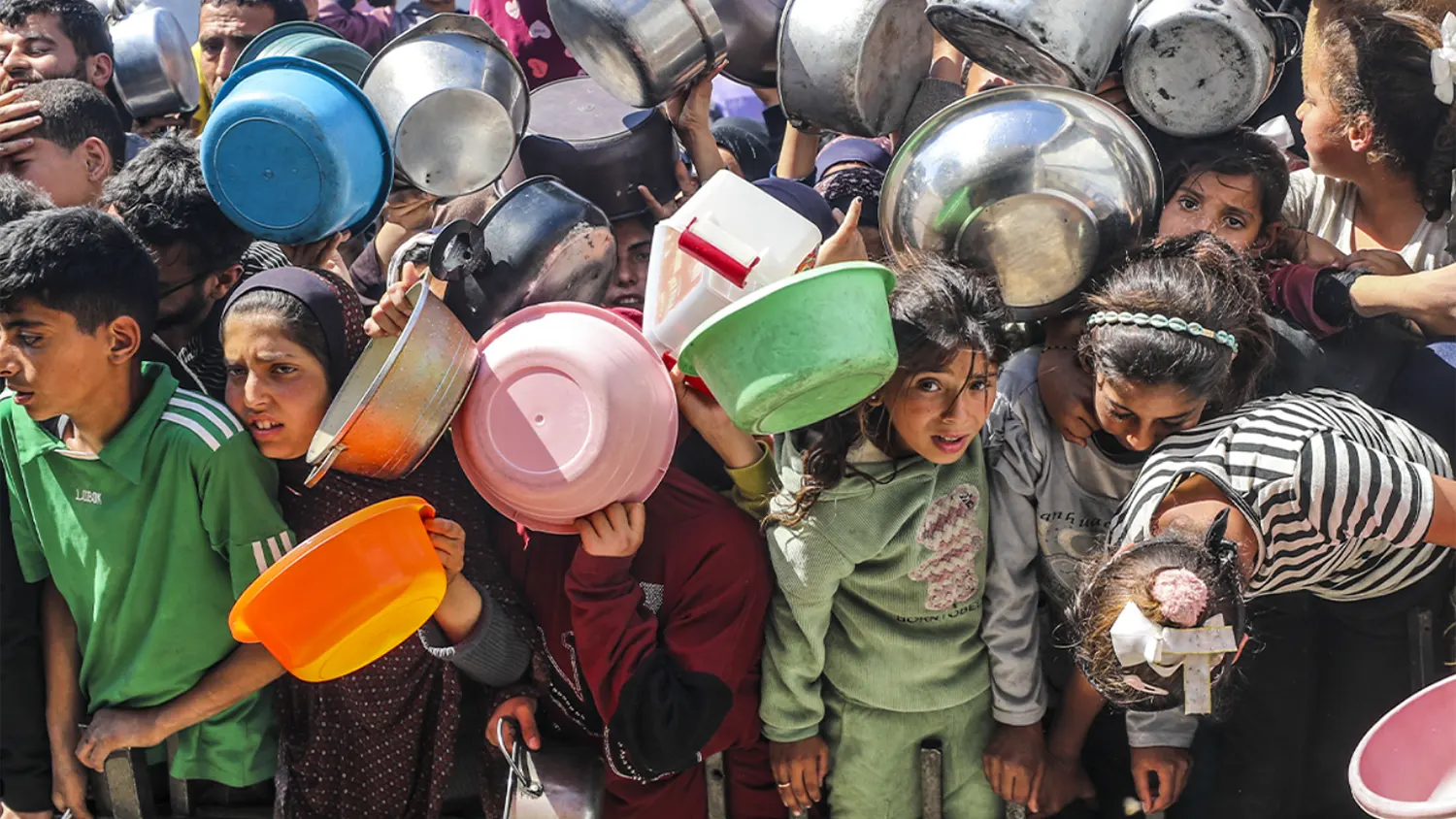
- Soaring levels of acute malnutrition, especially among children
The third indicator rising hunger related deaths is also being reported by local health authorities and aid groups. However, limited data collection due to ongoing conflict makes it difficult to fully confirm the scale.
Taken together, these signals point to a population on the brink of famine, even if an official declaration has not yet been made.
Aid Shortages and Access Challenges
While some humanitarian aid continues to enter Gaza, it remains far from sufficient.
Aid agencies consistently report that the volume of assistance is critically inadequate to meet the growing needs of the population. At the same time, access restrictions and ongoing insecurity are making distribution increasingly difficult.
This creates a dangerous cycle:
- Supplies are limited
- Delivery is disrupted
- Needs continue to grow
The result is a widening gap between aid available and aid required, leaving the most vulnerable populations at risk.
Displacement Pressures Add to the Crisis
Compounding the humanitarian situation are new concerns about large scale displacement.
Israel has indicated plans to resume the delivery of tents and shelter equipment to southern Gaza. While this may provide temporary relief, it coincides with reports of a possible expansion of military operations into Gaza City.
Such an offensive could force over a million people to move once again, many of whom have already been displaced multiple times.
The southern Gaza Strip, however, is already overcrowded and under resourced. Any additional influx of civilians could overwhelm existing infrastructure, further intensifying the crisis.
International Concerns and Legal Implications
These developments have drawn strong reactions from the international community.
The United Nations and humanitarian organizations warn that forced displacement on this scale could worsen human suffering and raise serious legal concerns under international humanitarian law.
There are growing fears that relocating large populations without adequate support may amount to forced transfer, a potential violation of global legal standards.
This adds a legal and ethical dimension to an already severe humanitarian emergency.
Calls for Ceasefire and Immediate Action
As conditions worsen, pressure is mounting for decisive international intervention.
Humanitarian groups are calling for:
- An immediate and unconditional ceasefire
- Full and unrestricted access for aid delivery
- Protection for civilians and critical infrastructure
They emphasize that without these steps, a full scale famine in Gaza may become unavoidable.
A Narrow Window to Prevent Catastrophe
The Gaza crisis is approaching a tipping point.
With famine risks increasing, aid falling short, and displacement rising, the situation demands urgent global attention. While some assistance is reaching the territory, it is not enough to reverse the trajectory.
The path forward depends on both humanitarian access and political solutions.
Without a ceasefire and sustained international support, the consequences could be devastating. For millions in Gaza, the coming weeks may determine whether this crisis stabilizes or escalates into a full humanitarian catastrophe.
The urgency is clear: action is needed now to prevent further loss of life and human suffering.