A fragile US-brokered ceasefire has all but collapsed. Over the past 48 hours, Israel has launched a sweeping new wave of airstrikes across southern Lebanon and parts of Beirut while simultaneously pushing its ground forces deeper into Lebanese territory than at any point in the last 25 years.
The escalation didn’t happen in isolation. After Israel targeted Hezbollah positions in Beirut, Iran responded with direct missile barrages at Israel. Israel then struck back inside Iran itself, a sequence of events that has now pulled the conflict into a volatile, multi-front confrontation with no clear exit.
Tyre Under Fire Including Its Historic Christian Quarter
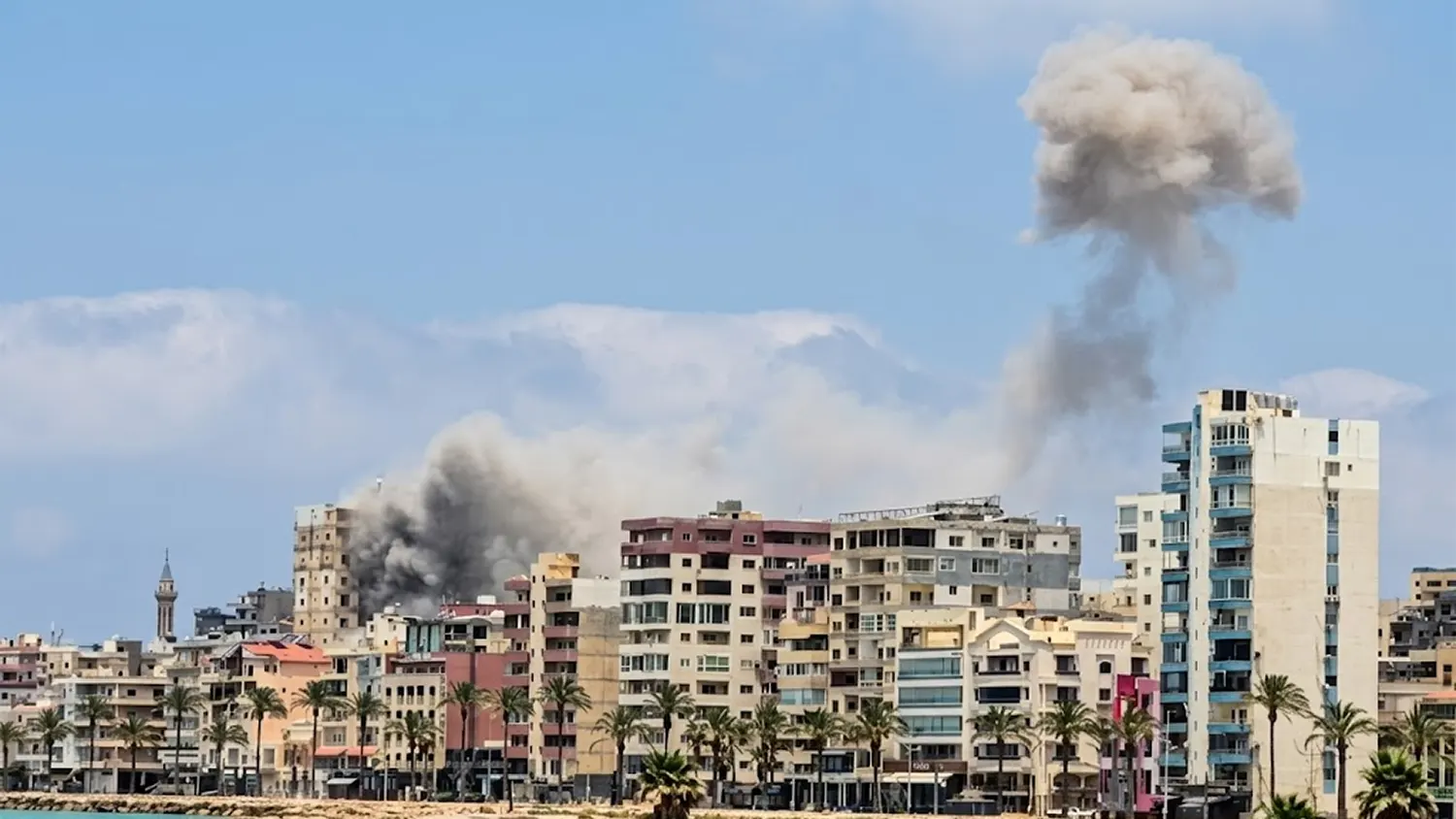
The coastal city of Tyre bore some of the worst of the new strikes. Airstrikes hit the city’s eastern edge, specifically the al-Masaken neighborhood, killing at least 11 people and wounding dozens more, among them several children. Rescue crews spent hours digging through the rubble of collapsed residential buildings. Smoke blanketed the city’s skyline. Nearby El-Buss was also struck.
What drew particular international alarm, however, wasn’t just the casualty toll, it was where Israel issued its evacuation orders.
For the first time, the IDF’s blanket evacuation warning explicitly included Tyre’s historic northwestern Christian quarter, a district that had until now been deliberately spared. Thousands of displaced civilians, including many Shia Muslim families who had fled the heavier-hit southern border villages, had crowded into its narrow streets and churches believing they were safe.
The Israeli military justified the order by claiming Hezbollah operatives had infiltrated the quarter to use it as cover. But that claim was immediately contested. Clergy from three separate Christian denominations made a joint emergency appeal to the United Nations, stating plainly that the district holds zero military presence and warning that an attack on what they called the “historical and human heart of Tyre” would be both a humanitarian and cultural catastrophe.
Ancient Ruins Already Taking Damage
The concern extends beyond lives lost. Tyre is one of the oldest continuously inhabited cities on Earth and carries UNESCO World Heritage status. The shockwaves and debris from nearby strikes have already cracked ancient Roman columns, capitals, and mosaic floors at the al-Bass archaeological site damage to irreplaceable heritage that cannot be undone.
The Ground War Is No Longer Just a Border Operation
What began in mid-March as a stated plan to clear a 3-to-5 mile buffer zone along the border has transformed into something far larger. Prime Minister Benjamin Netanyahu has formally ordered troops to push past the Litani River, long considered a diplomatic red line and Israeli forces are now advancing toward the Zahrani River further north.
The deepest symbol of that expansion: Israeli ground troops captured Beaufort Castle, a 900 year old Crusader fortress perched on a mountain peak overlooking vast stretches of southern Lebanon. Defense Minister Israel Katz announced that Israel raised its flag over the castle and intends to hold it permanently as a military outpost. From there, Israeli armor and infantry have pushed to within just 5 kilometers of Nabatiyeh, one of the largest cities in the south.
Five separate IDF divisions are currently deployed across the south, grinding through urban combat in towns like Bint Jbeil, Khiyam, and Bayada in what has become a brutal war of attrition.
A Proposed “Security Zone” That Would Swallow 10% of Lebanon
The Israeli government has now formally outlined plans for a permanent military security zone inside Lebanese territory. If fully implemented, the occupied buffer would cover roughly one-tenth of Lebanon’s entire landmass and would permanently block an estimated 600,000 to 800,000 displaced Lebanese civilians from ever returning to their homes in the south.
International diplomats and the US administration are still working to revive the collapsed ceasefire. But on the ground, the Israeli military has been unambiguous: it will keep operating with force south of the Zahrani River for as long as Hezbollah continues its operations and Netanyahu has signaled that large ground forces will hold strategic areas until Israel considers its northern border fully secure.