A ceasefire was supposed to be holding. It isn’t anymore, at least not in any meaningful sense.
When Prime Minister Benjamin Netanyahu issued his directive to expand Israeli military control to 70% of the Gaza Strip, it didn’t just cross a line on a map. It effectively shattered the framework of the U.S.-brokered truce that had been in place since October, compressed 2.2 million people into an ever-shrinking corner of devastated land, and set off a wave of international condemnation that is still building.
This is what’s actually happening and why it matters far beyond the region.
How the Ceasefire Map Got Redrawn
The October truce was built around a clear territorial division. A temporary “Yellow Line” split the Gaza Strip in two: Israeli forces would hold roughly 53% of the territory, while the remainder stayed under Palestinian administration pending final negotiations. It wasn’t a peace deal but it was a framework, a starting point, something both sides and their international guarantors had agreed to.
That framework has been steadily eroded. Israeli forces pushed past the Yellow Line earlier this year, expanding their footprint to around 60% of the strip. Netanyahu’s latest directive seizing 70% doesn’t just extend that creep. It makes the original agreement functionally irrelevant.
Egypt and European leaders have been among the sharpest critics, with Cairo warning that the unilateral expansion has pushed the ceasefire to the brink of complete breakdown. Hamas, for its part, has formally declared the October agreement “null and void,” accusing Netanyahu of using starvation and tactical displacement to forcibly redraw the borders of the enclave.
2.2 Million People, 30% of the Land
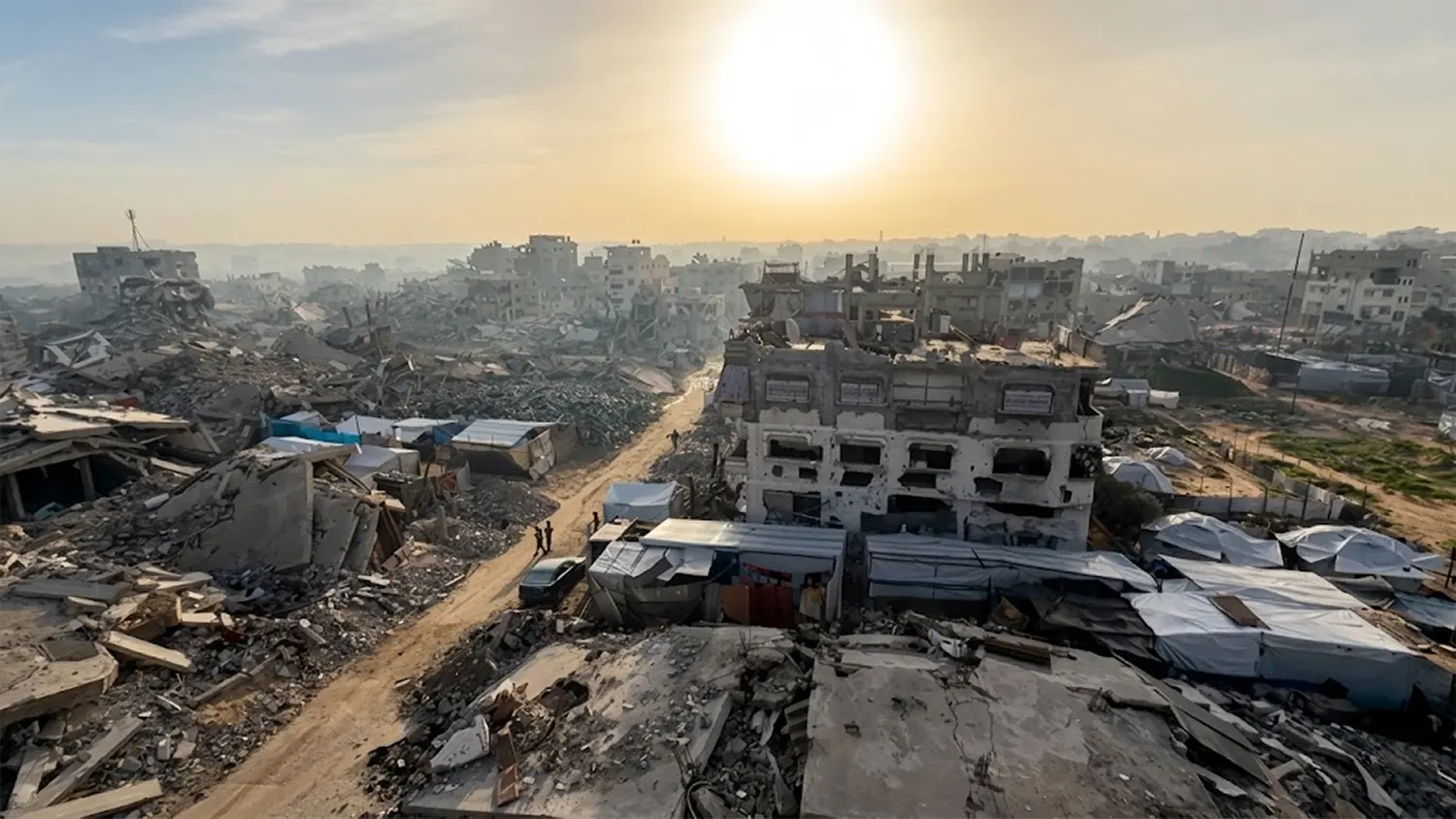
The numbers alone tell a brutal story. Gaza’s population of approximately 2.2 million people nearly all of whom remain trapped inside the strip, with borders sealed to civilian exit is now being systematically pushed into less than a third of the territory. That remaining 30% is not functional land. It is heavily devastated coastline and central encampments, already stripped of basic medical infrastructure, stable food supplies, clean water, electricity, and safe housing.
Between 1.7 and 1.9 million people roughly 90% of the population have already been displaced from their original homes, many of them multiple times as evacuation lines keep shifting westward. Most are now living in tent encampments. Local health authorities report more than 72,000 people killed and over 172,000 injured since hostilities began.
UN human rights officials have described the continued narrowing of civilian safety zones as “unthinkable” under the current blockade conditions. UNICEF warned that compressing this many people into such a small, ruined space will inflict catastrophic suffering on children, who make up a significant share of those trapped in the encampments.
The Mechanics of “Voluntary Migration”
Israeli Defense Minister Israel Katz’s references to a timeline for “voluntary migration” have drawn fierce scrutiny from human rights organizations, who argue the term is deliberately misleading and legally significant in its deception.
Israel has established a dedicated bureau to facilitate emigration, easing travel restrictions specifically for Palestinians willing to take a one-way journey out of Gaza. On paper, it’s voluntary. In practice, human rights groups argue, it is anything but.
The Association for Civil Rights in Israel was direct in its assessment: creating conditions that do not allow for survival, freedom, or dignity and sustaining those conditions until people say they want to leave, is not voluntary emigration. It is, they argue, forced evacuation and expulsion.
The pressure operates through three distinct mechanisms working in tandem. First, bureaucratic channelling, a formal emigration bureau that makes leaving easier than staying. Second, extreme overcrowding compressing over two million people, three-quarters of whom already live in temporary shelters, into an area structurally incapable of sustaining life. Third, buffer zone clearances, intensive airstrikes and armed militias systematically clearing border neighborhoods, pushing families permanently westward toward the coast.
International humanitarian law is unambiguous on this point: the forced displacement or expulsion of a civilian population constitutes a war crime. That legal framing is central to why the international response has been so sharp.
A “Green Zone” Future and Who Gets Left Out
Analysts and regional negotiators point to a parallel plan taking shape behind the scenes. Under what is being described as the “Green Zone” approach, the U.S. and Israel have reportedly discussed limiting future reconstruction to Israeli-controlled areas. Palestinians from the remaining 30% of Gaza would only be permitted entry after being rigorously vetted for ties to militant groups, a process critics say would effectively leave the rest of the territory permanently isolated and uninhabitable.
The combination of territorial seizure, displacement pressure, and a reconstruction framework confined to Israeli-controlled zones has led human rights lawyers and international observers to use a word that carries enormous legal and moral weight: ethnic cleansing.
The International Response: Sharp Words, Fractured Action
Condemnation has come from nearly every direction but it has not translated into unified pressure.
Egypt issued its sharpest warning yet, with intelligence officials urgently contacting the White House to demand the U.S. restrain Netanyahu. Cairo’s concern is explicitly about regional security: forcing millions of Palestinians toward the Egyptian border threatens long-standing treaties and Egypt’s own domestic stability.
The United Nations has gone further than words. Following criticism from UN leadership, Israel’s Ambassador to the UN, Danny Danon, announced that Israel is officially severing ties with UN Secretary-General António Guterres and his office, a diplomatic rupture that signals just how isolated Israel has become from multilateral institutions.
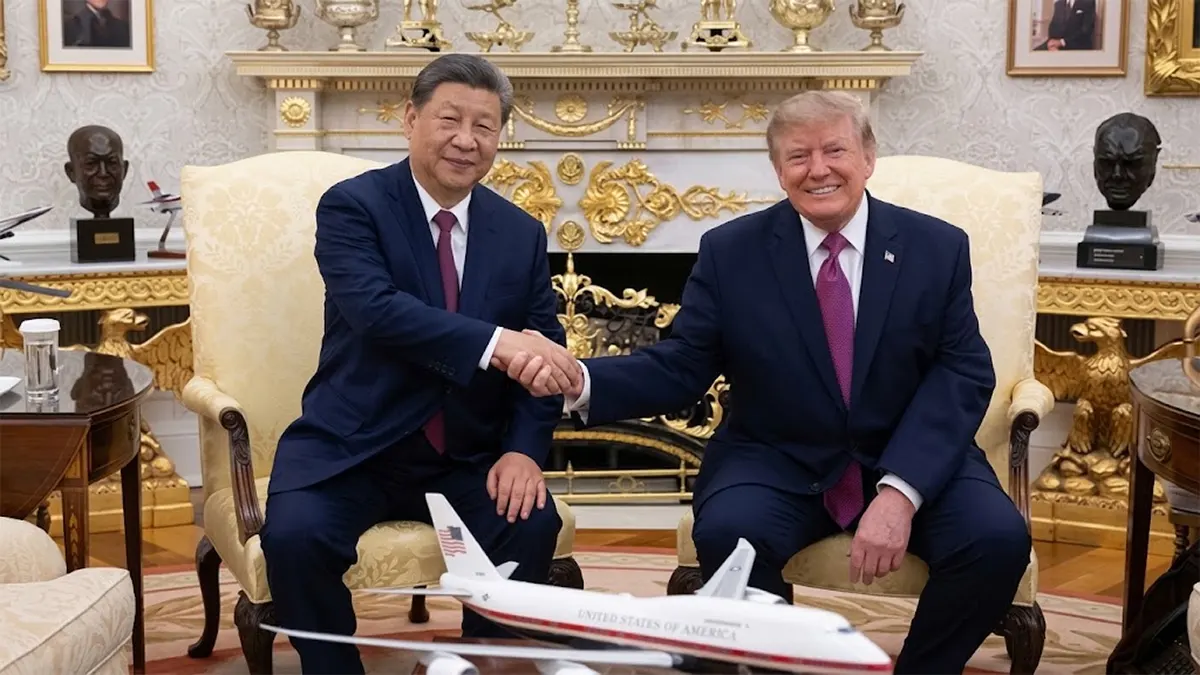
The United States finds itself in an awkward position. The expansion directly contradicts Donald Trump’s 20-point peace plan, which explicitly stated that “no one will be forced to leave Gaza” and established the 53% Yellow Line boundary. The White House has faced criticism for its relative public silence as Netanyahu’s actions dismantle the very U.S. framework meant to govern post-war Gaza.
Germany and the European Union have pushed back strongly against the “voluntary migration” scheme, reiterating that any forced displacement violates international humanitarian law, a position shared across the bloc even as member states struggle to translate that consensus into leverage.
The Domestic Calculation Behind the Decision
For all the international noise, analysts broadly agree that Netanyahu’s directive is as much about Israeli domestic politics as it is about military strategy. With a general election approaching, projecting total military dominance in Gaza plays directly to right-wing voter bases. Demonstrating control and signalling a post-war Gaza reshaped on Israeli terms is a politically potent message at home, even as it implodes diplomatic relationships abroad.
That calculation is precisely what makes the situation so difficult to resolve. The international community is pushing for restraint. Netanyahu’s political survival may depend on ignoring it.
What happens to the 2.2 million people caught in between remains the question no one in power has yet answered.