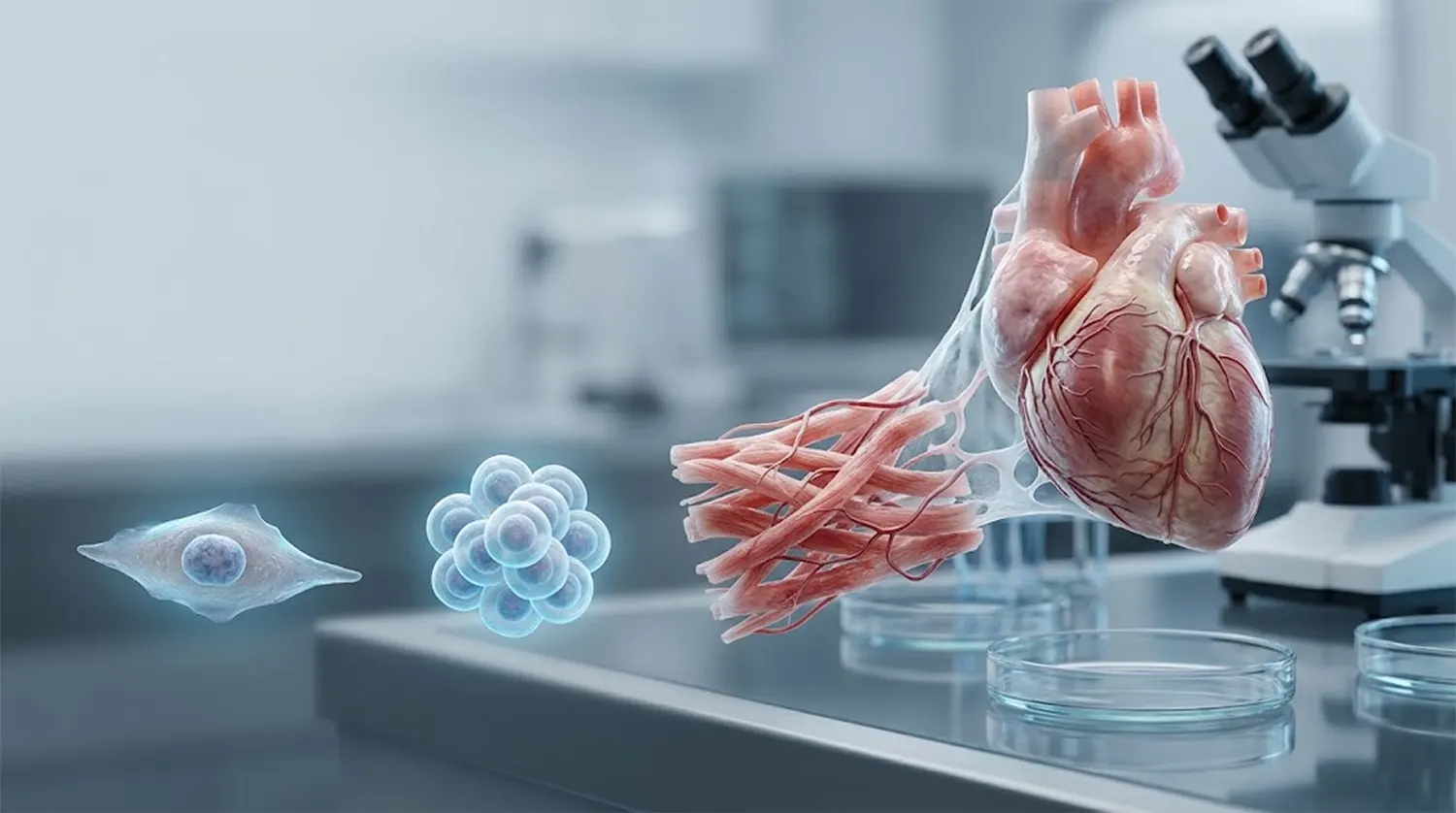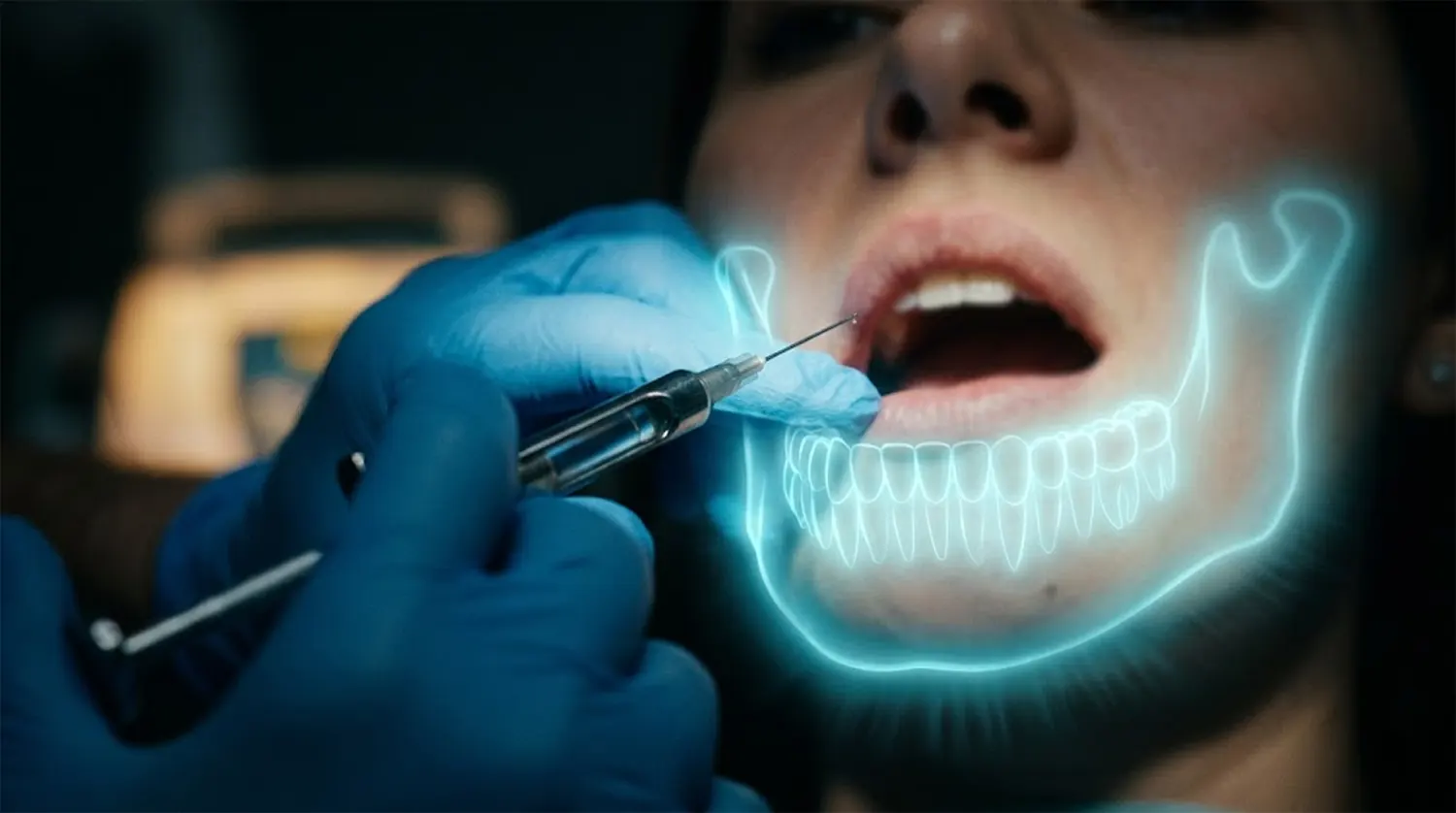
Imagine losing a tooth and being told you don’t need a crown, bridge, or implant just a shot, and your body will grow a new one. It sounds futuristic, but human trials for tooth regrowth are already underway in Japan.
At the center of this breakthrough is a simple but powerful idea: your body may already know how to grow another set of teeth, it’s just being stopped. Researchers have found a way to lift that block, potentially turning a lifelong dental problem into a temporary one.
So why does this matter now? Because if successful, this could become the first true alternative to dentures and implants, fundamentally changing how dentistry works for millions of people worldwide.
The surprising truth: your body still has “backup teeth”
To understand the discovery, you need to picture your teeth not as fixed objects, but as part of a system with hidden potential. Most people grow two sets baby teeth and adult teeth. But scientists now believe many of us carry dormant “third generation” tooth buds deep in our jaws.
The catch is that these buds never activate. They sit quietly, like seeds that never sprout. And for decades, no one knew why.
That’s where the breakthrough comes in. Researchers identified a protein called USAG-1, which acts like a biological stop sign, blocking the signals that would normally trigger tooth growth. In simple terms, your body isn’t incapable, it’s being told not to proceed.
Turning off the “off switch” to restart growth
Once scientists understood the problem, the solution became surprisingly elegant. Instead of forcing the body to grow a tooth artificially, they decided to remove the signal that prevents it from happening.
They developed a specialized antibody drug that essentially “caps” the USAG-1 protein. Think of it like placing tape over a stop sign so the signal disappears. Without that interference, the body’s natural tooth building process switches back on.
At the biological level, this unlocks something called BMP signaling a pathway that tells tissues how to grow. When released, it can activate dormant tooth buds and begin forming a real, natural tooth.
What makes this especially compelling is that the tooth isn’t synthetic. It’s not metal or ceramic. It’s your own tissue, growing exactly where it’s supposed to.
From lab success to real patients
But a theory only matters if it works in real life. And this is where the story gets more concrete.
The treatment has already shown strong results in animal studies, successfully regrowing teeth in mice and ferrets. That success paved the way for human trials, which began in 2024 at Kyoto University Hospital.
The first phase focused on safety. Researchers tested the drug on adults missing at least one tooth. Now, as of 2026, the trials have expanded to children with congenital tooth agenesis, a condition where teeth never develop at all.
This progression is significant. It shows the therapy is moving from “can we do this safely?” to “can we reliably regrow teeth in people who need them most?”
Why this could replace implants altogether
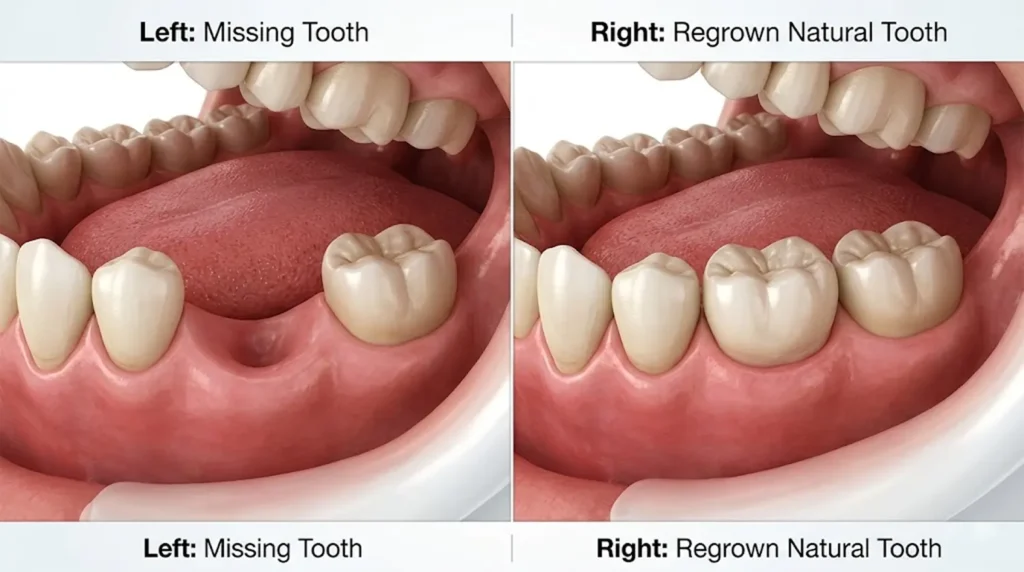
If you’ve ever looked into dental implants, you know they’re effective but far from perfect. They involve surgery, healing time, and sometimes complications. More importantly, they don’t behave like natural teeth.
This new approach flips the model entirely. Instead of installing a replacement, it tells your body to rebuild what’s missing.
In practical terms, that could mean:
- No artificial materials
- No long term maintenance issues
- A tooth that integrates naturally with bone and nerves
It’s why many experts see this as a potential “third option” in dentistry, one that could eventually overtake existing solutions.
your jawbone might not be ready
But there’s an important complication that often gets overlooked. Even if your body can regrow a tooth, it still needs a healthy foundation to grow into.
When a tooth is missing, the surrounding jawbone begins to shrink, a process known as resorption. And it happens faster than most people realize.
Within the first year alone, up to 50% of bone volume in that area can disappear. After that, the loss slows but continues over time.
This creates a practical limitation. If too much bone is gone, a new tooth won’t have enough support. In those cases, patients may still need a bone graft to rebuild the “soil” before the tooth can grow.
How the drug actually works inside the body
Another surprising detail is how the drug is delivered. Instead of being injected directly into the gums, it’s given through an intravenous (IV) infusion.
At first, that seems counterintuitive. But there’s a reason.
The drug is designed like a “smart key” that circulates through your bloodstream, only activating in places where the USAG-1 protein is present. That allows it to reach tiny, hidden tooth buds deep inside the jaw places a local injection might miss.
Interestingly, the drug doesn’t “choose” which tooth to grow. It simply reactivates whatever dormant buds already exist, letting the body decide the rest.
What happens if you already have implants?
This raises an obvious question: what if someone already has a dental implant?
Right now, the answer is complicated. A natural tooth can’t grow in a space already occupied by a titanium screw. So in most cases, the implant would need to be removed before regrowth could happen.
However, researchers are already exploring future solutions. One idea involves hybrid implants with dissolvable components, allowing a natural tooth to gradually replace the artificial one.
It’s still experimental but it shows how quickly this field is evolving.
What scientists still don’t know
For all its promise, this treatment isn’t a finished product yet. There are still important questions that need answers.
For example:
- How consistently can the drug trigger growth in adults?
- Will the new teeth match natural alignment and function perfectly?
- Are there any long term risks from altering growth signals in the body?
These concerns matter because the same biological pathways involved in tooth growth also play roles in other organs. Researchers have worked carefully to limit the effect to the jaw, but long term data is still being collected.
A future where losing a tooth isn’t permanent
Even with those uncertainties, the direction is clear. The research team aims to make the drug widely available by around 2030, assuming trials continue to show positive results.
If that happens, dentistry could shift from repair to regeneration. Losing a tooth might no longer mean replacing it, it could mean simply restarting a natural process your body already understands.
And that brings us back to the original idea. For decades, we’ve treated missing teeth as permanent losses. But this research suggests something different:
The blueprint was never gone. It was just waiting for permission to begin again.