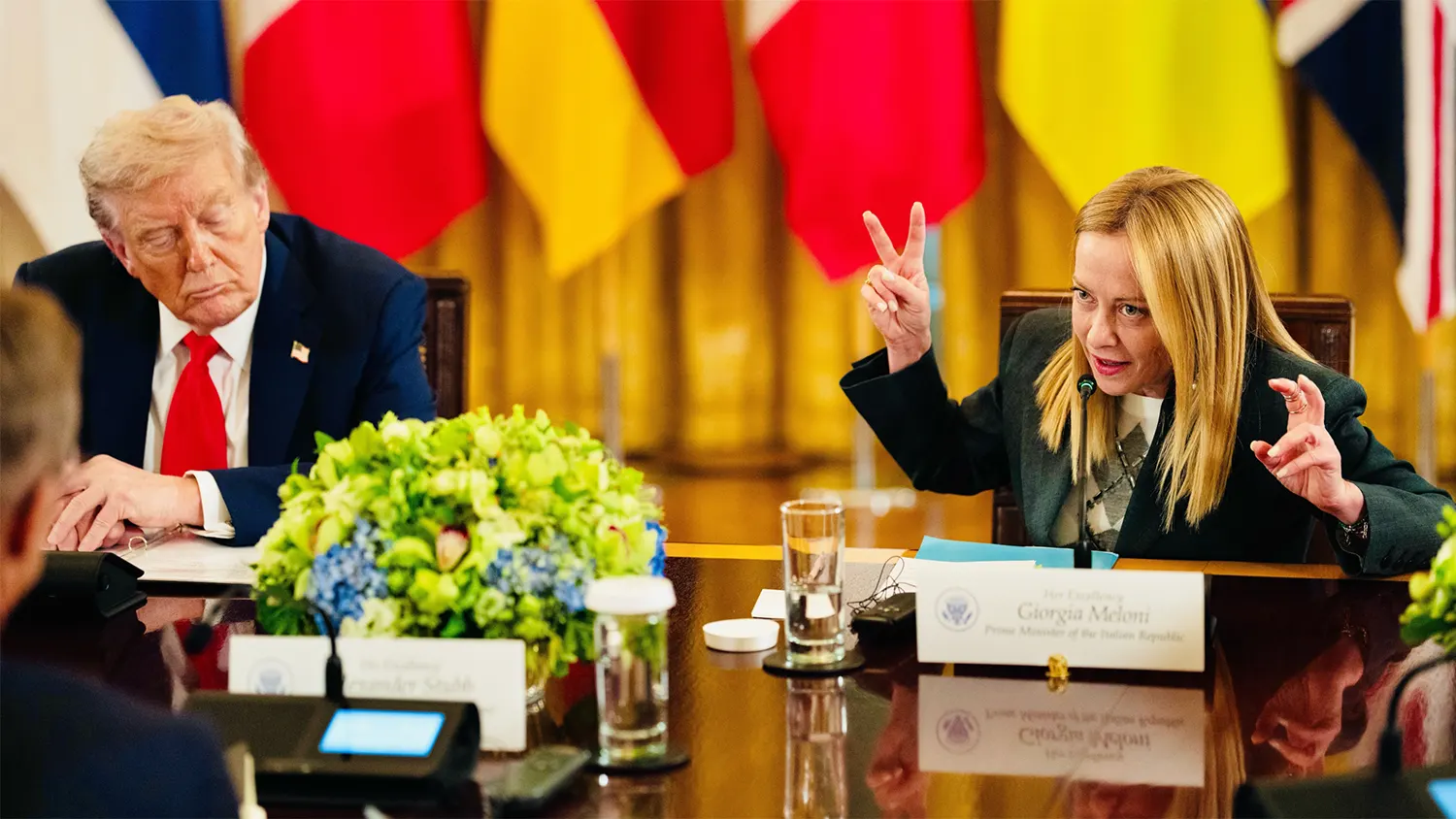
A sudden and sharp diplomatic rupture between the United States and Italy is sending shockwaves through global politics. What was once a close ideological partnership between President Donald Trump and Prime Minister Giorgia Meloni has deteriorated into a public and deeply personal confrontation centered on war, religion, and the future of Western alliances.
At stake is more than a disagreement. This crisis threatens to reshape NATO cohesion, Middle East strategy, and Europe’s relationship with Washington.
War in Iran and Italy’s Refusal
The crisis began with a clear policy divide. Italy has refused to support the U.S.-Israeli military campaign against Iran, marking a major break from expectations within the alliance.
Two decisions triggered the fallout:
- Blocking U.S. military access: Italy denied American bombers permission to use the Sigonella air base in Sicily, a key strategic hub.
- Distancing from escalation: Rome signaled it would not be drawn into a widening regional war.
This was more than a logistical decision, it was a political statement. Italy was asserting independence at a moment when Washington expected alignment.
As a result of this tension, what began as a policy disagreement quickly turned into a personal and ideological clash.
From Allies to Adversaries: The War of Words
The relationship between Trump and Meloni had once been unusually close. She was seen as Washington’s most reliable partner in Europe, even attending Trump’s 2025 inauguration.
That dynamic has now collapsed.
In a blunt interview, Trump expressed a sense of personal betrayal:
“I thought she had courage, I was wrong… Italy wasn’t there for us, we won’t be there for them.”
Meloni, however, drew a firm line when Trump publicly attacked Pope Leo XIV, the first American born pontiff. She called the remarks “unacceptable,” defending the Pope’s anti war stance.
Trump responded just as sharply:
“She’s the one who’s unacceptable.”
What might have remained a policy dispute has now become a deeply personal feud, amplifying the crisis and making compromise more difficult.
The Vatican Factor: A Moral Dimension
The involvement of Pope Leo XIV has added an unexpected and powerful dimension to the conflict.
His vocal opposition to the war has:
- Strengthened anti war sentiment across Europe
- Given Meloni moral and political cover domestically
- Complicated U.S. messaging, especially with an American Pope leading criticism
This shift in narrative from strategy to morality has reshaped the debate. Meloni is no longer just defending policy; she is aligning with a broader call for restraint.
Italy’s Strategic Shift: Toward Neutrality
Behind the rhetoric, Italy is quietly repositioning itself.
In a major move, Meloni:
- Suspended Italy’s defense cooperation agreement with Israel
- Froze joint military projects and intelligence collaboration
- Signaled a move toward “strategic neutrality” in the Middle East
This decision followed multiple triggers:
- A reported incident involving Italian peacekeepers in Lebanon
- Concerns about escalating conflict with Iran
- Growing domestic pressure to avoid deeper military involvement
Taken together, these actions show a clear shift: Italy is stepping back from direct alignment and prioritizing stability over escalation.
Trump’s Warning: “We Won’t Be There for Them”
The most serious escalation came from Trump’s threat to reconsider U.S. defense commitments to Italy.
“Italy wasn’t there for us, we won’t be there for them.”
This statement strikes at the heart of NATO’s Article 5, the principle of collective defense.
While legal experts note that a president cannot easily withdraw from treaty obligations, the rhetoric alone has had immediate consequences:
- Market volatility: Italian bond risk premiums have increased
- Investor uncertainty: Concerns about a weakened security umbrella
- Alliance anxiety: Questions about U.S. reliability as a partner
Even without policy changes, the message itself is destabilizing.
Global Reactions and Political Fallout
Across Europe, the reaction has been cautious but concerned.
Interestingly, within Italy, Trump’s criticism has had the opposite of its intended effect. It has:
- Unified political rivals behind Meloni
- Strengthened her domestic position
- Framed the dispute as one of national sovereignty
Meanwhile, Israel has downplayed the suspension of defense ties publicly, but political figures there have called it a serious diplomatic setback.
The reaction from world capitals has been swift but measured reflecting the sensitive nature of the crisis.
Why This Matters: A Fracture in the Transatlantic Alliance
This is not just a bilateral dispute. It represents one of the most significant strains in the transatlantic alliance since the Iran conflict began.
The implications are far-reaching:
- NATO cohesion is being tested
- U.S.-Europe trust is under pressure
- Middle East strategy is becoming fragmented
At a deeper level, the crisis reflects a broader shift:
Allies are increasingly willing to challenge Washington when national interests diverge.
The Next Phase of the U.S.–Italy Standoff
Despite the heated rhetoric, a full breakdown remains unlikely for now.
The U.S. State Department is reportedly working behind the scenes to contain the damage and preserve institutional ties.
However, the personal relationship between Trump and Meloni appears to be effectively over.
Looking ahead, key developments to watch include:
- Whether the U.S. follows through on tariff or defense threats
- How Italy balances neutrality with alliance obligations
- The broader impact on NATO unity and Middle East policy
The situation remains fluid and potentially volatile.
A Turning Point for U.S.–Europe Relations
The U.S.–Italy dispute highlights how quickly strategic alliances can unravel when politics, personality, and policy collide.
What began as a disagreement over Iran has evolved into a test of loyalty, leadership, and global order.
At its core, this crisis is about more than two leaders, it is about the future of cooperation between allies in an increasingly divided world.