What if your electricity bill and your country’s stability depended on sunlight and wind instead of oil shipments? That’s no longer a distant idea. It’s happening right now, and the shift is faster than many expected.
According to the International Renewable Energy Agency, the world has reached a major turning point. By the end of 2025, renewable energy made up nearly 50% of global power capacity, putting clean energy on the edge of becoming the dominant source.
That might sound like a technical milestone. But in reality, it affects something much closer to home how reliable, affordable, and secure your energy is.
The moment clean energy stopped being “alternative”
For years, renewable energy was seen as a backup plan. Something for the future. Something “nice to have.” But that view is quickly fading.
In 2025 alone, the world added a record 692 gigawatts of renewable power, with solar energy leading the way. In simple terms, that’s like building hundreds of large power plants in a single year powered by the sun and wind.
Even more striking, over 85% of all new power capacity came from renewables. Fossil fuels are no longer leading the expansion they’re falling behind.
Think of it like smartphones replacing landlines. At first, they were optional. Then suddenly, they became the standard.
But the real story isn’t just about growth. It’s about who is driving it and who is being left behind.
Why a few countries are powering most of the change
Right now, most of the renewable boom is concentrated in a handful of places.
China alone added 440 gigawatts of clean energy in one year, making it the clear leader. Together with the United States and Europe, these regions account for nearly 80% of global growth.
That creates what experts call a “two speed world.” Some countries are racing ahead with clean, stable energy. Others are still heavily dependent on imported oil and gas.
In parts of Africa, for example, renewable growth is rising quickly. But it still represents only a tiny share of global capacity, despite the continent having some of the best solar potential on Earth.
This gap matters more than ever. Because energy today isn’t just about the environment
it’s about survival.
When energy becomes a matter of national security
The importance of this shift became clear in early 2026, when tensions in the Middle East disrupted one of the world’s most critical energy routes.
The closure of the Strait of Hormuz cut off a huge portion of global oil and gas supply. Almost overnight, energy prices surged.
Oil prices climbed above $140 per barrel, and some countries faced immediate shortages. For nations that rely heavily on imported fuel, the impact was severe higher electricity bills, factory shutdowns, and economic strain.
But not every country was hit the same way.
The quiet advantage of “homegrown” energy
Some regions weathered the crisis far better than others. Why? Because their energy doesn’t rely on ships, pipelines, or global politics.
Countries with strong renewable systems especially in parts of Europe and China have what experts call “energy independence”. Their power comes from local sources like sunlight and wind.
That means no shipping delays. No blocked routes. No sudden price spikes tied to global conflicts.
As IRENA Director General Francesco La Camera put it, renewable energy acts as a “strategic buffer” a built in protection against global disruptions.
It’s a bit like growing your own food during a supply shortage. You’re less exposed to what’s happening outside your borders.
But this advantage is also changing how governments think about the future.
A new energy strategy: smaller, smarter, safer
In response to recent disruptions, countries are rethinking how they build their energy systems.
Instead of relying on large, centralized power plants, many are shifting toward smaller, decentralized networks known as microgrids. These systems can operate independently, making them harder to disrupt.
At the same time, there’s a growing focus on energy storage especially large batteries
that can store power for later use. This helps solve one of the biggest challenges of renewables: what happens when the sun isn’t shining or the wind isn’t blowing.
These changes are happening fast. In fact, investment in energy storage has doubled in just six months, driven by concerns over grid stability and security.
But while governments play a major role, this transition also connects directly to everyday life.
What this shift means for you
The move toward renewable energy isn’t just a global trend, it’s something you may
already be experiencing.
If your electricity comes from solar or wind, you’re likely seeing more stable prices over time. If not, you may feel the impact of rising fuel costs more sharply.
Even small changes like rooftop solar panels or community energy projects are part of a larger shift toward local, self reliant power systems.
And while not everyone can install solar panels, there are simple ways to be part of the transition:
- Support energy efficient appliances
- Reduce unnecessary energy use
- Choose renewable energy plans where available
These steps may seem small. But collectively, they help reduce dependence on fragile global systems.
A turning point that’s already underway
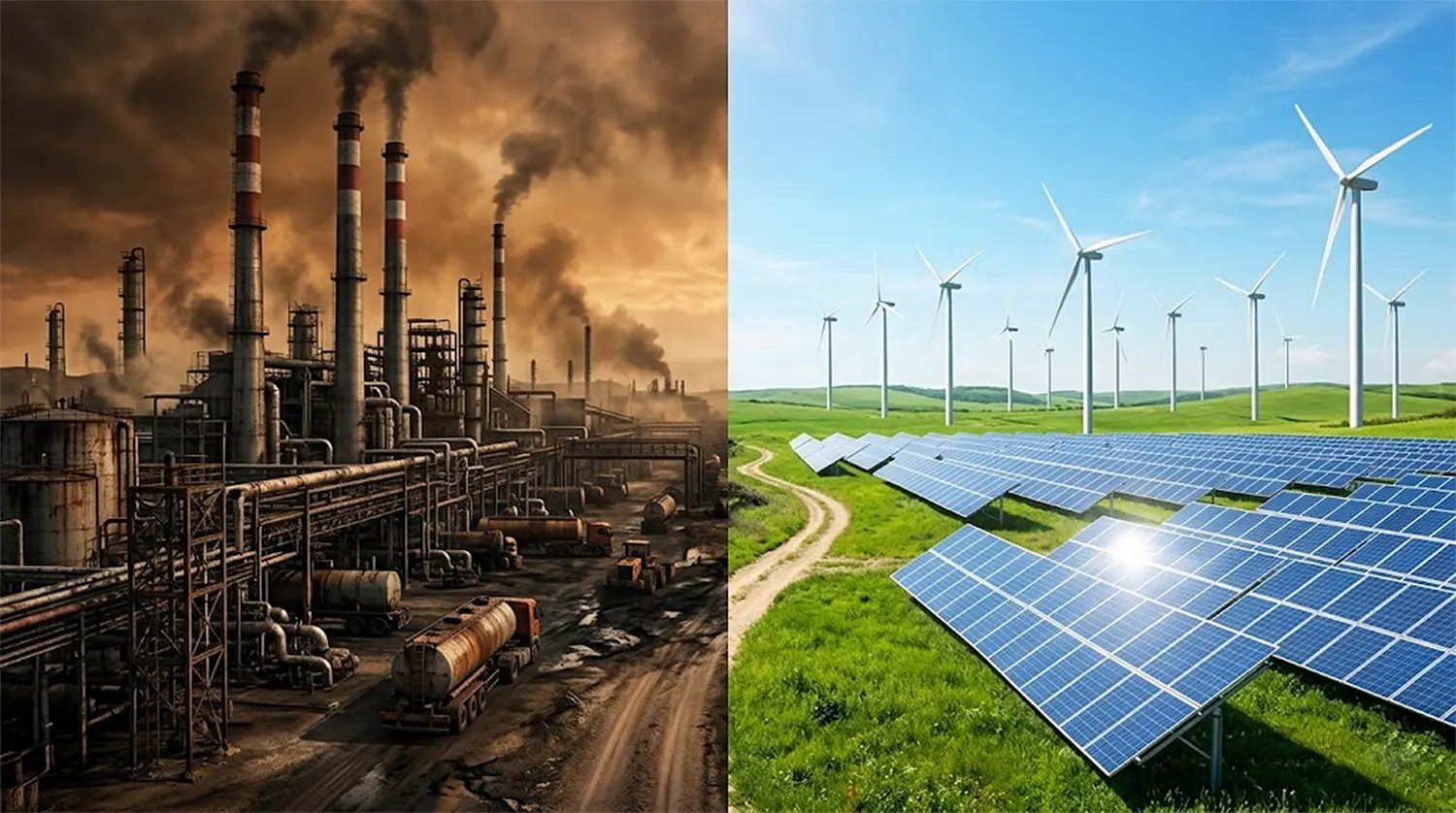
The world is standing at a crossroads. On one side is an energy system shaped by global tensions and limited resources. On the other is one built on renewable, local, and resilient power.
The shift is no longer theoretical. With nearly half of global capacity now renewable, the transition is already in motion.
And as recent events have shown, the question is no longer just about saving the planet. It’s about building a system that can withstand uncertainty.
Because in a world where supply chains can break overnight, the most reliable energy might be the kind that’s been there all along, the sun above us and the wind around us.