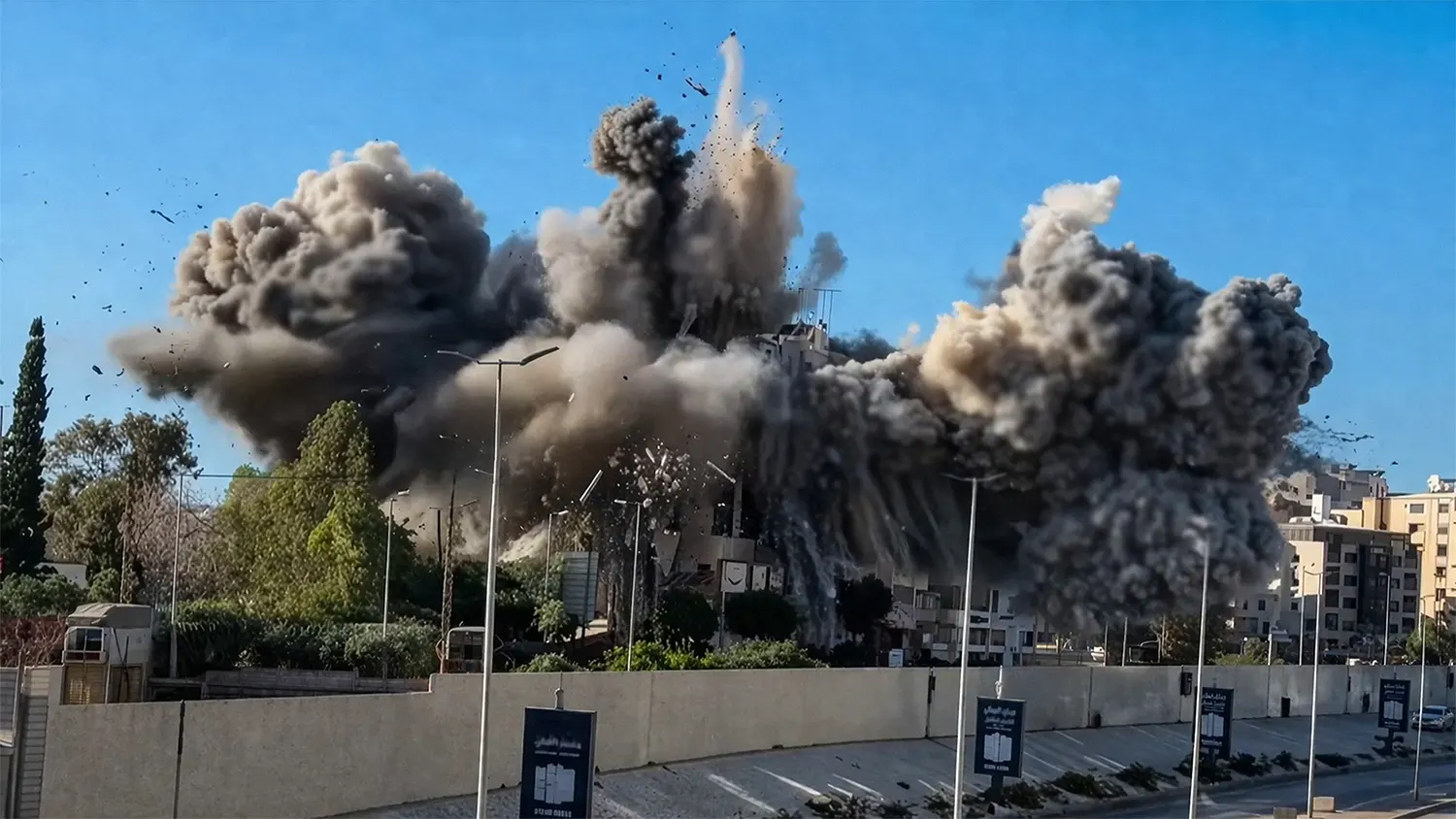
On April 3, 2026, an Israeli strike in Beirut killed a top Hezbollah commander, as fighting intensified across Lebanon, marking a major escalation in the war and raising fears of a widening regional conflict.
This latest development signals a turning point. What began as a border confrontation is now evolving into something broader and more dangerous. With high level assassinations, expanding ground operations, and international tensions rising, the conflict is entering a more volatile phase that could reshape the region.
A high profile killing shifts the battlefield dynamic
The strike targeted a building in Beirut’s Jnah district, killing Hajj Youssef Ismail Hashem, Hezbollah’s Southern Front commander, one of the group’s most senior military figures.
Lebanese officials confirmed at least eight people were killed and dozens wounded, but the strategic impact goes far beyond the immediate casualties. Hashem was not just another commander. He was widely seen as a “tier one” figure with decades of operational experience.
“He was central to rebuilding Hezbollah’s capabilities after earlier losses,” said a regional security expert. “Removing him disrupts both command and continuity.”
What makes this strike even more notable is how it was carried out. Israeli officials indicated the attack was launched from the sea, suggesting naval involvement that bypassed Hezbollah’s local surveillance systems.
That detail matters. It signals a shift in tactics, one designed to catch even well prepared defenses off guard.
Hezbollah responds with one of its largest barrages
The response was swift and forceful. Within hours of confirming Hashem’s death, Hezbollah launched more than 150 rockets and drones into northern Israel.
Most were intercepted. But several struck populated areas, including Kiryat Shmona, causing fires and damage to civilian infrastructure.
This was not just retaliation, it was a signal. Hezbollah’s leadership made clear that the Beirut strike crossed a line. In doing so, the group hinted at a willingness to expand the scope and intensity of its attacks.
“What we’re seeing is a loosening of previous constraints,” said a military analyst based in Tel Aviv. “The rules of engagement are shifting.”
That shift raises a critical question: how far both sides are willing to go.
A broader offensive is already underway
At the same time, Israel has intensified operations across southern Lebanon. In the past
24 hours alone, the military has struck more than 200 targets, focusing on border villages and suspected Hezbollah positions.
Since the renewed conflict began on March 2, Israeli forces have hit over 3,500 sites, according to official statements.
Israeli Defense Minister Israel Katz has reiterated a clear objective: to establish a “security zone” extending toward the Litani River, covering nearly 10% of Lebanese territory.
This aligns directly with the earlier buffer zone plan. But what makes this moment different is execution. The strategy is no longer theoretical, it is being implemented alongside sustained military pressure.
And as operations expand, so too does the human cost.
Displacement surges as the humanitarian crisis deepens
The number of displaced people in Lebanon has now reached 1.2 million, a staggering figure in a country already facing economic and political strain.
At the same time, the death toll since early March has climbed past 1,300 people, according to Lebanese authorities.
These numbers reflect more than the scale of fighting. They highlight a deeper transformation in the conflict, one where civilian displacement is becoming a defining feature, not just a consequence.
“Once displacement reaches this level, it changes the nature of the war,” said a humanitarian official working in Beirut. “It becomes a long term crisis, not a temporary emergency.”
That reality is now feeding into political tensions inside Lebanon itself.
Internal divisions in Lebanon are becoming harder to contain
The strike and its aftermath have intensified divisions within Lebanon’s political landscape. The government recently moved to ban Hezbollah’s military activities, a decision the group has rejected outright.
This tension reflects a broader struggle over authority. Some factions are pushing to reassert state control. Others argue that Hezbollah remains essential for defense.
“The country is being pulled in two directions,” said a Beirut based political analyst. “One toward state sovereignty, the other toward entrenched armed power.”
As the conflict escalates, that internal divide risks becoming even more pronounced especially under the strain of mass displacement.
But the pressure is not limited to Lebanon.
Global reactions reveal a fractured international response
The international reaction has been swift but far from unified.
At the United Nations, divisions are clear. France and China have called for immediate action to protect peacekeepers, following incidents involving UNIFIL forces. China has warned that “Lebanon must not become another Gaza.”
The United States has taken a more cautious stance, urging further investigation while continuing to emphasize Lebanon’s sovereignty and regional stability.
Across Europe, a coalition of countries has expressed alarm at the scale of the escalation. At the same time, they have reiterated a dual position: support for Israel’s right to self defense and concern over proportionality and civilian impact.
Meanwhile, Arab states including Saudi Arabia, Qatar, and Egypt have voiced support for the Lebanese government, while pointing to Iran’s role in driving regional instability.
Russia, by contrast, has framed the situation as the result of “U.S. and Israeli aggression,” highlighting how geopolitical narratives continue to diverge.
Even the Vatican has entered the conversation. Pope Leo has called for an “off ramp,” warning of a growing humanitarian catastrophe.
A conflict increasingly tied to a wider regional war
What makes this moment especially volatile is its connection to broader regional tensions. The conflict is no longer isolated.
Following the killing of Iran’s Supreme Leader earlier this year, what some analysts now describe as an “Iran war” is unfolding across multiple fronts.
Hezbollah’s actions are closely linked to that wider dynamic. And there are growing concerns that other groups including Houthi forces and Iraqi militias could become
more directly involved.
“This is no longer just Israel and Hezbollah,” said a regional affairs expert. “It’s part of a much larger confrontation taking shape across the Middle East.”
That broader context raises the stakes significantly.
A turning point with no clear off ramp
Taken together, the assassination of a senior commander, the scale of retaliation, and the expansion of military operations mark a clear escalation.
High level targeting, mass displacement, and shifting rules of engagement are now defining features of the conflict.
At the same time, diplomatic pathways appear increasingly narrow. Calls for ceasefire and restraint continue but so far, they have failed to slow events on the ground.
And that leaves a stark reality.
What began as a localized conflict is now moving toward something far more complex,
a prolonged, multi layered crisis with regional consequences.
As the fighting intensifies, the line between tactical moves and long term outcomes is beginning to blur.
And once that line disappears, it becomes much harder to draw it again.