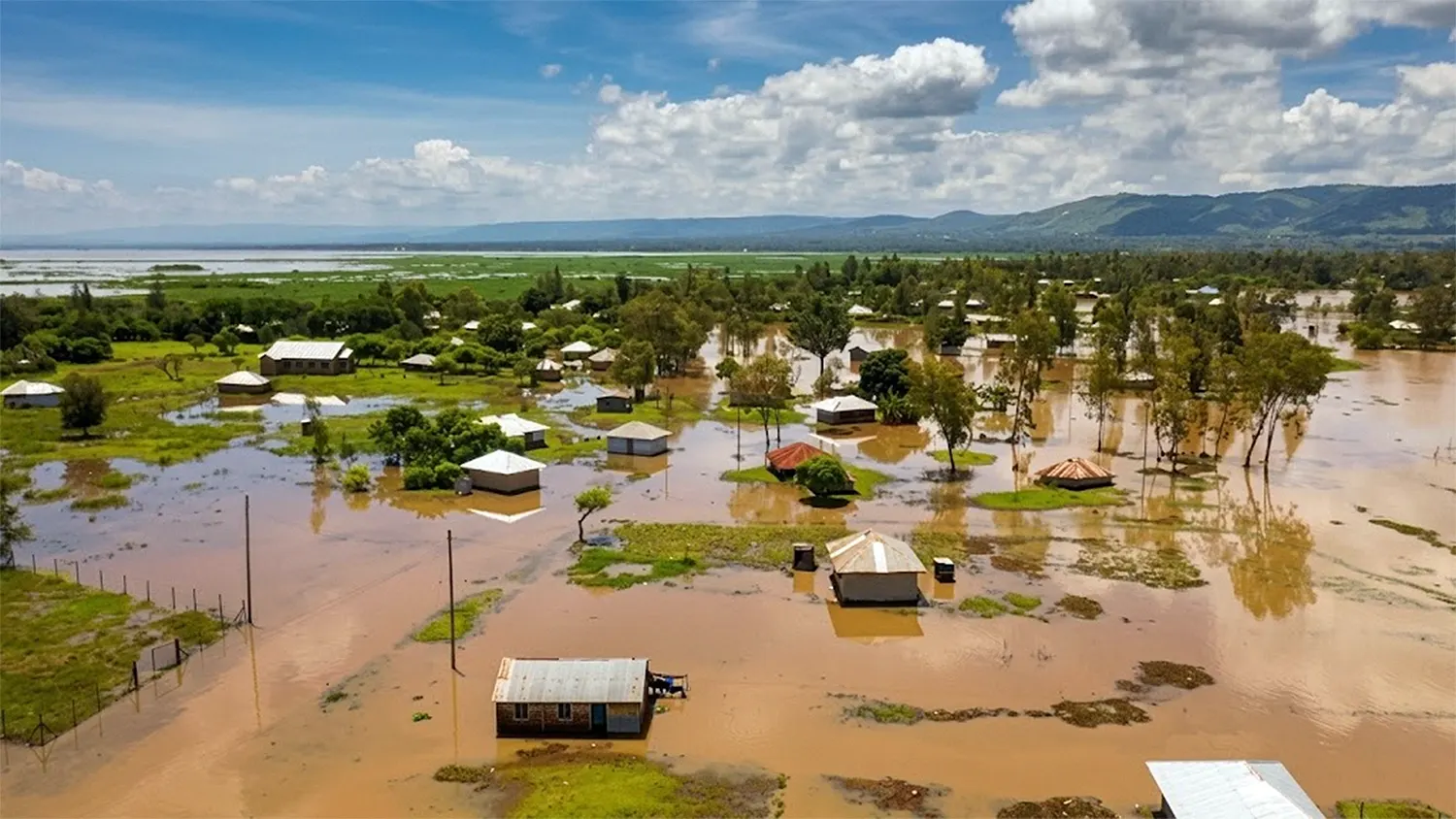
Flash flooding in Kenya has escalated into a full scale humanitarian emergency, with the official death toll rising to 88 people as of late March 2026. What began as seasonal rainfall has rapidly evolved into a nationwide crisis, displacing tens of thousands and crippling infrastructure across multiple regions.
The situation remains volatile as the “Long Rains” season continues, bringing persistent rainfall, swelling rivers, and growing risks to life and property.
A Worsening Humanitarian Emergency
To understand the scale of the disaster, consider the human impact first. More than 34,150 people approximately 2,690 families have been displaced across 21 counties. Many have sought shelter in churches, schools, and temporary evacuation centers, often with limited access to clean water and sanitation.
Beyond displacement, livelihoods are being wiped out. Thousands of livestock have perished, and vast areas of farmland remain submerged. Early estimates place economic losses at over $24 million (KES 3.2 billion), a figure expected to rise as the rains persist.
Nairobi has emerged as the epicenter, accounting for 37 deaths, with informal settlements particularly vulnerable. These densely populated areas, often located along waterways, are suffering the worst due to poor drainage and flooding of urban streams.
Infrastructure Collapse and Rising Isolation
Beyond the immediate devastation, critical infrastructure is failing under pressure.
Major rivers including the Nyando and Tana have burst their banks, flooding entire communities.
One of the most alarming incidents involves the Ahero Bridge, which has been submerged after the Nyando River overflowed. This has effectively cut off the vital Kericho–Awasi–Kisumu transport corridor, disrupting trade, emergency response, and daily movement.
In urban centers, key highways such as Mombasa Road and Uhuru Highway have turned into waterways, stranding motorists and halting economic activity. Meanwhile, 21 counties have been officially designated as severely affected zones, highlighting the nationwide scope of the crisis.
Rescue Operations in Overdrive
In response, authorities have shifted from monitoring to active emergency operations. Multi-agency teams including the Kenya Red Cross are conducting large scale rescue missions.
In one dramatic operation, over 900 students were evacuated from Ahero Girls National School, underscoring the urgency of the situation. Search-and-rescue efforts continue in flood-prone regions, often under dangerous conditions.
However, resources are stretched thin, and access to some areas remains limited due to damaged roads and rising water levels.
Why the Flooding Is So Severe
This raises a critical question: why has this year’s flooding been so destructive?
The answer lies in a convergence of environmental and human factors.
1. Extreme Weather and “Climate Whiplash”
Kenya’s Long Rains season (March–May) has delivered far above average rainfall.
In early March alone, Nairobi recorded 112mm of rain in just 24 hours more than its typical monthly total.
Scientists describe this pattern as “climate whiplash”, a rapid shift from prolonged drought (2020–2023) to intense flooding. The soil hardened by years of dryness, now behaves like concrete, preventing absorption and accelerating runoff.
Additionally, a warming atmosphere holds more moisture about 7% more per 1°C
increase leading to heavier, more sudden downpours.
2. Urban Planning Failures
While the rain is the trigger, urban design has amplified the disaster.
- Construction on riparian land (areas near rivers) has removed natural flood buffers
- Outdated drainage systems, often clogged with plastic waste, cannot handle current volumes
- Rapid urbanization has outpaced infrastructure development
As a result, water has nowhere to go but into homes and streets.
3. Environmental Degradation
Deforestation in key areas such as the Mau Forest Complex has reduced the land’s ability to absorb and slow water flow. This accelerates runoff into rivers, increasing the likelihood of flooding downstream.
4. Overwhelmed Rivers and Dams
Major rivers including the Nyando, Tana, and Sosiani have exceeded capacity. At the same time, hydroelectric dams are nearing spillage levels, forcing authorities to consider controlled releases that could flood downstream communities.
Forecast: The Danger Is Far From Over
According to the Kenya Meteorological Department, the peak intensity of rainfall may ease by March 30. However, this does not signal safety.
Moderate to heavy rains are expected to continue through June, particularly in:
- The Lake Victoria Basin
- Highlands west of the Rift Valley
- Nairobi metropolitan area
More concerning is the “saturated ground effect” even light rain now triggers instant flooding and landslides, especially in hilly regions like the Aberdare ranges and Mt. Kenya.
Public Safety: Critical Actions to Take
Authorities have issued urgent advisories to reduce further casualties:
For Motorists
- Avoid flooded roads entirely, especially at night
- Water depth and current strength are often impossible to judge
For Residents in High Risk Areas
- Move immediately from low lying or river adjacent areas
- Prepare for possible dam water releases
During Storms
- Avoid tall objects and metal structures
- Unplug electronics and avoid running water indoors
Health Precautions
- Boil all drinking water to prevent cholera and typhoid
- Avoid contact with contaminated floodwaters
A critical reminder: just 15 cm of fast moving water can knock an adult off their feet, and 30 cm can carry away a vehicle.
Emergency Contacts and Resources
For immediate assistance:
- Kenya Red Cross Hotline: 1199
- Mombasa Emergency Line: 1599
- Real-time updates: @KenyaRedCross on X (Twitter)
These services are vital for rescue coordination, missing persons reports, and evacuation guidance.
A Crisis Demanding Urgent Action
In summary, Kenya’s flooding crisis is not just a natural disaster, it is the result of a complex interplay between climate extremes, environmental degradation, and urban vulnerability.
As rains continue and risks compound, the window for preventive action is narrowing. Authorities face mounting pressure to clear drainage systems, enforce land-use regulations, and strengthen disaster preparedness.
For now, the priority remains clear: saving lives, supporting displaced communities, and navigating the days ahead with caution and resilience.