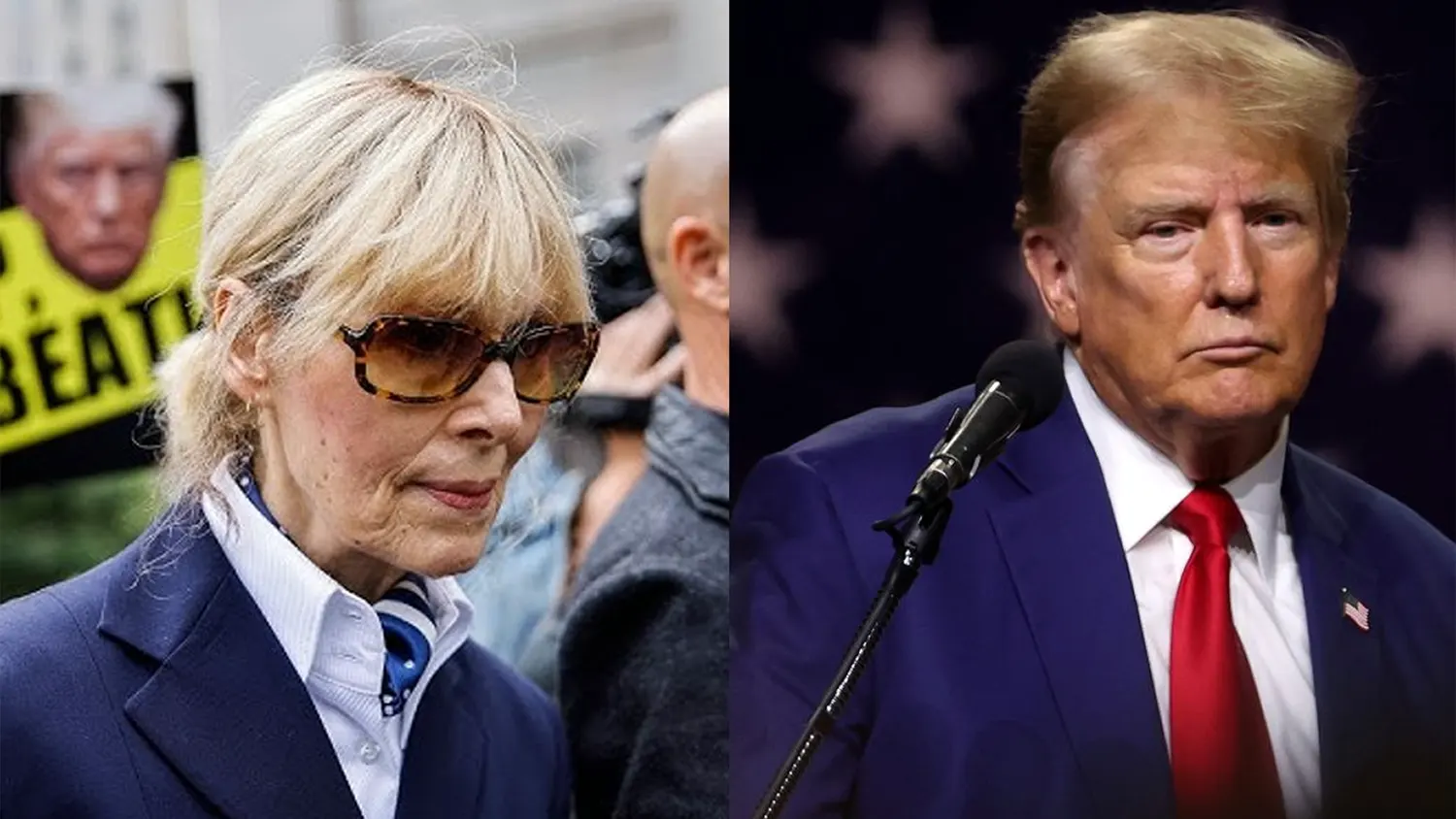
A federal appeals court has upheld the massive $83.3 million defamation judgment against former President Donald Trump, delivering another major legal setback in one of the most closely watched civil cases tied to his post-presidency conduct.
The ruling keeps intact a jury’s decision that Trump maliciously defamed writer and journalist E. Jean Carroll after she publicly accused him of sexually assaulting her in the 1990s.
More than just a financial penalty, the decision sends a broader legal message:
even former presidents are not shielded from accountability when courts determine they knowingly used public platforms to spread false and damaging statements.
The Appeals Court Said the Jury’s Verdict Was Fully Justified
In a unanimous decision issued by a three-judge panel of the 2nd U.S. Circuit Court of Appeals, the court rejected every major argument raised by Trump’s legal team.
The judges ruled that the original damages award was legally sound and supported by extensive evidence presented during trial.
“The record supports a finding that Mr. Trump’s conduct was remarkably high, perhaps unprecedented, in its reprehensibility,” the panel wrote in its opinion.
The ruling preserves the full $83.3 million judgment awarded to Carroll earlier this year, including:
- $18.3 million in compensatory damages
- $65 million in punitive damages
The punitive portion was particularly significant because jurors concluded Trump continued attacking Carroll publicly even after previous court rulings had already found him liable for defamation and sexual abuse.
The appeals court agreed that the repeated nature of those attacks justified the unusually large penalty.
A Case That Began With a Public Denial Escalated Into a Landmark Legal Fight
The legal battle traces back to 2019, when Carroll publicly accused Trump of sexually assaulting her in a Manhattan department store dressing room during the mid-1990s.
Trump denied the allegation repeatedly while serving as president, claiming he had never met Carroll and accusing her of fabricating the story for publicity despite photographic evidence showing the two together.
He also made multiple statements attacking Carroll personally, including comments about her credibility, motives, and mental health.
Carroll responded by filing a defamation lawsuit, arguing that Trump’s statements damaged her reputation and exposed her to widespread harassment.
The dispute escalated dramatically in 2023 when a separate civil jury found Trump liable for sexual abuse and defamation, awarding Carroll $5 million in damages.
That verdict laid the foundation for the second trial in January 2024, the case now upheld by the appeals court which focused specifically on Trump’s continued public attacks after the first ruling.
Jurors ultimately concluded that Trump acted with clear malice and intentionally continued harming Carroll despite already being found liable in court.
Trump’s Immunity and Free Speech Defenses Failed
Trump’s legal team attempted to overturn the verdict using several constitutional and procedural arguments.
Among them:
- Claims of presidential immunity
- Arguments that the damages were excessive
- Assertions that Trump’s remarks qualified as protected political speech under the First Amendment
The appeals court rejected all of them.
The judges ruled that presidential immunity does not protect defamatory statements unrelated to official presidential duties. The court also found that Trump’s comments fell outside ordinary protected political speech because jurors concluded the statements were knowingly false and intended to discredit a private citizen.
“This case is not about political speech protected by the First Amendment,” the opinion stated. “It is about knowingly false statements made with the intent to punish and discredit a private citizen.”
That distinction could carry major implications beyond this case.
Legal analysts say the ruling reinforces the idea that public officials including presidents can still face personal liability when courts determine they knowingly spread false information to damage private individuals.
The Decision Adds to Trump’s Growing Legal Pressures
The ruling arrives during a politically sensitive period for Trump, who continues facing multiple criminal and civil legal battles while remaining central to Republican politics.
Those cases include:
- Federal charges involving classified documents
- Election interference charges in Georgia
- Civil fraud rulings connected to his business empire in New York
While Trump has frequently portrayed the investigations and lawsuits as politically motivated attacks, the cumulative legal pressure is becoming increasingly difficult to separate from the broader political environment surrounding his public image.
Political analysts note that while legal controversies often energize Trump’s core supporters, repeated findings of liability and misconduct may weigh more heavily on independent and undecided voters.
“The image of a candidate repeatedly found liable for defamation and abuse becomes politically difficult over time,” one political strategist noted following the ruling.
That dynamic could become especially important as legal proceedings continue intersecting with the national political landscape.
The Case Could Become a Lasting Legal Precedent
Legal scholars say the significance of the ruling extends far beyond the individuals involved.
The decision may help establish stronger precedent around accountability for defamatory conduct carried out through social media platforms and public influence campaigns particularly by powerful public figures.
In recent years, courts have increasingly confronted cases involving online harassment, reputational attacks, and coordinated disinformation amplified by digital platforms.
This ruling signals that courts may be willing to impose severe financial penalties when juries conclude such behavior was intentional and malicious.
For Carroll, the decision represents another major courtroom victory after years of litigation and public scrutiny.
For Trump, it narrows his remaining legal options considerably. His attorneys are expected to seek review from the U.S. Supreme Court, though legal experts say such appeals are rarely accepted when lower courts have issued consistent rulings supported by extensive findings.
Unless the Supreme Court intervenes, Carroll’s legal team can now move toward enforcing the judgment.
And beyond the money itself, the ruling leaves behind something potentially more enduring:
a formal judicial finding that one of America’s most powerful political figures repeatedly used false public attacks to punish an accuser and that the law still applies even at the highest levels of power.