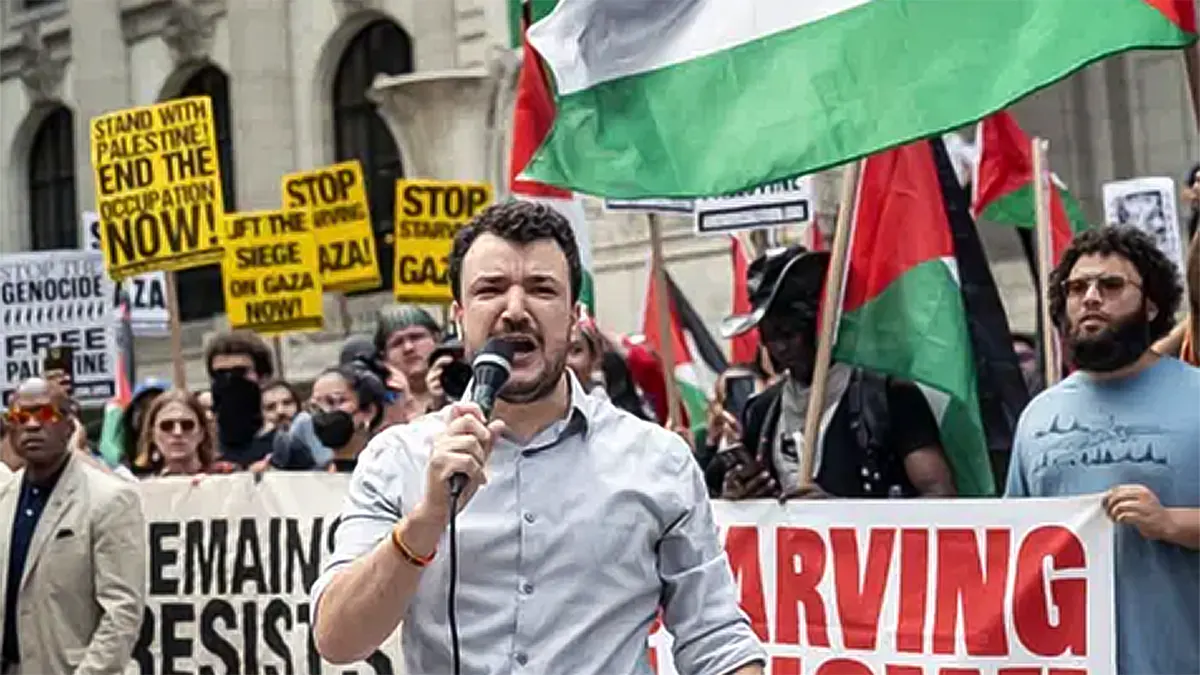
A federal immigration ruling ordering the deportation of pro-Palestinian activist Mahmoud Khalil has sparked a fierce national debate over immigration law, political activism, and free speech rights in the United States.
The case has quickly become one of the most closely watched legal battles involving student activism and immigration enforcement, with civil rights groups warning that the outcome could have lasting consequences for political expression on college campuses.
Columbia Activist at the Center of National Controversy
Khalil, originally from Syria and holding Algerian citizenship, gained national attention during his time at Columbia University for his outspoken support of Palestinian rights.
He served as a lead negotiator for the Columbia University Apartheid Divest movement, a student-led campaign that pushed the university to divest from companies linked to Israel.
Supporters viewed Khalil as a prominent advocate for human rights and free expression. Critics, however, argued that some of the movement’s rhetoric crossed political and ethical lines, making him a controversial figure during a period of intense campus protests across the United States.
Judge Orders Deportation Over Green Card Disclosures
On September 12, Immigration Judge Jamee Comans ordered Khalil’s deportation to either Algeria or Syria.
According to court filings, the ruling centered on allegations that Khalil failed to fully disclose information during his green card application process.
The government claims Khalil omitted details about:
- An internship with the United Nations Relief and Works Agency (UNRWA)
- His involvement with the Columbia University Apartheid Divest group
The judge argued that Khalil should have understood the importance of including that information because of his educational background and experience.
Court documents stated that the omissions appeared to be a deliberate attempt to bypass immigration requirements.
Legal Team Calls the Case Political Retaliation
Khalil’s lawyers strongly rejected the accusations and said the deportation effort is politically motivated.
Attorneys from the American Civil Liberties Union and the Center for Constitutional Rights argue that immigration law is being used to punish Khalil for his political activism and public criticism of U.S. foreign policy.
The legal team plans to appeal the decision before the Board of Immigration Appeals.
They also claim the immigration proceedings moved too quickly and failed to provide proper due process protections.
According to the defense, the government is attempting to silence a political activist after earlier deportation efforts failed in federal court.
Earlier Deportation Attempt Was Blocked
This is not the first time the government has tried to remove Khalil from the country.
Earlier this year, U.S. District Judge Michael Farbiarz blocked a separate deportation attempt tied to foreign policy concerns.
At the time, Farbiarz questioned whether the government’s actions amounted to unconstitutional retaliation against protected political speech.
That earlier ruling intensified national attention around the case and helped turn Khalil into a symbol in the broader debate over free speech protections for immigrant activists.
Political and Civil Rights Debate Intensifies
The deportation order has triggered strong reactions from across the political spectrum.
In a public statement, Khalil accused the Trump administration of using “fascist tactics” and turning immigration court into a political weapon after previous efforts to deport him were unsuccessful.
Civil rights organizations warn the case could create a chilling effect for immigrant activists, particularly students involved in politically sensitive causes.
Many advocates fear the ruling could discourage non-citizens from participating in protests, activism, or public political debate out of concern that immigration consequences could follow.
At the same time, supporters of the deportation order argue that the issue is about legal compliance rather than free speech.
They maintain that all immigration applicants must provide complete and truthful information regardless of their political beliefs or activism.
A Case With National Implications
As the appeal process moves forward, the Khalil case continues to raise difficult questions about the balance between immigration enforcement and constitutional protections.
Legal experts say the outcome could shape future cases involving immigrant activists, student protest movements, and the limits of government authority when political speech becomes entangled with immigration law.
The case also reflects the growing tensions surrounding campus activism, national security concerns, and the role of free expression in an increasingly polarized political climate.