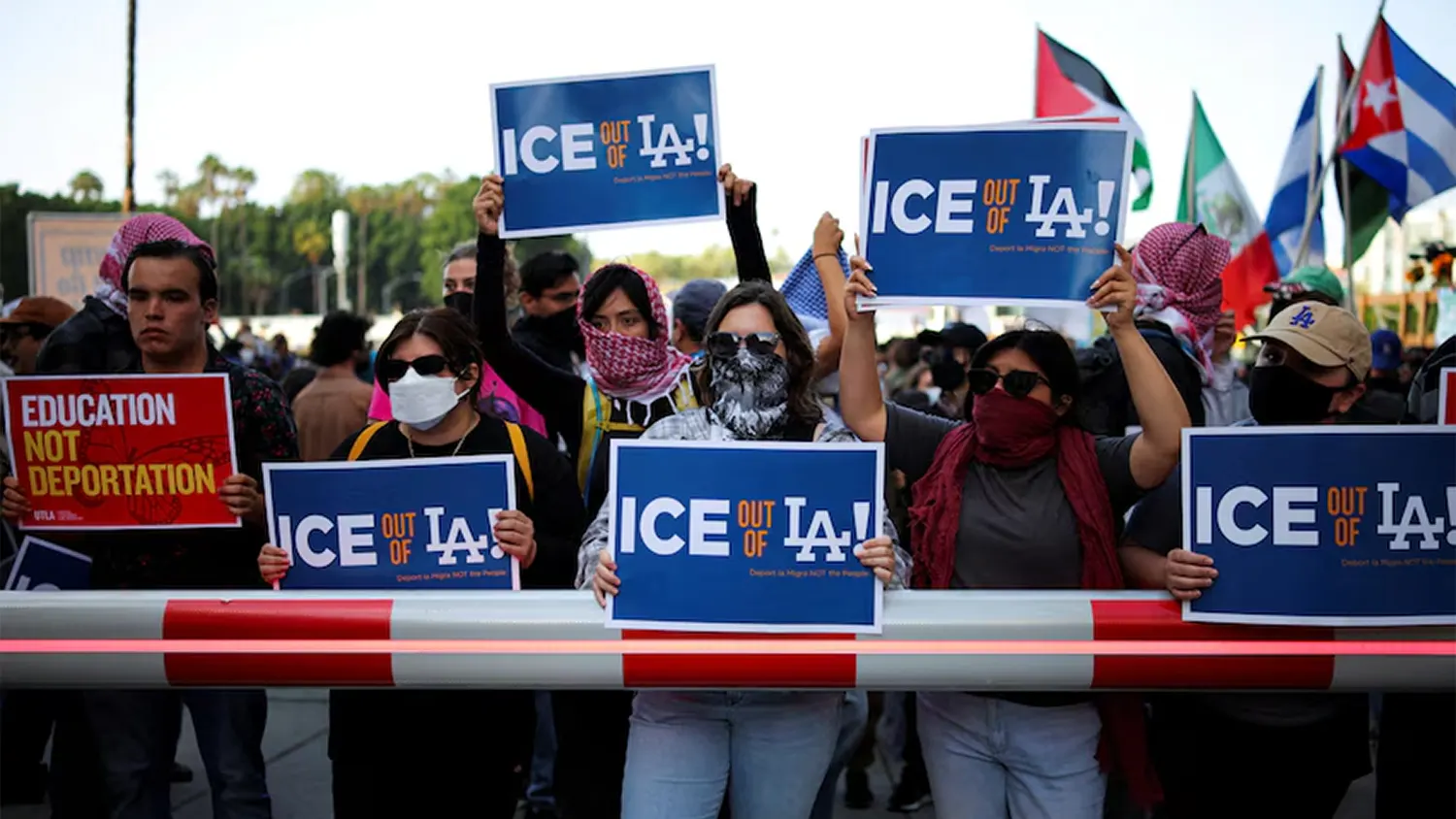
A recent U.S. Supreme Court decision has reignited tensions over immigration enforcement in Los Angeles, leaving many immigrant families worried about what comes next.
In a 6-3 ruling issued on September 9, 2025, the court lifted a temporary block on aggressive immigration operations in the city, allowing federal agents to resume controversial enforcement tactics.
Supporters of the decision say it strengthens immigration law enforcement. Critics argue it opens the door to racial profiling, unconstitutional stops, and widespread fear inside immigrant communities.
The ruling has quickly become one of the most politically charged immigration battles in the country.
Supreme Court Sides With Federal Immigration Enforcement
The decision overturned a lower court order that had temporarily restricted certain immigration enforcement practices in Los Angeles.
Earlier, U.S. District Judge Maame Ewusi-Mensah Frimpong ruled that federal agents appeared to be targeting people based on appearance, language, and type of work rather than clear evidence of immigration violations.
Her injunction cited what she described as a “mountain of evidence” showing unconstitutional stops and detentions.
The case eventually reached the U.S. Supreme Court, where the conservative majority sided with the federal government.
Justice Brett Kavanaugh argued that immigration agents have broad authority under federal law to question individuals about their immigration status. According to the ruling, brief questioning by agents does not necessarily violate constitutional protections.
However, critics say the court ignored the real-life impact such operations can have on immigrant communities.
Sotomayor Warns of “Papers, Please” Policing
In a strongly worded dissent, Justice Sonia Sotomayor warned that the ruling could give federal agents too much unchecked power.
She argued the decision would allow authorities to stop and detain people based largely on factors such as their accent, appearance, or manual labor jobs.
Sotomayor described the danger of creating a “papers, please” environment where Latino communities could face constant suspicion.
Her dissent quickly gained attention nationwide, especially among civil rights groups and immigration advocates who viewed her comments as a direct acknowledgment of the fears many immigrant families already face daily.
Los Angeles Leaders Condemn the Decision
The reaction from California leaders was immediate.
Karen Bass called the ruling “dangerous” and “un American,” warning that it could damage trust between immigrant communities and local institutions.
Meanwhile, Gavin Newsom described the decision as an “abhorrent attack on Californians.”
For many residents, the ruling revived memories of previous immigration crackdowns that targeted workplaces, neighborhoods, and public areas.
Community leaders fear that aggressive enforcement operations could discourage immigrants from reporting crimes, seeking healthcare, or sending children to school out of fear of deportation.
Fear Grows Inside Immigrant Communities
Across Los Angeles, anxiety is growing among immigrant families, especially within Latino neighborhoods.
Advocates say many residents are already preparing for possible raids and detentions.
Civil rights organizations, including the American Civil Liberties Union of Southern California, have accused federal authorities of promoting what they describe as a discriminatory deportation strategy.
In response, community groups are expanding legal aid services, organizing rapid-response teams, and holding “know your rights” workshops to help residents understand what to do during encounters with immigration officers.
For many families, the fear goes beyond deportation itself. The possibility of family separation, job loss, and community disruption has created a growing sense of uncertainty throughout the city.
Federal Government Defends the Ruling
The Department of Homeland Security welcomed the Supreme Court’s decision, calling it a victory for the “rule of law.”
Federal officials argued that the lower court’s restrictions interfered with immigration enforcement efforts and public safety operations.
The department also signaled plans to increase immigration enforcement activities in sanctuary cities, including Los Angeles and Chicago.
Critics, however, argue that linking immigration enforcement to crime prevention unfairly targets immigrant communities and fuels public fear.
The broader political debate over immigration enforcement remains deeply divided across the United States, especially ahead of the upcoming election cycle.
Legal Fight Is Far From Over
Although the Supreme Court ruling allows immigration operations to continue for now, the legal battle is not finished.
Civil rights groups are expected to return to lower courts with new evidence and additional constitutional challenges tied to future enforcement actions.
Meanwhile, advocacy organizations across California are preparing for what could become another major legal and political confrontation over immigration policy.
As federal authorities expand operations and local leaders push back, Los Angeles is once again at the center of America’s immigration debate.
For millions of immigrants and their families, the Supreme Court’s decision is more than a legal ruling, it is a moment that could shape daily life, community trust, and civil rights protections for years to come.