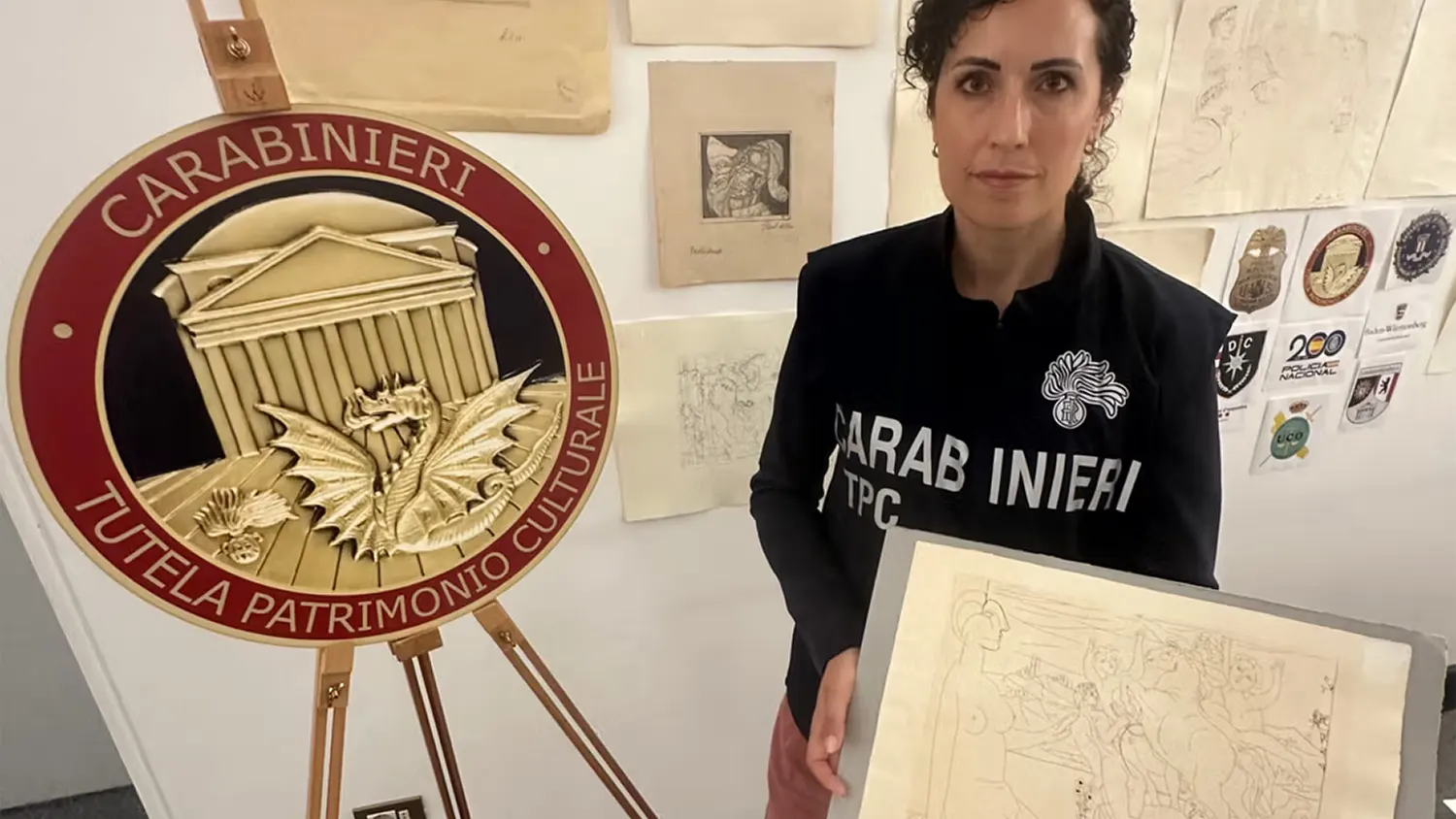
A major art fraud case is shaking confidence in the global art market. Italian authorities have uncovered a large scale art forgery operation, recovering more than 100 fake works including forged pieces attributed to Pablo Picasso sold through a European auction network.
The investigation highlights a growing risk: even trusted platforms are not immune to sophisticated art fraud schemes.
“Minotauro bis” Investigation Exposes Cross Border Network
The operation, known as “Minotauro bis,” was led by Italian police and quickly expanded beyond national borders.
Authorities traced the forged artworks to multiple countries, including Germany and Austria. Several fake pieces were reportedly sold through an auction house in Stuttgart, raising concerns about vulnerabilities in established art market channels.
The case also led to the discovery of a secret production site in Rome, where counterfeit works were being created and prepared for sale.
This cross border dimension shows how art crime has evolved into a highly coordinated international business.
Fake Picasso Prints at the Center of the Scheme
At the heart of the scandal are forged prints from Picasso’s famous “Suite Vollard,” a collection of 100 etchings from the 1930s.
Investigators recovered multiple fake versions of these highly valuable prints, which are considered prime targets for forgery due to their market demand and historical value.
Authorities had previously intercepted additional forged prints before they reached buyers, suggesting the scale of the operation may be even larger than currently known.
The presence of these fakes in reputable sales channels raises serious questions about authentication processes in the art world.
How the Forgeries Were Made
The suspected mastermind, an Italian national believed to be a trained art restorer used advanced techniques to produce convincing replicas.
According to investigators, the process included:
- Creating fake watermarks to mimic original paper
- Using scanned images of authentic artworks
- Artificially aging materials with substances like coffee or tea
- Applying forged signatures to complete the illusion
These methods allowed the counterfeit works to pass as genuine, making detection difficult without expert analysis.
This level of detail reflects a troubling trend: art forgery is becoming increasingly technical and harder to detect.
A Lucrative and Expanding Criminal Market
The scale of the operation underscores how profitable art forgery has become.
Authorities seized 104 counterfeit artworks and froze financial assets, including bank accounts and vehicles. The investigation, which began in 2022, suggests the network had been operating for years.
In addition to Picasso, the Rome based lab is believed to have produced fake works attributed to artists like Edvard Munch and Paul Klee.
This broad scope highlights the global demand for high value art and the opportunities it creates for fraud.
Final Thoughts
The “Minotauro bis” case is a wake up call for the art world.
Even respected auction houses and galleries can be exposed to highly sophisticated forgery networks, putting collectors at risk.
For buyers, the lesson is clear: thorough verification and expert authentication are no longer optional they are essential.
As the market grows more complex, vigilance and due diligence will be key to protecting both investments and the integrity of the global art industry.