
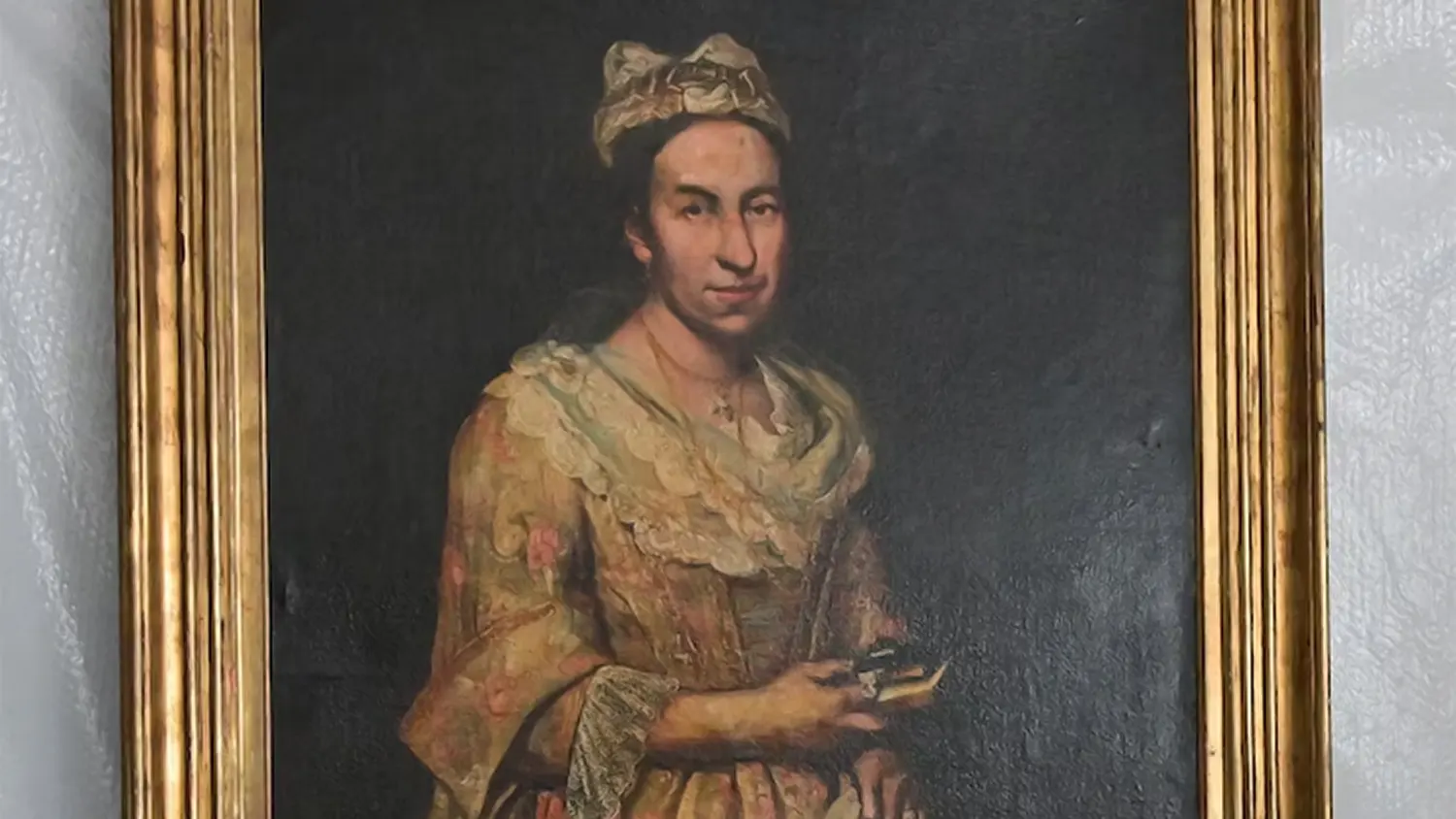
Nobody expected a property listing to crack one of history’s longest running art crime cases. But tucked inside an online real estate advertisement for a home in Mar del Plata, Argentina, was something that stopped a team of Dutch investigative journalists cold an 18th century Italian masterpiece, hanging casually above a living room couch, that had been missing since World War II.
The painting, Portrait of a Lady by Giuseppe Ghislandi the Italian master known as Fra Galgario had not been seen publicly in eight decades. It was last documented as part of the celebrated collection of Jacques Goudstikker, a prominent Dutch-Jewish art dealer whose entire life’s work was torn away when the Nazis invaded the Netherlands in 1940.
How a Scroll Through a Property Listing Broke the Case
The journalists were already deep into research on Friedrich Kadgien, a high ranking Nazi financial officer with a known history of art looting. When they came across the real estate photos, they recognized the portrait immediately from Goudstikker’s archived collection records.
They alerted international authorities without delay. Within hours of their inquiry, the photos were quietly pulled from the listing, a telling sign that whoever lived there knew exactly what they had, and knew the attention it would attract.
From Amsterdam’s Finest Gallery to Nazi Hands
Before the war, Jacques Goudstikker ran one of Europe’s most respected art dealerships out of Amsterdam. When Nazi forces invaded the Netherlands in 1940, he was forced to flee overnight, leaving everything behind. He never made it to safety, he died in a shipwreck during the escape.
With Goudstikker gone, the Nazis moved in and systematically stripped his collection of over 1,000 artworks. Senior Nazi officials, including Hermann Göring, personally handpicked pieces for themselves. Portrait of a Lady is believed to have been taken by Kadgien, who later used forged identity documents to slip into Argentina after the war one of many Nazi war criminals who found refuge there under false names.
Argentine Authorities Moved Fast But Not Fast Enough
Once journalists handed over their findings, Argentine federal authorities launched an immediate investigation, zeroing in on properties connected to Kadgien’s descendants. But by the time they secured a warrant and reached the Mar del Plata home, the painting had already been taken down and hidden somewhere inside.
The occupants Kadgien’s daughter and her husband were placed under house arrest. After negotiations, their lawyer handed the artwork over to the state voluntarily.
An independent art expert who examined the piece confirmed it is the authentic Fra Galgario original, and described it as in “remarkably good condition” given everything it had been through. The painting is now secured in a climate-controlled government facility while legal proceedings finalize its transfer back to the Goudstikker heirs.
A Family’s Decades-Long Fight, Finally Rewarded
For the Goudstikker family, this recovery is more than legal vindication, it is deeply personal. They have spent years campaigning to reclaim what was stolen, and have now successfully recovered more than 200 works from the original collection.
But hundreds more remain missing, scattered across private collections and storage rooms around the world their whereabouts unknown, their histories buried.
A representative from a European art restitution committee captured the weight of the moment: the case, they said, proves that persistent historical research combined with the reach of the digital age can still deliver justice, even eight decades after the crime was committed.
The Portrait That Outlasted the People Who Stole It
Portrait of a Lady has traveled a remarkable and painful road from the studio of an 18th-century Italian master, to the walls of one of Amsterdam’s finest galleries, to the hands of a Nazi looter, to a quiet home on Argentina’s Atlantic coast, and now, finally, back toward the family it was taken from.
Its return will not undo the horrors of what happened to Goudstikker and the millions of others who suffered under Nazi occupation. But it is a small, hard-won measure of justice proof that some stolen things can still find their way home.