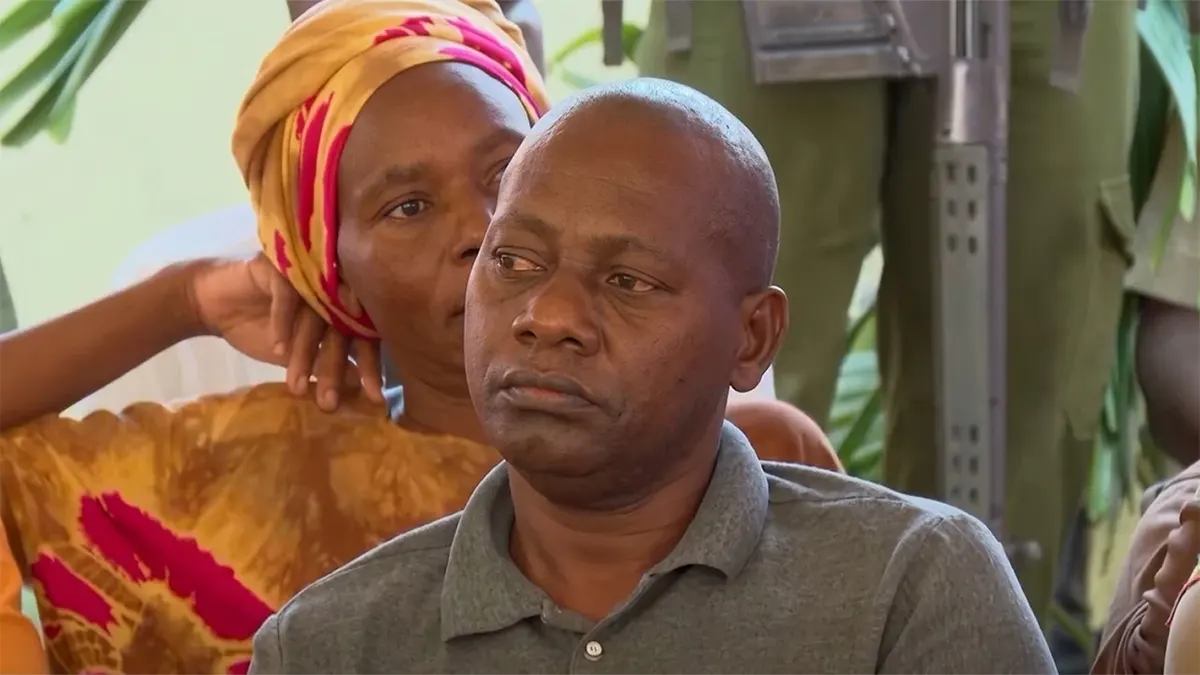
Kenyan preacher Paul Nthenge Mackenzie, whose followers died after being instructed to starve themselves to reach heaven, has been convicted of manslaughter over the deaths of 123 people in the Shakahola Forest massacre. The November 27 ruling adds to a series of convictions against the founder of Good News International Church, who is already serving a 200-year prison sentence for murdering 190 children and one adult.
The latest verdict, delivered at the Mombasa Law Courts, also found 29 other defendants guilty of manslaughter-related charges, including Mackenzie’s wife, Rhoda Mumbua. The convictions mark another major development in one of Kenya’s most devastating cases involving religious extremism and mass deaths.
The Shakahola tragedy came to international attention in April 2023, when Kenyan authorities began uncovering mass graves in a remote forest in Kilifi County. Investigators eventually recovered more than 400 bodies, many belonging to followers of Mackenzie’s religious movement.
Court proceedings have since revealed how an organized system of religious indoctrination, enforced fasting, and violence contributed to the deaths of hundreds of people over several years.
Mackenzie Convicted of Manslaughter Over 123 Deaths
On November 27, 2026, High Court Judge Alex Ithuku delivered the latest verdict in the Shakahola manslaughter case, finding Mackenzie guilty over the deaths of 123 adult followers who were encouraged to starve themselves as part of an alleged religious programme.
The ruling also covered dozens of other defendants who were accused of participating in or facilitating the fasting system.
According to the court findings, 18 defendants, including Mackenzie, were convicted on 123 counts of manslaughter each. Another 10 defendants were convicted on 104 counts each, while Mackenzie’s wife, Rhoda Mumbua Maweu, was found guilty of one count involving the death of an adult follower.
The court also acquitted 60 defendants of all charges. Sentencing for those convicted in the manslaughter case remains pending.
The prosecution established that Mackenzie played a central role in directing the fasting programme, determining the order in which followers were expected to die, and moving members to isolated locations where the activities could continue away from public scrutiny.
The verdict followed an extensive investigation into deaths that occurred between January 2021 and September 2023.
Separate 200-Year Sentence for the Murder of 190 Children
The manslaughter conviction is separate from an earlier murder case in which Mackenzie received 200 years in prison on November 6, 2026.
In that case, the Mombasa High Court found him guilty of murdering 191 people, including 190 children and one adult.
The sentence consisted of two consecutive 100-year terms: one for murder by starvation and another for direct homicide involving children.
The court found that the children were deliberately targeted first in the fasting programme. Those who cried for food, attempted to eat or resisted the instructions were reportedly beaten, confined, or subjected to other forms of violence.
Twenty-eight co-defendants were also convicted in the murder case, receiving prison sentences that varied according to their involvement. One additional defendant, Enos Amanya Ngala, had entered a guilty plea and received a separate sentence.
The court concluded that the deaths were not simply the result of voluntary religious fasting but involved an organized system of coercion and violence.
The distinction between the murder and manslaughter cases reflects the different circumstances and legal responsibility established for the victims.
How the Good News International Church Became a Doomsday Movement
Background: The rise of Paul Mackenzie’s religious movement
Mackenzie founded Good News International Ministries in 2003 in Malindi, a coastal town in southeastern Kenya. Before becoming a preacher, he worked as a taxi driver.
Initially operating as a small religious congregation, the ministry gradually attracted a larger following through Mackenzie’s sermons and increasingly extreme teachings about the end of the world.
The movement expanded its reach through religious broadcasts and media platforms. In 2012, it registered Good News Media, which operated a television station known as Times TV.
However, concerns about Mackenzie’s teachings began attracting the attention of Kenyan authorities.
He was arrested in 2017 and faced allegations involving radicalization, operating an unauthorized school, and encouraging parents to deny children access to education and healthcare. His church also faced scrutiny over its broadcasting activities.
In 2019, Mackenzie announced the closure of his church in Malindi. Instead, he and hundreds of followers relocated to Shakahola Forest, an isolated area within Chakama Ranch in Kilifi County.
The move created an increasingly secluded religious community, where followers became separated from ordinary social institutions and outside scrutiny.
Apocalyptic Teachings Encouraged Followers to Reject Modern Life
At the center of Mackenzie’s movement was an extreme interpretation of Christian end-times prophecy.
He reportedly convinced followers that the world was approaching its end and that abandoning ordinary life was necessary to prepare for the return of Jesus Christ.
His teachings promoted the rejection of several institutions and practices, including:
- Formal education: Followers were discouraged from sending their children to school.
- Modern medicine: Medical treatment was portrayed as incompatible with religious teachings.
- Government identification: National identification documents were rejected as symbols associated with the biblical mark of the beast.
- Entertainment and modern culture: Sports, music, and other secular activities were discouraged.
- Outside institutions: Followers were encouraged to distance themselves from organizations and authorities that challenged Mackenzie’s teachings.
The Kenya National Commission on Human Rights (KNCHR) documented how the ministry developed from its founding in 2003 into an isolated community following its relocation to Shakahola in 2019.
According to the commission, religious indoctrination and the fasting system intensified after the relocation, with followers being instructed to die in a predetermined sequence.
The Shakahola Forest Fasting Programme: Children Were Ordered to Die First
One of the most disturbing findings in the court proceedings was the organized nature of the starvation programme.
According to the prosecution and judicial findings, the practice began around January 2021, considerably earlier than the discovery of the mass graves in April 2023.
Followers were allegedly instructed to fast until death so they could meet Jesus before the anticipated end of the world.
The programme followed a deliberate sequence.
1. Children were targeted first
Parents were instructed to stop feeding their children. Children who cried from hunger or attempted to obtain food were reportedly beaten, locked inside huts, or prevented from receiving assistance.
Enforcers allegedly patrolled the settlements to ensure that nobody secretly provided food or water.
2. Women were instructed to fast next
After the children had died, women, including mothers, were expected to begin fasting. This stage formed part of the wider programme designed to bring the community closer to what Mackenzie described as their passage to heaven.
3. Adult men were expected to die last
Men were scheduled to follow the women. Mackenzie reportedly told followers that he would be the last person to die, allowing him to oversee their spiritual journey.
Court findings established that this was not simply a collection of individual decisions to undertake religious fasting. Investigators presented evidence of an organized hierarchy involving religious leaders, village officials, security enforcers, and people responsible for burying the dead.
Violence and Forced Starvation Contributed to Hundreds of Deaths
Although starvation was a major cause of death, investigators also uncovered evidence of physical violence against followers who resisted the programme.
Autopsies and forensic investigations identified victims who had suffered injuries consistent with strangulation, asphyxiation, and blunt-force trauma.
Children were among those particularly vulnerable to abuse. Prosecutors presented evidence that some were beaten, confined, or prevented from escaping when they attempted to resist the fasting instructions.
The court’s findings in the murder case established that the deaths of the 190 children and one adult involved deliberate criminal conduct rather than voluntary participation in a religious practice.
The discovery of mass graves in April 2023 exposed the scale of the tragedy. Authorities eventually recovered 448 bodies from Shakahola, according to reporting on the investigation, although the full number of people believed to have died in connection with Mackenzie’s movement remains uncertain.
Around 30 Associates Also Convicted in Separate Trials
Mackenzie was not the only person prosecuted over the Shakahola deaths.
Investigators identified a network of followers and associates who allegedly helped enforce the fasting programme, control the settlements, and prevent members from escaping.
Several groups of defendants were prosecuted across separate cases in Mombasa and surrounding courts.
The November 6 murder judgment resulted in convictions for Mackenzie and 28 co-accused over the deaths of 191 people.
The November 27 manslaughter judgment produced another set of convictions involving Mackenzie and 29 co-defendants, including his wife, Rhoda Mumbua.
In addition, separate proceedings addressed child cruelty, assault, radicalization, and terrorism-related offences.
On November 25, Mackenzie was convicted of five counts of cruelty to children and one count of assault causing actual bodily harm. Eleven followers were also charged alongside him in the children’s case, while 24 other defendants were acquitted.
He was also convicted of terrorism-related and radicalization offences in a separate proceeding. Sentencing for the additional offences was scheduled for December 2026.
The multiple proceedings reflect the different categories of alleged crimes uncovered during investigations into the deaths.
What Happened to the Shakahola Survivors?
Not everyone who entered the forest died.
During the 2023 search operations, authorities rescued dozens of severely malnourished followers. Many were found in critical physical condition after prolonged periods without adequate food and water.
Their recovery presented serious medical and psychological challenges.
Some survivors initially resisted food and medical treatment because of the religious indoctrination they had experienced.
Survivors Were Initially Charged With Attempted Suicide
One particularly controversial development occurred in June 2023, when Kenyan prosecutors brought attempted suicide charges against 65 rescued survivors.
The charges followed reports that the survivors had refused meals while staying at a rescue facility in Mtwapa.
The move attracted criticism from human rights organizations, particularly the Kenya National Commission on Human Rights.
The commission argued that prosecuting people who had survived prolonged starvation risked further traumatizing victims who needed medical treatment, psychological support, and rehabilitation.
It called for the withdrawal of the charges and urged authorities to prioritize survivor welfare rather than treating the rescued individuals as criminals.
Medical Treatment and Reintegration Remain Major Challenges
Survivors faced several obstacles as they attempted to rebuild their lives.
These included:
- Physical recovery: Severe malnutrition and dehydration required medical treatment and continued monitoring.
- Psychological rehabilitation: Survivors needed counseling to address the effects of prolonged indoctrination and trauma.
- Family separation: Some children had lost their parents, while other survivors had been separated from relatives during the relocation to Shakahola.
- Identity documentation: The destruction or loss of identification documents created difficulties when survivors attempted to access public services.
- Social reintegration: Returning to ordinary communities required long-term support, particularly for children who had spent years outside formal education.
Some rescued followers and relatives who had escaped earlier also became important prosecution witnesses. Their testimony helped investigators establish how Mackenzie’s teachings were enforced and how members were prevented from resisting the fasting programme.
The survivors’ experiences remain an important part of the broader Shakahola case, demonstrating that the consequences of the tragedy extend well beyond the deaths uncovered in the forest.
Separate Investigation Links Mackenzie to 52 More Deaths
Beyond the Shakahola proceedings, Mackenzie and several associates have also faced a separate investigation involving the suspected deaths of 52 people in Kwa Binzaro village, another location in Kilifi County.
Prosecutors have alleged that the deaths were connected to similar starvation practices associated with Mackenzie’s teachings.
The case represents another part of the wider investigation into the preacher’s activities and the number of people potentially affected by his religious movement.
The allegations in this separate case should be distinguished from the convictions already delivered in the Shakahola proceedings.
Shakahola Verdicts Raise Questions About Religious Oversight in Kenya
The convictions against Mackenzie and his associates mark a significant development in Kenya’s efforts to establish accountability for the Shakahola tragedy.
The case has also raised broader questions about how religious organizations are monitored, particularly when their leaders promote teachings that encourage isolation, reject essential services, or place vulnerable followers at risk.
Kenya’s human rights commission previously documented concerns about the authorities’ failure to intervene despite earlier warning signs surrounding Mackenzie’s activities.
The tragedy also prompted calls for stronger oversight of religious organizations and improved safeguards for children and vulnerable communities.
With Mackenzie already serving a 200-year prison sentence and facing additional sentences for separate offences, the November 27 manslaughter verdict adds another layer of legal accountability.
However, the wider consequences of Shakahola extend beyond the courtroom. More than 400 people lost their lives, families were destroyed, and survivors continue to face the difficult process of rebuilding their lives.
The case remains a stark reminder of the dangers of unchecked religious authority, coercive indoctrination, and the exploitation of vulnerable people through extreme beliefs.