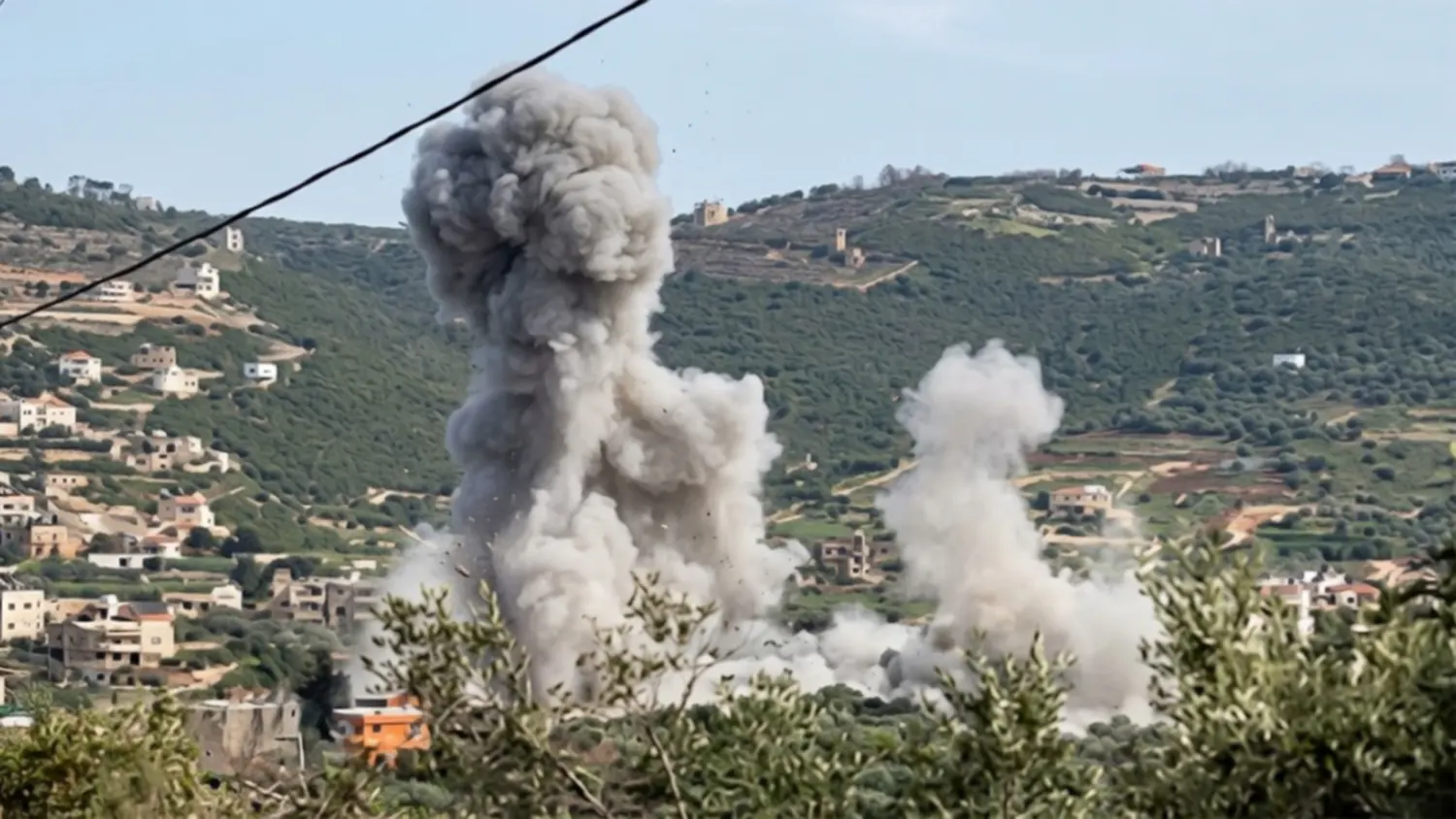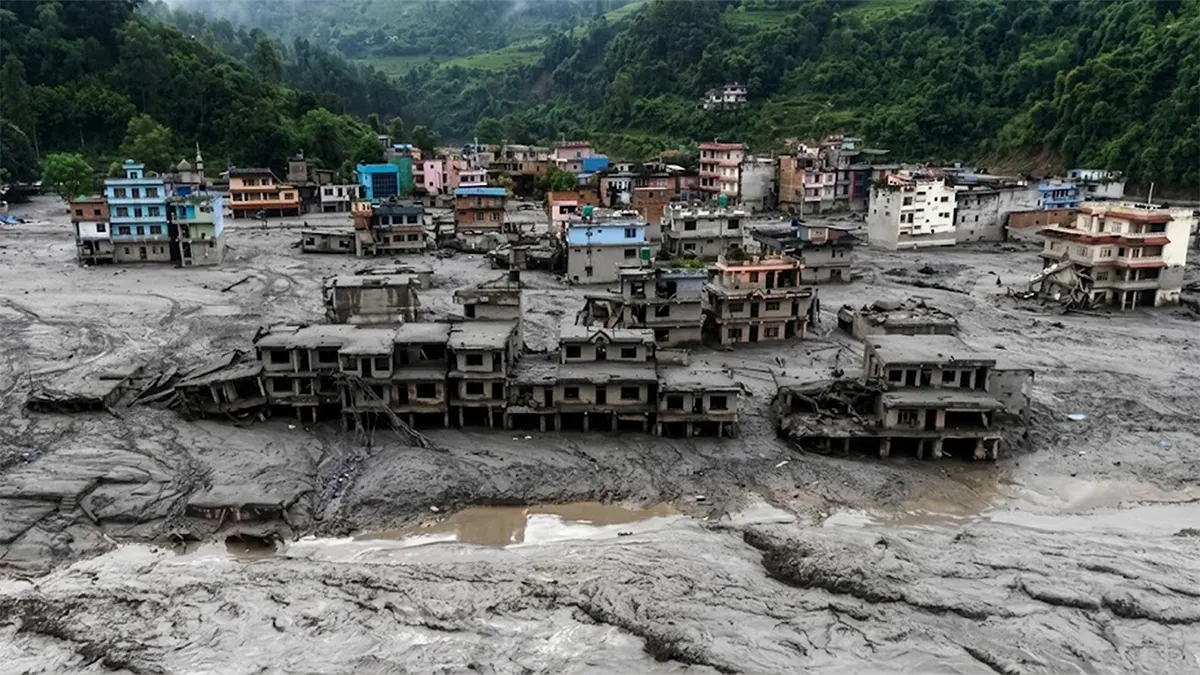
A catastrophic flash flood triggered by a glacial collapse in the Himalayas has killed more than 1,000 people across Nepal and Tibet, while thousands remain missing and rescue teams race to reach workers believed to be trapped inside mud-filled hydropower tunnels.
The disaster struck on August 26 after a sudden surge of water and debris swept through Nepal’s Rasuwa district near the border with Tibet. The flood then moved down the Bhote Koshi and Trishuli river systems, destroying settlements, bridges, roads and hydropower facilities along the way.
As of September 1, Nepal’s National Disaster Risk Reduction and Management Authority (NDRRMA) reported 987 deaths and 3,916 people still missing. China has reported another 16 deaths and 546 missing in Tibet’s Gyirong County, bringing the combined confirmed death toll to 1,003 and the number of missing people to 4,462.
The numbers are still expected to change as rescue teams reach isolated areas and recover bodies from rivers and debris fields.
Thousands Still Missing as Rescue Teams Reach Remote Valleys
The scale of the missing-persons list is one of the most difficult aspects of the disaster.
In Nepal alone, hundreds of missing people are linked to hydropower projects in Rasuwa and Nuwakot, where workers were caught by the sudden flood while working around construction sites, access roads and underground tunnels.
Independent Power Producers’ Association Nepal (IPPAN) previously reported hundreds of workers missing across multiple projects. As rescue operations progressed, many were located and brought to safety, but a substantial number remained unaccounted for. At the Upper Trishuli-I project, for example, hundreds were initially reported missing, with around 300 believed to have been inside tunnels during the disaster.
Other heavily affected facilities include Rasuwagadhi, Upper Trishuli 3A, Upper Trishuli 3B, Langtang Khola and Chilime.
The exact number of workers still trapped is difficult to establish because some people initially listed as missing later emerged or were rescued, while project operators continued updating their lists.
Mud and Rock Have Turned Hydropower Tunnels Into Rescue Zones
The most dangerous rescue operations are taking place underground.
The flood pushed enormous quantities of mud, boulders, silt and water into hydropower tunnels, blocking entrances and filling sections that normally provide access to underground infrastructure.
At Upper Trishuli 3A, Nepal Army teams have drilled through debris and pumped air into sections of the tunnel while using cameras and other equipment to search for survivors. Similar operations have been attempted at other damaged projects.
The challenge is not simply reaching the tunnels. Rescuers must determine whether there is enough open space for survivors to remain alive, while dealing with unstable ground, water, heavy debris and the possibility of further flooding.
Ventilation and oxygen are therefore critical. Rescue crews have worked to introduce air into potentially occupied sections while simultaneously removing mud and water.
The difficult terrain has also made conventional ground rescue extremely slow. In some locations, helicopters are the only practical way to move personnel and equipment.
Nepal’s Hydropower Industry Has Taken a Major Hit
The disaster has also exposed the vulnerability of Nepal’s rapidly expanding hydropower sector.
The affected valleys contain a dense concentration of run-of-river hydropower projects, many of which depend on river channels, diversion structures, intake facilities and underground tunnels.
At least a dozen hydropower projects in the worst-hit areas were damaged or disrupted, including operational plants and projects still under construction. Several suffered flooding around their headworks, while tunnels, temporary structures, access roads and construction equipment were buried or swept away.
Among the most prominent affected facilities are:
- Rasuwagadhi Hydropower Project, a 111 MW operational facility.
- Upper Trishuli 3A, a 60 MW operational project.
- Upper Trishuli 3B, a 37 MW project under construction.
- Chilime Hydropower Project, with an installed capacity of 22 MW.
- Langtang Khola Hydropower, a project under construction.
- Upper Trishuli-I, a major 216 MW project under construction.
The damage has temporarily removed a significant amount of generating capacity from Nepal’s electricity system. The overall loss has been estimated at roughly 700 MW or more, equivalent to around a tenth of Nepal’s installed generation capacity.
That disruption comes at a particularly important time for Nepal, which has invested heavily in hydropower both to meet domestic demand and to expand electricity exports.
Roads and Bridges Were Swept Away Along the Flood Corridor
The destruction extends far beyond power plants.
The flood tore through the Bhote Koshi, Trishuli and downstream Narayani river corridors, damaging roads, bridges, settlements, schools and other public infrastructure.
Rasuwa, near the Himalayan border, suffered some of the most severe destruction. From there, floodwaters and debris moved south through Nuwakot, Dhading and other districts before reaching downstream areas including Chitwan and the Nawalparasi districts.
Major transport links were cut by landslides and washed-out roads. Numerous bridges were destroyed or damaged, leaving some communities isolated.
The damage to transportation infrastructure has become a major obstacle to the rescue itself. Equipment that would normally travel by road has had to be moved by helicopter or across newly constructed temporary bridges.
Every missing bridge adds another delay to the search for survivors.
Nepal Deploys Thousands of Personnel as International Help Arrives
Nepal has mobilized a large-scale national response involving the Nepal Army, Nepal Police and Armed Police Force.
More than 11,800 people had been rescued by September 1, while more than 21,000 security personnel had been deployed for rescue and relief operations, according to NDRRMA figures reported by the Kathmandu Post.
Helicopters have been used to evacuate people from isolated settlements and deliver food, drinking water and medical supplies.
But the government has also recognized that conventional search-and-rescue equipment is insufficient for the tunnel operations.
India Brings Tunnel and Forensic Expertise
India has provided specialized assistance, including tunnel-rescue expertise, heavy equipment and forensic support.
Indian technical personnel have been involved in efforts to reach workers trapped in hydropower facilities, while forensic specialists have assisted Nepal with the difficult task of identifying recovered bodies.
The need for forensic assistance has grown as bodies have been recovered from several downstream districts. Authorities have asked relatives of missing people to provide DNA samples to help match unidentified victims with their families.
China Supports Operations Near the Border
China has also deployed rescue and engineering personnel, particularly around the border region and affected infrastructure in Tibet.
In Gyirong County, emergency teams have been working to clear debris and restore damaged roads and other infrastructure along the important trans-Himalayan trade corridor.
The border region is strategically important for trade between Nepal and Tibet, making the destruction of roads and crossings an economic problem as well as a humanitarian one.
UN Agencies and Other Partners Join the Relief Effort
International humanitarian organizations have also contributed food, medical assistance, sanitation supplies and emergency shelter.
The World Food Programme and UNICEF are among the organizations supporting the humanitarian response, while international technical experts have provided advice on difficult tunnel-rescue operations.
The assistance is particularly important because many communities remain cut off from normal supply routes.
The Humanitarian Crisis Is Growing Beyond the Initial Flood Zone
The disaster has affected far more than the communities directly hit by the initial surge.
Thousands of people have been displaced, while hospitals and morgues have faced enormous pressure as bodies continue to arrive from flood-affected districts.
Foreign nationals are also among the missing. Nepal’s latest figures include 583 foreign nationals among those unaccounted for, reflecting the region’s importance to tourism, pilgrimage and cross-border employment.
Families are therefore dealing with two crises at once: finding survivors and identifying those who have died.
For many, the lack of reliable communications and damaged roads has made it difficult even to determine whether relatives were in the affected areas.
A Warning for Nepal’s Climate and Energy Strategy
Beyond the immediate emergency, the disaster is raising difficult questions about climate change, glacier instability and infrastructure planning in the Himalayas.
Experts have warned that a warming Himalayan environment can increase risks associated with glacier melt, unstable slopes and extreme weather. Nepal is particularly exposed because many of its hydropower facilities are concentrated in narrow mountain valleys close to major rivers.
The country’s dependence on run-of-river hydropower adds another layer of vulnerability. When a major flood destroys an intake, diversion structure or transmission connection, an entire generating facility can suddenly become unusable.
The recent disaster therefore presents a broader challenge: rebuilding damaged infrastructure may not be enough.
Future hydropower projects may need stronger flood protection, better early-warning systems, more resilient access routes and more rigorous assessments of glacier and landslide hazards.
The Rescue Continues as the Scale of Damage Becomes Clearer
Nearly a week after the flood, rescue crews are still working through remote valleys and damaged hydropower sites.
The latest figures show that 1,003 people have been confirmed dead across Nepal and Tibet, while more than 4,400 remain missing. At the same time, more than 11,000 people have already been rescued in Nepal.
The immediate priority remains finding survivors, particularly those who may still be inside underground tunnels.
But even after the search operation ends, Nepal will face a much longer recovery. Roads and bridges will need to be rebuilt, hydropower plants repaired, communities relocated or reconstructed, and thousands of families supported through the aftermath.
The Himalayan flood has become not only one of Nepal’s worst recent disasters, but also a stark reminder of the growing risks facing communities and infrastructure in a rapidly changing mountain environment.