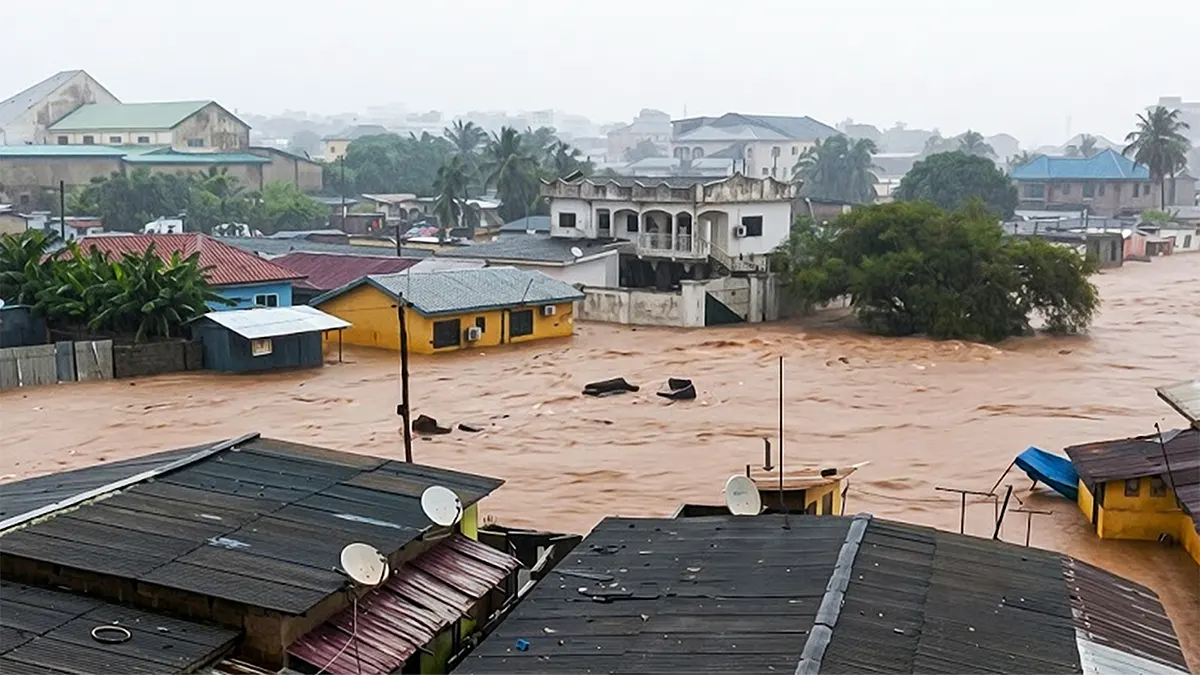
Southern Ghana is reeling from one of its worst flooding disasters in years. Torrential rain slammed the coastline on Monday, June 29, 2026, turning streets into rivers across Greater Accra, Central, and Western regions and emergency crews are still racing to reach people trapped by the water.
Accra Underwater
The capital took the hardest hit. Accra recorded roughly 140 mm (5.5 inches) of rain in a single day, one of the heaviest downpours the city has seen in years. Some of the most recognizable and busiest parts of the city were completely submerged, including Kwame Nkrumah Circle, Kaneshie Market, and Adabraka, all major transit and commercial hubs that thousands of people pass through every day.
The human toll is heavy and still climbing. At least 12 to 13 people have died, several others remain missing, and more than 38,000 people have been displaced from their homes. On the brighter side, emergency responders including the National Fire Service have already pulled more than 470 stranded residents to safety.
Getting around the city became nearly impossible. Roads that carry Accra’s morning commute turned into waterways overnight, and the flooding blocked the N1 highway corridor, a critical route through the Central Region.
Government Response: Troops, Funding, and a Public Safety Push
Ghana’s Ministry of the Interior moved quickly, issuing a public safety advisory telling residents in low-lying or flood-prone areas to head for higher ground, avoid driving through flooded roads, and stay indoors when possible.
President John Mahama has since deployed military and police units to support the National Disaster Management Organisation (NADMO), and ordered the release of 300 to 350 million Ghanaian cedis from government contingency funds to pay for immediate relief efforts and flood mitigation work.
If you or someone you know is in Ghana and needs emergency help, call 112 for general emergency response or 192 to reach the Ghana National Fire Service directly.
Beyond the loss of life and mass displacement, the flooding has quietly crippled basic infrastructure across the affected regions. Widespread power outages followed the storm, temporarily knocking out communication networks, traffic systems, and even hospital operations. Emergency teams remain on high alert, particularly because meteorologists are warning that more rain is likely on the way.
Why the Danger Isn’t Over Yet
Here’s the part that has officials most concerned right now: the ground itself can’t take any more water. The Ghana Meteorological Agency (GMet) says southern Ghana’s soil is completely saturated from the June 29 deluge, meaning it has nowhere left to absorb new rainfall. GMet is forecasting continued light-to-moderate rain along the coast and thunderstorms across the middle belt in the coming days.
That saturation creates what officials are calling a “compounding effect” even a relatively normal rainfall now could trigger a fresh round of flash flooding, simply because the water has no place to go. A few factors are driving that heightened risk:
- Overwhelmed drainage systems. Major sewers and drains in and around Accra are already clogged with debris and mud from the first wave of flooding, making them far less effective at handling new rain.
- Weaker ground, higher collapse risk. Saturated soil undermines the foundations of buildings and roads, raising the chances of structural collapses and landslides in hilly areas.
- Slower recovery, new health risks. Continued wet weather is making it harder to restore power, deliver clean water, and get medical aid to the more than 38,000 displaced people and that’s raising concerns about the spread of waterborne diseases.
Local authorities are urging anyone in low-lying areas not to wait until conditions worsen before relocating to safer ground. If you have family or friends in the affected regions, keeping an eye on GMet’s daily updates is strongly recommended while the situation develops.