Afghanistan’s humanitarian crisis is often measured in statistics millions needing aid, rising poverty, and widespread food insecurity. Yet behind those numbers lies another crisis that could shape the country’s future for decades.
Since returning to power in 2021, the Taliban has imposed sweeping restrictions on women’s education, employment, and public life. Humanitarian organizations, economists, and international institutions argue that these policies are not only limiting individual freedoms but also weakening Afghanistan’s ability to recover economically.
The consequences extend well beyond the lives of Afghan women. They affect healthcare, education, humanitarian operations, business activity, and the country’s long-term supply of skilled workers.
For many experts, the issue has become one of the biggest obstacles standing between Afghanistan and economic recovery.
Half the Workforce Is Missing From the Economy
Every economy depends on its workforce to produce goods, deliver services, and generate income.
When a significant portion of that workforce is unable to participate, economic growth inevitably slows.
Since 2021, restrictions have sharply reduced opportunities for Afghan women to work across numerous sectors. Women have been barred from many government jobs, limited in private employment, and prohibited from working for most non-governmental organizations (NGOs) and United Nations agencies inside the country.
According to UNICEF, these restrictions are already costing Afghanistan tens of millions of dollars in lost economic output every year, with estimates placing annual losses at around $84 million.
While the financial impact is significant, economists say the larger concern is what happens over the next decade.
Every year that girls remain excluded from higher education reduces the number of future teachers, doctors, engineers, business owners, and public servants available to support the country’s development.
Instead of building new human capital, Afghanistan is steadily losing it.
An Education Ban With Long-Term Consequences
The restrictions begin long before women enter the workforce.
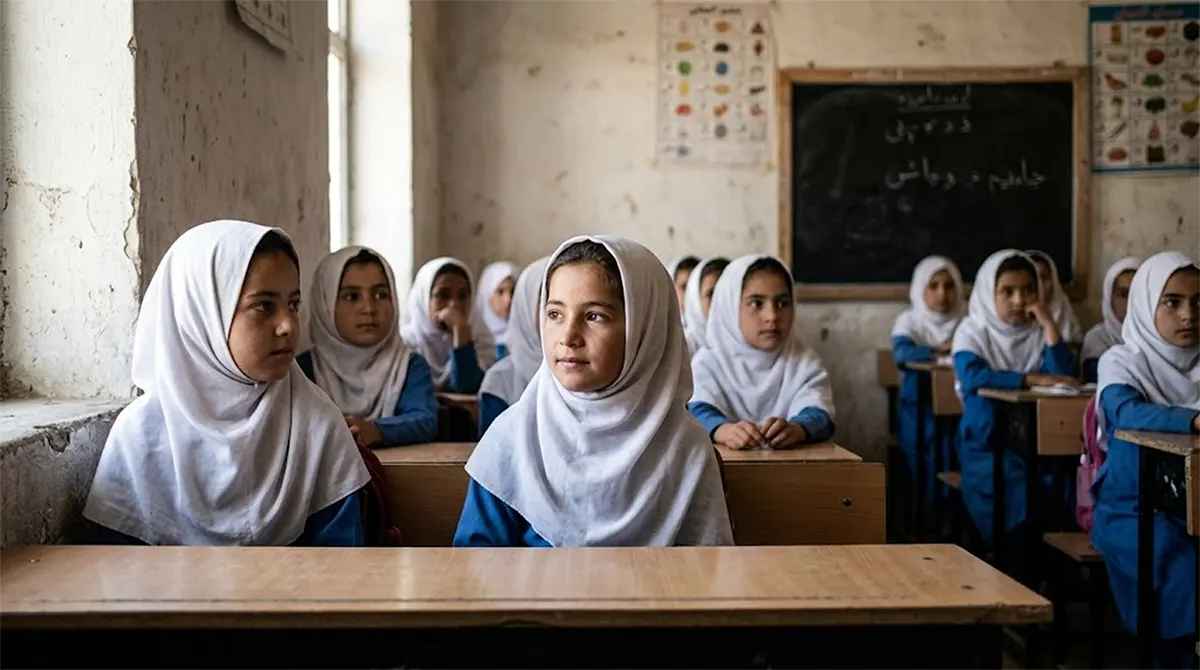
Girls are currently barred from attending school beyond the sixth grade in most parts of the country, effectively ending access to secondary education and universities for millions of students.
For today’s teenagers, that means their education has stopped during the years when students normally prepare for higher learning and professional careers.
The impact is cumulative.
Every graduating class that never reaches university represents another group of professionals who will never enter Afghanistan’s workforce.
Unlike infrastructure damaged by war or earthquakes, this type of loss cannot be rebuilt quickly. Replacing an engineer, physician, or teacher takes years of education and practical training.
When that pipeline is interrupted for multiple consecutive years, the shortage becomes increasingly difficult to reverse.
A Growing Shortage of Teachers and Healthcare Workers
One of the clearest examples of this long-term challenge is already emerging in education and healthcare.
UNICEF projects that Afghanistan could face a shortage of more than 25,000 female teachers and healthcare workers by 2030 if current restrictions remain in place.
This is particularly significant because many communities rely on women to provide essential services for women and children.
As experienced professionals retire, relocate abroad, or leave the workforce, fewer qualified graduates are available to replace them.
The result is a steadily shrinking pool of trained personnel at a time when humanitarian needs continue to grow.
In practical terms, this could mean fewer schools with qualified female teachers, fewer maternity clinics, and longer travel distances for families seeking basic healthcare.
Healthcare Faces One of Its Greatest Challenges
The healthcare system illustrates how education and employment policies can affect an entire population.
In many conservative Afghan communities, women traditionally seek medical treatment from female healthcare providers whenever possible.
Female doctors, nurses, and midwives therefore play a central role in maternal healthcare, childbirth, and pediatric services.
However, because girls are no longer progressing through secondary schools and universities, the pipeline producing future medical professionals has been severely disrupted.
The women currently working in hospitals and clinics largely belong to the generation educated before 2021.
As these professionals retire or leave the country, the number of qualified replacements continues to decline.
Healthcare organizations warn that this trend could significantly reduce access to maternal and child healthcare, particularly in rural provinces where medical services are already limited.
For pregnant women, newborns, and young children, shortages of trained female healthcare workers could have life-changing consequences.
Humanitarian Aid Becomes More Difficult to Deliver
The restrictions have also complicated humanitarian operations.
Many international aid organizations rely on female staff to reach women and children, particularly in communities where cultural norms limit interaction between unrelated men and women.
Female aid workers often conduct household assessments, distribute food assistance, provide healthcare consultations, and deliver nutrition programs.
When women are prevented from participating in humanitarian operations, aid agencies face significant logistical challenges.
In some areas, organizations have reduced or suspended certain programs because they cannot safely or effectively reach the people most in need.
This affects not only women but also children, elderly family members, and vulnerable households that depend on humanitarian assistance.
For aid organizations, the challenge is balancing continued emergency support with operational restrictions that make delivering that support increasingly difficult.
The Economic Cost Extends Beyond Lost Jobs
The impact of restricting women from education and employment goes far beyond individual careers. Economists describe it as a structural problem that affects nearly every part of the economy.
When fewer people are able to work, household incomes decline. Families spend less on goods and services, businesses see lower demand, and government tax revenues shrink. Over time, this slows investment and limits economic growth.
Women’s participation in the workforce also contributes to entrepreneurship, consumer spending, and community development. Limiting those opportunities reduces the country’s productive capacity at a time when Afghanistan can least afford it.
Instead of expanding its labor force to support recovery, Afghanistan is operating with a significant portion of its human capital underutilized.
For a country already dealing with food insecurity, unemployment, and declining investment, the long-term economic costs continue to grow each year.
A Growing Brain Drain Weakens Key Institutions
Afghanistan is also experiencing another challenge that is difficult to reverse: the departure of skilled professionals.
Since the political transition in 2021, many doctors, engineers, university lecturers, entrepreneurs, journalists, and civil servants have left the country in search of greater security and professional opportunities abroad.
The outflow includes both men and women, but restrictions on education and employment have accelerated concerns about Afghanistan’s future workforce.
When experienced professionals leave, they take with them years of expertise that cannot be replaced overnight.
Hospitals lose specialists.
Universities lose lecturers.
Businesses lose experienced managers.
Government institutions lose technical expertise needed to oversee public services.
Combined with the shrinking pipeline of new graduates, the result is a widening skills gap across multiple sectors.
Even if economic conditions improve in the future, rebuilding this professional workforce will require years of investment in education and training.
Can the Economy Recover Without Half Its Population?
This question has become central to discussions among economists and international organizations.
Senior officials from several United Nations agencies have repeatedly argued that long-term recovery will remain extremely difficult while women are excluded from large parts of education, employment, and public life.
Their argument is based not only on human rights but also on economics.
Modern economies rely on education, innovation, entrepreneurship, and skilled labor. Restricting opportunities for a large share of the population inevitably reduces productivity and limits future growth.
Afghanistan continues to receive humanitarian assistance that helps millions survive, but humanitarian aid is not designed to replace a functioning economy.
Without broader participation in education and employment, experts warn that rebuilding domestic industries, expanding healthcare, and strengthening public institutions will become increasingly difficult.
Poverty and Restrictions Reinforce Each Other
One of the most concerning aspects of the current situation is how different challenges feed into one another.
Families facing severe financial hardship often have fewer options for supporting their children.
When employment opportunities decline, household incomes fall.
When incomes fall, nutrition, healthcare, and education often become more difficult to afford or access.
As educational opportunities shrink, future earning potential also declines.
The result is a cycle where poverty and limited opportunity reinforce each other across generations.
Breaking that cycle requires more than humanitarian assistance.
It requires expanding access to education, supporting employment, rebuilding public services, and creating conditions that allow families to become economically self-sufficient.
Without those changes, today’s humanitarian crisis risks becoming tomorrow’s development crisis.
A Defining Challenge for Afghanistan’s Future
The debate surrounding women’s education and employment is often framed as a political or human rights issue.
It is also an economic one.
The decisions made today will influence the size and skills of Afghanistan’s workforce for decades to come.
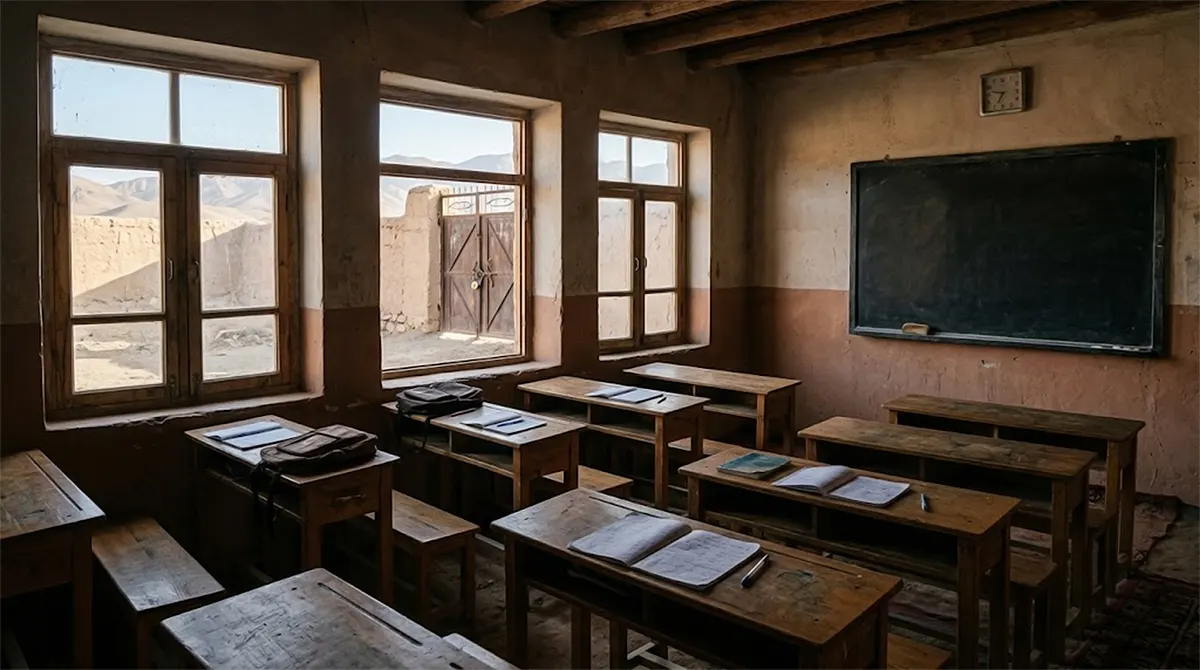
Every year that secondary schools remain closed to girls reduces the number of future professionals available to teach children, treat patients, build infrastructure, manage businesses, and support economic development.
International organizations continue to stress that humanitarian aid remains essential for saving lives.
However, they also emphasize that lasting recovery depends on restoring the country’s human capital—the knowledge, skills, and talent needed to rebuild an economy from within.
Afghanistan’s future will not be determined solely by the amount of aid it receives.
It will also depend on whether future generations are given the opportunity to learn, work, and contribute to rebuilding their country.
For now, that remains one of the nation’s greatest unresolved challenges.
Next in this series: The exclusion of women from the workforce is a massive bottleneck, but it exists within a much larger, puzzling macroeconomic landscape. While surface-level indicators like exchange rates and tax collection have shown surprising resilience, the broader afghanistan economy under taliban rule remains paralyzed for everyday citizens.
Read [Part 3: Why Afghanistan’s Economy Remains Stuck Despite Relative Stability] to understand why top-down fiscal controls are failing to translate into jobs, income, or food on the table.