For many countries, the end of large-scale conflict marks the beginning of reconstruction. Businesses reopen, investors gradually return, infrastructure is rebuilt, and economic activity slowly resumes.
Afghanistan has followed a very different path.
Although nationwide fighting has declined significantly since the Taliban returned to power in 2021, the country’s economy has yet to experience the recovery that often follows the end of war. Millions remain unemployed, private investment is weak, and businesses continue to struggle under a combination of political uncertainty, financial isolation, and restrictive domestic policies.
Economists say this is because peace alone is not enough to rebuild an economy.
A functioning market requires predictable laws, access to finance, skilled workers, international trade, and investor confidence. Without those foundations, reduced violence does not automatically translate into economic growth.
Today, Afghanistan faces exactly that dilemma.
The End of War Did Not Bring an Economic Boom
In many post-conflict countries, reconstruction creates jobs through new infrastructure projects, foreign investment, and expanding public services.
Afghanistan has largely missed that opportunity.
Before 2021, international assistance funded an estimated three-quarters of the country’s public spending, supporting everything from healthcare and education to civil service salaries and infrastructure projects.
Following the Taliban’s return to power, much of that development assistance was suspended. Billions of dollars in Afghan central bank assets held overseas were frozen, while many international financial institutions halted cooperation with the new authorities.
Humanitarian aid continued, helping prevent widespread famine, but development funding used to build roads, schools, irrigation systems, and public institutions declined sharply.
The distinction is significant.
Humanitarian aid helps people survive. Development investment helps economies grow.
Without sustained development funding, Afghanistan lost one of its largest economic engines almost overnight.
International Isolation Has Ripple Effects Across the Economy
Afghanistan’s diplomatic isolation extends beyond politics.
It also affects banking, trade, investment, and the confidence needed for businesses to expand.
Because the Taliban government remains unrecognized by most Western countries, Afghanistan’s financial sector continues operating under severe constraints.
Businesses face difficulties accessing international banking services, obtaining foreign investment, and participating fully in global financial markets.
Importers often encounter higher transaction costs.
Exporters struggle with payment systems.
Entrepreneurs face uncertainty when seeking financing or expanding operations.
For international companies considering investment, legal uncertainty and sanctions-related concerns further increase financial risk.
The result is an economy where even profitable businesses face obstacles that would not exist under normal financial conditions.
The Opium Ban Changed Rural Livelihoods Overnight
One of the Taliban’s most significant economic decisions was the nationwide ban on poppy cultivation.
For decades, Afghanistan supplied the majority of the world’s illicit opium. While the trade fueled criminal networks and international narcotics markets, it also provided income for millions of rural farming families.
The ban dramatically reduced cultivation, a move widely recognized internationally as one of the most successful anti-narcotics campaigns in recent history.
However, the economic consequences inside Afghanistan have been profound.
Many farmers lost their primary source of income almost immediately.
Transitioning to legal crops is possible in theory, but profitable alternatives often require irrigation systems, storage facilities, transportation infrastructure, reliable markets, and agricultural investment that remain unavailable across much of rural Afghanistan.
Without those supporting systems, many farming communities have found themselves earning substantially less than before.
For families already living close to poverty, even modest income reductions can determine whether they are able to buy food, medicine, or school supplies.
Rather than creating a smooth transition toward legal agriculture, the policy has exposed the broader weaknesses of Afghanistan’s rural economy.
Rebuilding an Economy Requires More Than Security
Security is often viewed as the first step toward economic recovery, but it is only one piece of a much larger puzzle.
Businesses also need predictable regulations, reliable infrastructure, access to financing, and confidence that long-term investments will be protected.
Many economists argue that Afghanistan continues to struggle because these conditions remain uncertain.
While the Taliban has emphasized restoring security and reducing corruption in some areas, investors generally look beyond public order. They also evaluate legal protections, contract enforcement, banking stability, labor availability, and the broader business environment before committing capital.
Without confidence in these institutions, both domestic and foreign investment tend to remain limited.
An Education System Focused Less on Modern Skills
Afghanistan’s education system has also undergone significant changes since 2021.
Alongside restrictions affecting girls’ education, the Taliban has expanded the role of religious schools and revised parts of the national curriculum.
Critics including education experts and international organizations—argue that reducing emphasis on subjects such as science, mathematics, technology, and computer literacy could leave future generations with fewer skills needed in a modern economy.
Every developing country relies on engineers to build infrastructure, accountants to manage businesses, software developers to support digital services, and healthcare professionals to strengthen public health systems.
If fewer students receive training in these fields, employers may find it increasingly difficult to recruit qualified workers.
This does not create an immediate economic collapse, but it can gradually reduce productivity and innovation over many years.
For Afghanistan, where rebuilding already requires substantial technical expertise, the long-term implications could be significant.
A Heavy Tax Burden on a Weak Private Sector
At the same time, the Taliban has sought to increase domestic revenue collection.
Officials have promoted stronger tax enforcement and customs collection as evidence that the government can finance itself without relying entirely on foreign assistance.
Generating public revenue is a normal function of any government.
However, economists note that taxation can become counterproductive if businesses are already struggling to survive.
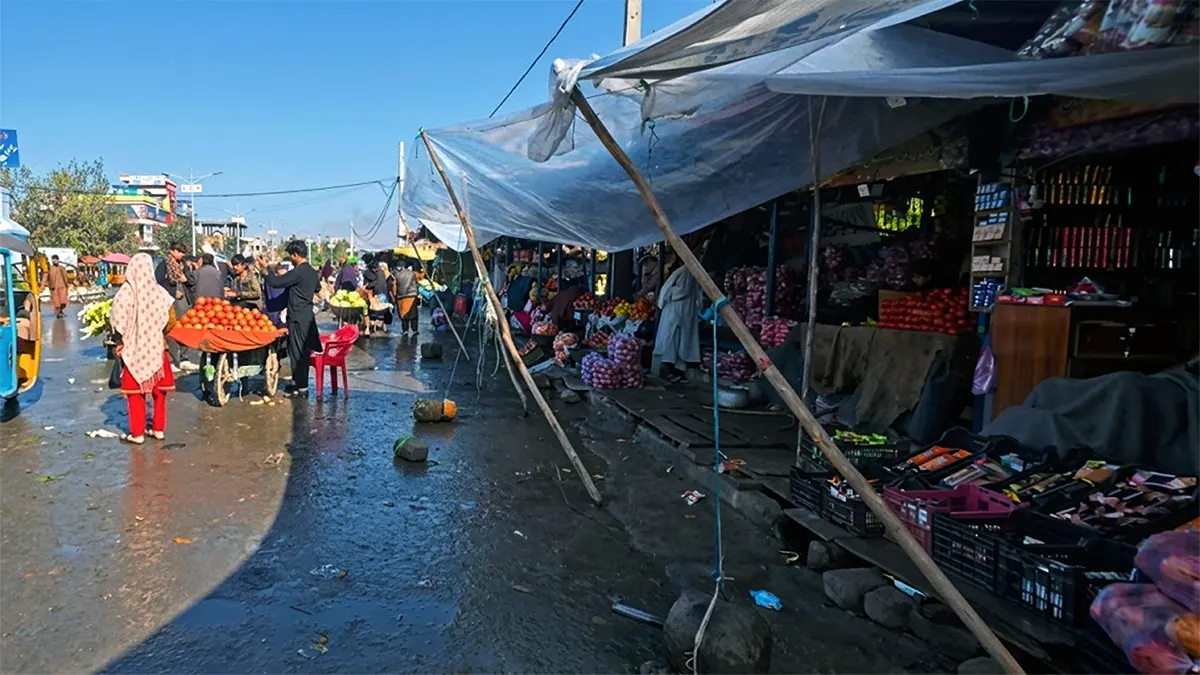
Many Afghan shop owners, traders, and small manufacturers continue operating in an economy marked by weak consumer demand and limited access to financing.
Higher taxes or stricter collections may increase government revenue in the short term, but they can also reduce business investment, discourage expansion, or force smaller enterprises to close altogether.
For a fragile economy, finding the balance between raising revenue and encouraging private-sector growth remains a difficult challenge.
Creative Industries and Independent Media Face New Obstacles
Before 2021, Afghanistan had begun developing a modest but growing media, technology, and creative sector.
Independent news organizations, advertising agencies, software companies, photographers, filmmakers, and digital entrepreneurs provided employment for thousands of educated young Afghans.
Many of these industries have since contracted.
Restrictions affecting independent journalism, entertainment, music, and some cultural activities have reduced opportunities across sectors that typically contribute to innovation and urban economic growth.
Technology entrepreneurs have also faced new uncertainty.
For many skilled professionals working in software development, digital marketing, media production, and communications, opportunities abroad increasingly appear more attractive than remaining in Afghanistan.
The result is not only fewer jobs today, but also the loss of industries that often drive innovation in developing economies.
Regional Engagement Is Growing, but Recognition Remains Limited
Despite continued diplomatic isolation from much of the West, Afghanistan is no longer completely cut off internationally.
In July 2025, Russia became the first country to formally recognize the Taliban government, marking a significant geopolitical shift.
Meanwhile, countries including China, Pakistan, India, Türkiye, the United Arab Emirates, and several Central Asian states have maintained varying levels of diplomatic engagement, accepted Taliban-appointed diplomats, or allowed Taliban representatives to manage Afghan embassies without formally recognizing the government.
This growing regional engagement has helped maintain trade links and diplomatic communication.
However, it has not fundamentally changed Afghanistan’s relationship with the global financial system.
Major Western sanctions, restrictions on financial transactions, and frozen overseas assets remain largely in place.
As a result, the country continues to face serious barriers to attracting international investment and restoring broader economic confidence.
Economic Recovery Depends on More Than Stability
Afghanistan’s economic challenges cannot be explained by a single policy or event.
Instead, they stem from the interaction of multiple factors.
International isolation limits access to finance.
Reduced development assistance slows reconstruction.
Changes to education may reduce future technical capacity.
Restrictions affecting women reduce labor force participation.
Weak private-sector confidence discourages investment.
Together, these pressures create an environment where growth remains difficult even in the absence of large-scale conflict.
Many economists argue that Afghanistan’s greatest challenge today is no longer ending war, it is creating the institutions, policies, and economic conditions needed for long-term development.
Until those foundations become stronger, improvements in security alone are unlikely to produce the broad-based recovery that millions of Afghans continue to hope for.
Next in this series: Managing a isolated economy through survival tactics is a temporary shield, not a permanent cure. To truly understand the deeper systemic issues from climate shocks and geopolitical isolation to the lack of technocratic leadership.
read [Part 4: Can Afghanistan Recover? Why Governing a Country Is Different From Winning a War] for a comprehensive breakdown of the structural hurdles blocking long-term stability.