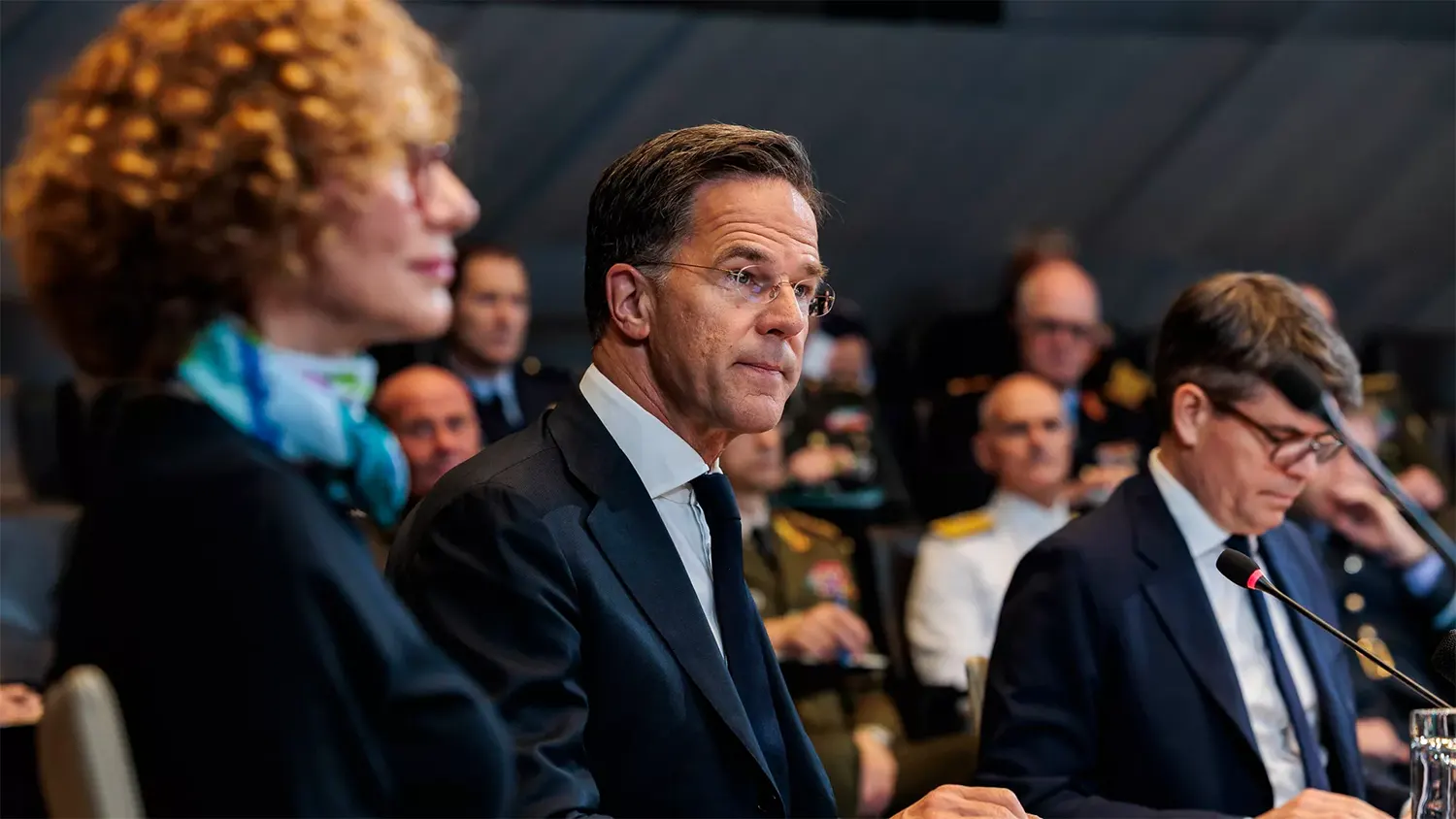
When NATO Secretary General Mark Rutte stepped up to the podium at the Atlantic Council forum in Washington, D.C. on June 25, 2026, he did something you almost never hear from the head of a 32-nation military alliance. He addressed Vladimir Putin directly by his first name.
“In the end, Putin is not afraid of commitments, he is afraid of implementing those commitments, and that’s exactly what we are doing, Vladimir. We will defend ourselves.”
That single line landed like a thunderclap. It wasn’t diplomatic boilerplate. It was a pointed, personal warning and it was deliberate. To understand why it matters so much right now, you need to know what’s coming in just a few days.
From Promise to Action: Why Ankara Is Different from The Hague
Earlier this year, NATO allies gathered at The Hague summit and made what many called a historic commitment, a new target to spend 5% of their GDP on defense by 2035. That was a massive political win. Bold numbers, unified statements, cameras flashing.
But Rutte’s message in Washington was essentially this: making a promise is easy. Keeping it is what Russia fears.
The July 7–8 NATO Summit in Ankara, Turkey, is built entirely around that idea. Unlike The Hague, which was about setting targets, Ankara is about writing checks signing tens of billions of dollars in real defense contracts, locking in weapon-production timelines, and showing the world (and the Kremlin) that NATO isn’t just talking anymore.
That’s why calling Putin “Vladimir” in that moment wasn’t accidental bravado. It was a deliberate signal from one of the world’s most powerful military alliances that the talking stage is over.
Two Sides, Two Very Different Audiences
Here’s where it gets genuinely complicated: both sides are being rational, but the combined effect is dangerous.
Rutte’s “Vladimir” comment wasn’t aimed at softening anything. NATO’s strategy right now is pure deterrence, the idea that you prevent a war by convincing the other side that attacking you would be catastrophic. When Rutte says Putin fears NATO “implementing” its commitments, he’s sending a message of absolute strength and unity ahead of Ankara. The logic is: if we look unbreakable, they won’t test us.
Putin, on the other hand, is playing a completely different game with a very different audience. In his recent speeches from military academy addresses to his Victory Day address, he has repeatedly framed the war in Ukraine as a defensive battle against NATO itself, not just a fight over Ukrainian territory. NATO’s real military buildups become, in his telling, proof that the West is planning to invade Russia.
The goal there is domestic: rally support for a long war, justify massive military spending, and keep the Russian public believing that backing down would mean national destruction.
When Deterrence and Domestic Politics Collide
The problem is that when you put both of these strategies together, you get a feedback loop that’s hard to break:
NATO builds up to deter Russia → Putin points to that buildup as proof of Western aggression → Russia ramps up its own military and issues sharper threats → NATO sees those threats as justification to build up even more.
Neither side thinks they’re the aggressor. Both sides believe they’re reacting. But the net effect is that the space for diplomacy keeps shrinking, and the risk of a serious miscalculation near NATO’s eastern borders keeps growing.
Rutte’s “Vladimir” line was striking precisely because rhetoric like that doesn’t cool things down, it throws fuel on a fire that’s already burning hot. It’s the clearest sign yet that NATO has moved past the era of carefully measured diplomatic language and into something much more direct.
What to Watch When the World Lands in Ankara
Once world leaders converge on Ankara on July 7–8, the decisions made in that room will shape the security landscape for years. There are three things that will tell you everything about which direction this is heading:
The 5% spending commitments becoming real contracts. It’s one thing to agree to a defense spending target. It’s another to see Germany, France, or Poland sign contracts for new missile factories or tank production lines. If billions of dollars start flowing into industrial-scale weapons manufacturing, Russia will almost certainly match it.
Where the United States actually stands. With shifts in American political leadership, the unity of the alliance on long-term funding is genuinely uncertain. The world will be watching to see whether Washington is fully in or quietly hedging.
What Ukraine actually gets. President Volodymyr Zelenskyy is expected in Ankara. What NATO formally promises him whether that’s a permanent weapons pipeline, security guarantees, or something closer to a long-term membership pathway will directly influence Putin’s next calculated move.
The War That Rewrote NATO’s Entire Agenda
Even though NATO was built to handle a wide range of threats cyber warfare, terrorism, instability across the Middle East, the war in Ukraine has effectively pulled the alliance back to its original reason for existing: defending Europe from Russian aggression.
Every major item on the Ankara agenda flows directly from it:
The weapon supply question is about moving from improvised aid packages (sending whatever spare ammunition countries had lying around) to building a permanent, industrial-scale production pipeline that can sustain Ukraine for years, not months.
The 5% GDP defense target exists because Russia’s actions have forced European nations to fundamentally rethink how little they’d been spending on their own defense.
And because Turkey is hosting, Black Sea security will get major attention, a region where grain shipments, naval forces, and active combat zones are all tangled together in the middle of a live war.
NATO will technically vote on many things in Ankara. But make no mistake every single decision will be filtered through one question: how does this affect the war?
The Week That Could Define What Comes Next
By the second week of July, we’ll have a much clearer picture. Either Ankara produces concrete, binding commitments that demonstrate NATO’s industrial capacity has actually shifted or it produces more promises, and the credibility gap that Rutte was trying to close gets wider.
What we do know is that Vladimir Putin took notice of what was said in Washington. When the secretary general of a 32-nation military alliance addresses you by your first name and tells you that your fears are already coming true, that’s not something you ignore.
The question is whether that kind of pressure forces a recalculation in Moscow, or whether it simply turns the volume up on an already deafening confrontation.
We’ll know a lot more by July 9th.