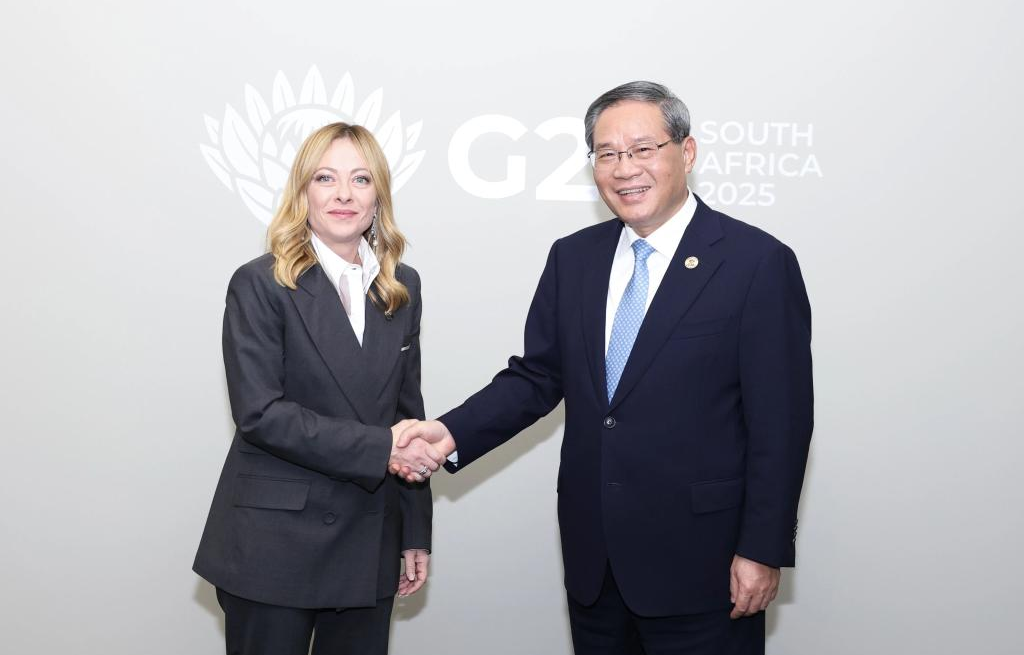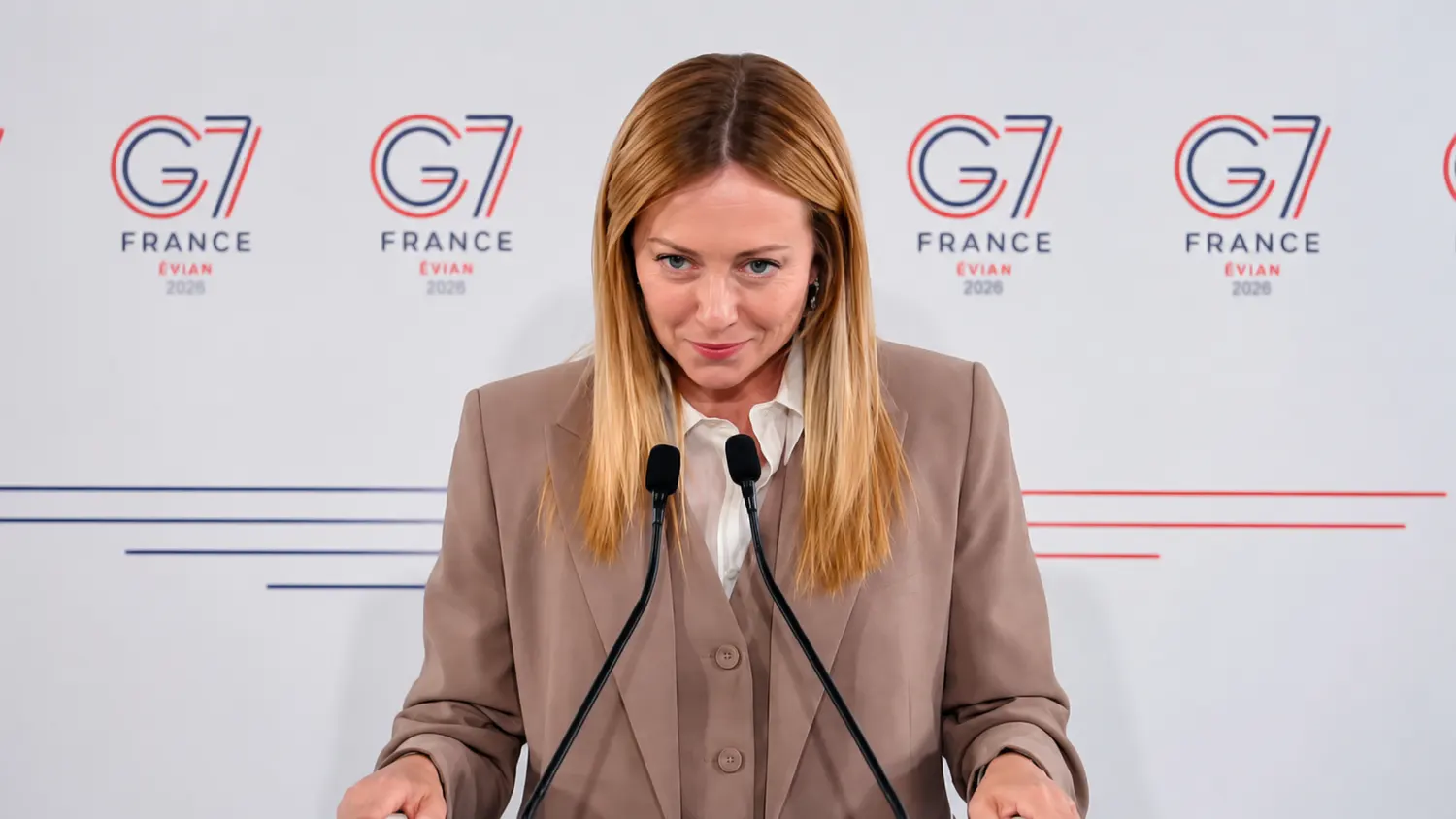
The G7 summit in Evian, France wrapped up with most of its usual pomp and communiqués but the more interesting story walked out the door with Italian Prime Minister Giorgia Meloni.
Fresh off the summit, Meloni made two significant moves that signal Italy is positioning itself as a key bridge between the Trump administration and a European bloc that’s been struggling to find its footing in a rapidly shifting diplomatic landscape. She praised a landmark U.S.-Iran agreement. She proposed a bold structural reform to how Europe negotiates with Russia. And she did it all without tipping her hand on the details.
The question is whether Europe and Moscow is ready to follow her lead.
Why Meloni Is Backing the Trump-Iran Deal
The first headline out of Evian was Meloni’s vocal support for the tentative U.S.-Iran memorandum of understanding, a framework aimed at ending the conflict in West Asia and reopening the Strait of Hormuz.
This matters because European leaders have been quietly desperate for exactly this kind of outcome. The conflict had sent energy prices spiking across the continent, adding economic pressure to governments already dealing with sluggish growth and restless electorates. Meloni acknowledged the deal created a noticeably “positive influence” on the overall atmosphere at the G7, diplomatic language for: this took a lot of tension out of the room.
By publicly backing a Trump-era diplomatic win, Meloni is doing something most European leaders have been reluctant to do, actively aligning with Washington’s deal-making momentum rather than keeping a critical distance. Whether that’s strategic positioning or genuine agreement, it places her in a unique lane among her European counterparts.
One EU Voice for Russia Talks, Meloni’s Big Proposal
The second, arguably more consequential announcement came on Ukraine. Meloni said she intends to formally propose, at the upcoming European Council summit in Brussels, the appointment of a single, dedicated EU negotiator for peace talks with Russia.
Her reasoning was blunt: “The proliferation of diplomatic channels within Europe risks creating confusion. We need a unified EU voice.”
She’s not wrong. Europe’s current approach to Ukraine diplomacy has involved overlapping tracks, individual member states pursuing bilateral contacts, EU-level statements, and NATO channels all running in parallel. The result is a message that often arrives fragmented, and a Russia that has proven adept at exploiting those divisions.
But Meloni’s proposal comes with a specific, and politically loaded, condition: the envoy must not come from one of Europe’s major powers.
No French candidate. No German candidate. Her argument is pragmatic, appointing a diplomat from Paris or Berlin would trigger immediate internal gridlock, with smaller EU members questioning whether their interests would genuinely be represented. Instead, she’s pushing for a candidate from a medium-sized EU nation, someone credible enough to command Moscow’s respect without becoming a lightning rod for intra-EU friction.
She’s also clear that diplomacy doesn’t mean softening pressure. Meloni emphasized that any negotiating track must run alongside, not instead of, the EU’s latest sanctions package against Russia ensuring Moscow enters any talks knowing the economic cost of stalling.
Who Could Actually Get the Job
Meloni deliberately declined to name a candidate at the press conference noting, pointedly, that leaked names tend to complicate the actual agreements. But Brussels doesn’t wait for official announcements, and several names are already circulating.
The frontrunners fitting Meloni’s “medium-sized nation” criteria:
- Alexander Stubb (Finland) — The current Finnish President brings deep, practical knowledge of Russia’s strategic thinking, shaped by Finland’s geography and complicated history with Moscow. He’s widely respected in Brussels. The catch: Stubb has publicly downplayed his own interest, suggesting the role should go to a sitting national leader rather than himself.
- Sauli Niinistö (Finland) — Stubb’s predecessor has also come up repeatedly in diplomatic circles. Like Stubb, he carries the credibility of a leader who has dealt directly with Moscow without illusions.
- Mark Rutte (Netherlands) — Technically en route to lead NATO, Rutte is the archetype of the medium-power consensus builder. His track record of holding together difficult coalitions between conflicting Western factions makes him a natural fit, if the timing works.
The heavyweights Meloni is actively pushing back against:
- Mario Draghi (Italy) — The former Italian PM and ECB chief is Brussels’ go-to name for high-stakes complexity. But Draghi is Italian, which creates an awkward conflict with Meloni’s own rule, and would generate significant domestic political noise for her.
- Angela Merkel (Germany) — Her years of direct Putin negotiations give her unmatched experience. But Central and Eastern European nations remain deeply wary of a German-led diplomatic effort, given longstanding criticism of Berlin’s past energy dependence on Russia, a sensitivity that hasn’t faded.
The wild cards:
- António Costa’s office (European Council) — The European Council President isn’t a candidate, but his top adviser has already been making quiet, direct phone calls to senior Russian officials close to Putin, laying early groundwork. Whoever is eventually appointed will almost certainly operate under Costa’s mandate.
- Gerhard Schröder (Germany) — The Kremlin has explicitly said it would welcome the former German chancellor. That alone disqualifies him in Brussels. His close personal and business ties to Putin make him a complete non-starter for any credible EU role.
Meloni will keep her official pick under wraps until the Brussels summit. What she’s signaled so far is the shape of the person she wants not the name.
Moscow Says It’s Open. Its Conditions Say Otherwise.
Here’s where the diplomatic optimism runs into hard ground.
The Kremlin has said, through spokesperson Dmitry Peskov, that it views European discussions about appointing a dedicated negotiator as a positive sign. Behind the scenes, there’s already been movement, the top adviser to European Council President António Costa has made discreet, direct calls to a senior Russian official close to Putin to test the waters for future talks.
So far, so encouraging. But Russia’s actual conditions for peace tell a very different story.
Putin recently flatly rejected a direct ceasefire proposal and face to face meeting offered by Ukrainian President Volodymyr Zelensky. His position: there is no point in negotiating until Ukraine fully withdraws from territories currently occupied by Russian forces. He’s also maintaining that Ukraine must abandon its NATO membership bid before any serious peace deal can be signed.
Those aren’t opening positions designed to be bargained down. They’re maximalist demands dressed up in diplomatic language.
Meanwhile, Russia has intensified its drone and missile strikes on Ukrainian cities, a signal that Moscow is trying to negotiate from a position of maximum military pressure, not genuine compromise.
So why is Russia engaging at all?
Two reasons. First, the Trump-Iran deal is a problem for the Kremlin. If it holds and energy markets stabilize, oil prices will likely fall and Russia’s war economy is heavily dependent on high oil revenues. That creates new fiscal pressure on Moscow at exactly the moment it wants to sustain military operations.
Second, Putin is playing Europe against Washington. Ever since Trump began pursuing a direct negotiating track with the Kremlin, European leaders have been quietly panicking that a peace deal might be imposed on them without their input. By staying engaged with EU figures, Putin can play both sides, gauging which track offers him better terms before committing to either.
The honest read on Russia’s position right now: open to talking, not open to yielding. These early diplomatic contacts are less about peace and more about Moscow mapping out how much land and leverage the West is willing to pressure Ukraine to surrender.
What Meloni Is Actually Building
Taken together, Meloni’s moves at Evian sketch the outline of a coherent strategy, one that’s more nuanced than it first appears.
She’s not breaking with Europe on Ukraine. She’s maintaining the pressure through sanctions. She’s not dismissing Washington. She’s actively validating Trump’s diplomatic wins where she can. And she’s not pretending Europe’s current approach is working. She’s proposing to fix it.
Whether the Brussels summit delivers a unified EU negotiator remains to be seen. Whether that negotiator can bring Moscow to a table where real concessions are possible is an even bigger question. But in a moment when European diplomacy has often looked reactive and divided, Meloni is at least trying to write the next chapter rather than just respond to it.
The harder challenge is that the other side isn’t reading from the same script and in Moscow, they rarely are.