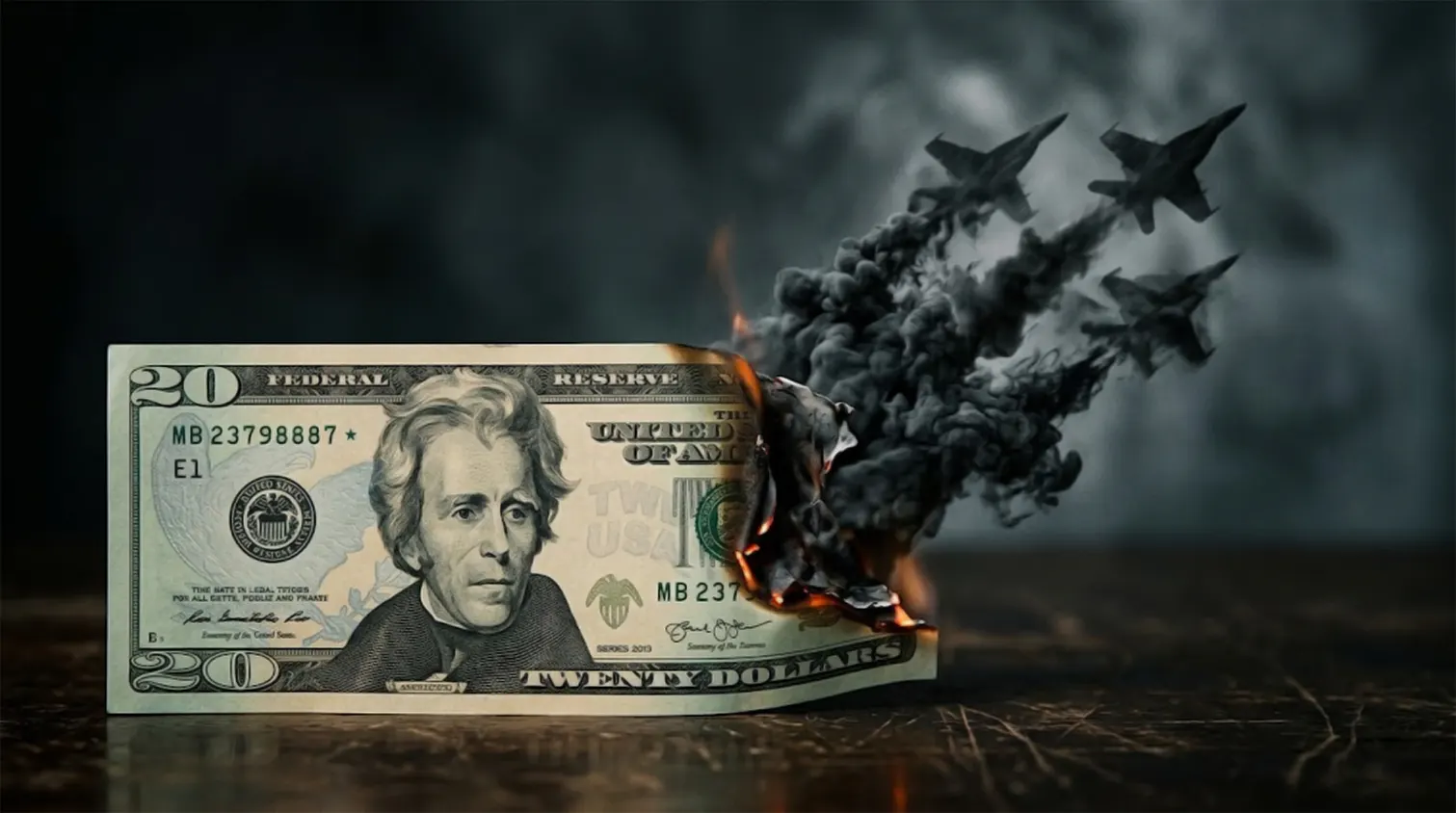
The Pentagon confirmed on May 12, 2026, that the U.S. military operation in Iran has now cost $29 billion, a figure that jumped by $4 billion in just the last few weeks. But the financial pain isn’t staying inside the Department of Defense. It is spreading directly into the daily lives of ordinary Americans, showing up at the gas pump, the grocery store checkout line, and even at the airport departure gate.
The War Premium Nobody Asked For
When the Strait of Hormuz, one of the world’s most critical oil shipping lanes was partially shut down following the February 28 attack, global energy markets didn’t wait for economists to react. Oil prices surged almost immediately, and they haven’t looked back.
As of today, Brent crude is trading at roughly $105 per barrel, while West Texas Intermediate (WTI) has climbed to $99. Traders are pricing in what analysts are now calling a “war premium”, the extra cost baked into every barrel because the world is uncertain about how long the disruption will last and how much worse it could get.
That premium doesn’t stay in the futures markets. It flows downstream into every drop of fuel that powers the American economy.
$4.52 a Gallon and the Gas Tax Fix That Barely Dents It
The most visible and immediate impact is at the gas station. The national average for a gallon of regular gasoline has hit $4.52, roughly $1.38 more than this time last year, a 44% increase in year over year pump prices.
In April alone, gasoline prices jumped 5.4% in a single month. For a typical commuter filling up a 15-gallon tank twice a week, that translates into $40 to $50 in extra fuel costs every month just compared to last year.
President Trump responded by announcing a temporary suspension of the federal gas tax, which currently sits at 18.4 cents per gallon. The relief is real but modest. Against a $1.38 increase, it covers barely more than a tenth of what drivers have lost at the pump. The administration has also rejected calls for airline bailouts, despite carriers facing crippling jet fuel costs, a decision that has sent airline ticket prices up 14.9% over the past year as summer travel season begins.
How a War Overseas Ends Up in Your Grocery Bill
Here is something many people don’t immediately connect: when diesel gets expensive, everything gets expensive.
Almost every product sold in an American grocery store arrives by truck. When fuel surcharges eat into freight margins, suppliers and retailers pass those costs along. It’s a phenomenon economists call the “pass-through effect” and it’s already showing up in the data.
Food prices at home rose 0.7% in April alone. Year over year, fruits and vegetables are up 4%, while nonalcoholic beverages have climbed 4.7%. Items that are heavy, bulky, or require refrigeration the exact things most dependent on diesel transport and electricity are being hit hardest.
Economists are warning that this is likely just the first wave. Many retailers are currently absorbing some fuel surcharges rather than passing them all on at once. Expect another round of price increases on packaged goods and furniture in the coming weeks as those buffers run out.
3.8% Inflation: The Highest in Nearly Three Years
All of this feeds into a single headline number that the Bureau of Labor Statistics released on May 12: the U.S. consumer price index rose to 3.8% annually in April, up from 3.3% in March. That is the highest inflation rate since May 2023.
It might not sound like a huge jump in isolation. But context matters. For most of early 2026, inflation had been cooling. Consumers and policymakers were beginning to feel like the worst was behind them. This reversal driven not by a supply chain snarl or a pandemic, but by an active military conflict marks a fundamentally different and harder to fix kind of price pressure.
The energy price index is up 17.9% compared to a year ago, by far the largest jump of any category in the report. There is, however, one small silver lining: core inflation which strips out volatile food and energy prices rose a more modest 2.8%. That suggests the broader economy hasn’t fully “de-anchored” yet. Inflation, for now, is concentrated. But economists caution that concentration can spread.
Why the Fed Can’t Just Raise Its Way Out of This
In 2021 and 2022, the Federal Reserve responded to runaway inflation by aggressively raising interest rates. It worked eventually because that inflation was largely caused by supply chain bottlenecks and excess consumer demand. Raising rates cooled demand, which eased prices.
This time is different. The Strait of Hormuz is physically restricted. Oil supply isn’t constrained because of logistics delays or mismatched demand, it’s constrained because of a war. No interest rate hike reopens a shipping lane. The Fed’s traditional tools are, at best, a partial answer to a problem rooted in geopolitics, not monetary policy.
That asymmetry is what makes the current situation particularly difficult to navigate and particularly frustrating for average Americans who are watching prices rise with no clear end in sight.
The Diplomatic Stalemate Making Everything Worse
Adding to the uncertainty is a peace process that appears stuck. President Trump rejected Iran’s latest 14-point ceasefire proposal, while Tehran has warned that American consumers will keep paying the price as long as Washington delays a permanent agreement. Diplomats have described the current state of negotiations as being on “life support.”
Until a durable ceasefire is reached and the Strait of Hormuz fully reopens, the war premium on oil is unlikely to disappear and neither is the inflation it’s driving.
Americans Are Already Changing How They Live
The data tells one story. The behavioral shifts tell another.
The University of Michigan’s latest consumer sentiment survey has plummeted to some of its lowest readings ever recorded. Families are making real adjustments: switching from brand-name products to store-brand generics, cutting back on dining out, canceling or scaling down summer vacations, and rethinking discretionary spending across the board. Economists call this “downtrading” and it’s becoming widespread.
Shelter costs are adding to the pressure, with the rent and housing index rising 0.6% in April as landlords pass on their own rising utility and maintenance bills. Summer travel, once a post-pandemic ritual, is being quietly abandoned by many families facing $4.52 gas and $1,000 flights.
The $29 Billion Question
The Pentagon’s $29 billion figure covers operational costs, equipment repairs, and munitions replacement and it is still climbing. The $4 billion increase in just the last three weeks reflects the intensity of ongoing theater operations. That spending, funded by taxpayers, is one layer of the financial cost.
The other layer, the one felt in real time by real people is the inflation tax on every tank of gas, every grocery run, and every flight booked this summer. Together, these costs represent the true price of the conflict, and neither the military bill nor the economic one shows clear signs of shrinking anytime soon.