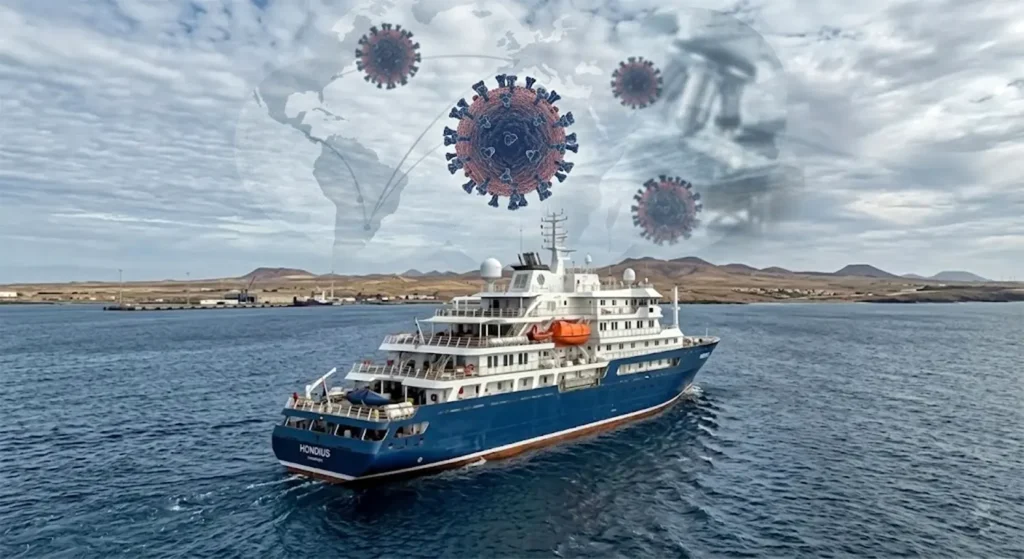
When the MV Hondius departed from Ushuaia, Argentina on April 1, 2026, it carried passengers from across the world on what was meant to be an expedition cruise. Instead, it became the starting point for one of the most closely watched international disease responses of the year involving a rare virus, three deaths, and health agencies scrambling across multiple continents to trace who was exposed before anyone knew there was anything to trace.
This is not a story about the next pandemic. But it is a story worth understanding clearly because the details matter, and because the difference between informed concern and unnecessary panic often comes down to knowing exactly what you’re dealing with.
What Has Happened So Far
The outbreak centers on the Andes strain of hantavirus, a rare but serious respiratory illness that has infected multiple passengers aboard the MV Hondius. As of May 8, 2026:
- 3 people have died — two Dutch nationals and one German national
- 5 cases have been laboratory confirmed
- 3 additional suspected cases are currently under investigation
- Passengers are being monitored across at least 12 countries
The ship is currently en route to Tenerife, Spain, where specialized medical teams are preparing a controlled quarantine and screening operation for the remaining passengers on board.
It’s important to note that these figures reflect the situation as of publication date and may have changed. Given the virus’s unusually long incubation period which can stretch up to 45 days, new cases may still emerge in the coming weeks. Checking updates from the WHO or your national health authority is advisable if you have any reason to believe you may have been exposed.
Investigators believe the virus most likely entered the ship through a traveler who was exposed to infected rodents during trekking activities in Patagonia before boarding. Why is the origin still described as probable rather than confirmed? Because tracing the exact source of a hantavirus exposure requires environmental sampling and genomic sequencing work that Argentina’s health ministry is actively conducting in the southern Patagonia region, but that takes time to complete definitively.
Why This Particular Virus Is Being Taken So Seriously
Most people have never heard of hantavirus. And most hantavirus infections while serious don’t trigger international responses like this one.
That’s because the Andes strain is different from virtually every other hantavirus known to exist.
In typical hantavirus cases, the only way to get infected is through direct exposure to rodents or their droppings breathing in contaminated dust, handling nesting material, or coming into contact with an infected animal. The virus reaches a dead end in the human body. It cannot jump to the next person.
The Andes strain can. It is the only hantavirus known to occasionally spread from person to person and that single fact is why health agencies worldwide are treating this cruise ship cluster as a high-priority international event.
That said, “can spread between people” is not the same as “spreads easily between people.” This is a crucial distinction that gets lost in alarming headlines.
How This Virus Actually Spreads and What That Means for Risk
The Andes virus does not spread like COVID-19, influenza, or measles. It cannot travel efficiently through the air across a room. It does not spread through casual contact, shared surfaces, or brief encounters in public spaces.
What the evidence from past outbreaks consistently shows is that transmission almost always requires:
- Very close and prolonged physical proximity — typically hours, not minutes
- Enclosed, poorly ventilated spaces — a shared cabin, bedroom, or small car
- Direct exposure to respiratory droplets or bodily fluids — through activities like sharing a bed, close caregiving without protection, or extended face to face contact in tight quarters
This is why the cruise ship environment raised immediate red flags. Passengers shared small cabins for days or weeks at a time exactly the conditions that historical data suggests the Andes virus needs to move between people.
It also explains why a brief taxi ride or a passing interaction at an airport is not considered a meaningful risk by health officials.
What About Airplanes? Here’s Why Experts Aren’t Panicking
This is the question most people ask first and it’s a reasonable one. If infected passengers flew home before the outbreak was identified, didn’t they potentially expose hundreds of fellow travelers?
The short answer is: possibly, but far less than you might think and here’s the specific reason why.
Modern commercial aircraft use hospital grade HEPA filtration systems that capture 99.9% of airborne particles, including viruses. Cabin air is completely refreshed every two to three minutes. Airflow moves from ceiling to floor rather than across the cabin, which reduces lateral spread of droplets. In practical terms, this makes the interior of a plane far less hospitable to the Andes virus than an unventilated cabin or bedroom.
There’s also the nature of the virus itself. The Andes strain travels in heavy respiratory droplets rather than fine aerosols meaning it doesn’t float through the air the way measles does. It tends to fall quickly rather than linger.
Health authorities are nonetheless being cautious. Anyone who sat within two rows of a confirmed case on a long-haul flight is being contacted, asked to monitor symptoms daily, and given PCR testing where appropriate. A KLM flight attendant who had close contact with one of the victims tested negative, a data point that supports the broader picture of limited airborne transmission.
What’s Happening in Each Country
Because passengers dispersed globally before the outbreak was fully identified, the response has required unprecedented international coordination. The 12 countries currently involved span two categories: those with confirmed or suspected cases, and those actively tracing passengers who passed through their borders.
The six countries with the most direct medical involvement are:
The Netherlands has taken the lead as the ship’s flag state, sending specialized air ambulances to evacuate critically ill patients including the ship’s doctor to Leiden University Medical Center and Radboud University Medical Center, where they are being treated under high level biocontainment protocols.
Argentina is focused on tracing the outbreak’s origin, mapping the index case’s four-month road trip through Patagonia and issuing rodent exposure warnings in trekking regions across the south of the country.
South Africa became a central response node after passengers flew through Johannesburg. One British passenger is currently in intensive care there, and South African authorities are tracing everyone who traveled on the same flights as a Dutch passenger who died shortly after landing.
Germany deployed a specialized high risk medical unit to transport a German passenger classified as high risk due to direct contact with another German national who died on the ship to University Hospital Düsseldorf.
Switzerland confirmed on May 6 that a passenger who had already returned home is being treated in an isolation ward in Zurich. Swiss authorities have publicly stated there is no risk to the general public.
The United Kingdom is monitoring nearly 20 individuals connected to the voyage, a group that includes passengers who disembarked at Saint Helena, close contacts who have already returned to the UK, and one British national currently in critical but stable condition in South Africa. The UK military flew PCR testing kits to remote Ascension Island on May 7 to reach passengers who disembarked there. All individuals classified as high risk are required to self isolate for the full 45 day maximum incubation window.
At the center of all of this is the WHO, which is coordinating passenger tracing across all 12 countries and has publicly maintained that the risk to the general public remains low while making clear that the situation is being treated with the highest level of caution given the Andes strain’s unique transmission profile.
Recognizing the Symptoms and When to Act
For most people reading this, the most practical section is this one.
Hantavirus infection typically begins with symptoms that look almost identical to a bad flu. Early warning signs include:
- Fever and chills
- Muscle aches, particularly in the thighs, hips, and back
- Headaches
- Fatigue
- Nausea, vomiting, or stomach pain
The dangerous window comes several days later, when some patients develop Hantavirus Pulmonary Syndrome (HPS), a severe condition where fluid accumulates in the lungs and breathing becomes critically compromised. This progression can happen quickly.
Seek emergency care immediately if you experience:
- Shortness of breath or rapid breathing
- Chest tightness or pressure
- A sudden drop in energy or severe weakness
- Low blood pressure or dizziness
Early medical intervention significantly improves survival outcomes. But there is one step that makes an enormous difference in how quickly doctors can respond: tell them your travel history. If you were on the MV Hondius, if you recently traveled through Patagonia, or if you were in close contact with someone who was say so immediately. This allows medical teams to test for hantavirus rather than treating you for a general respiratory illness while the real cause goes unidentified.
What You Should Actually Do Right Now
For the vast majority of people, the answer is: nothing, beyond staying informed.
If you have no connection to the MV Hondius or recent travel in Patagonia, your personal risk from this outbreak is extremely low. The virus has no local rodent reservoir outside South America, which means it cannot establish itself in European, African, or North American animal populations. Every human chain of transmission will eventually stop because the virus simply isn’t efficient enough at spreading between people to sustain a large outbreak.
If you were a passenger on the MV Hondius, contact your national health authority immediately if you haven’t already been reached. Do not wait for symptoms to appear the 45-day incubation period means you could feel completely well today and become ill weeks from now.
If you recently trekked in Patagonia and are experiencing flu like symptoms, mention your travel history to your doctor and specifically ask whether hantavirus testing is appropriate. Argentina’s health ministry has issued alerts for the southern trekking regions where the index case is believed to have been exposed.
If you are a close contact of someone connected to the outbreak a family member, housemate, or caregiver follow the guidance of your national health authority. In most cases this will involve symptom monitoring and, depending on the level of exposure, possible testing or precautionary isolation.
The 45-Day Wait and What Comes After
The most difficult part of managing this outbreak for health officials and for the people being monitored is the waiting.
With an incubation period of up to 45 days, the countries involved are in the middle of what amounts to a month and a half long watch period. Passengers who feel perfectly healthy today may still develop symptoms into June. That timeline is what’s driving the scale of the monitoring effort and why so many governments are maintaining strict self-isolation requirements even for people who show no signs of illness.
As of now, no confirmed secondary infections have been reported meaning no confirmed cases of the virus spreading from returning passengers to people in their home communities. That is genuinely reassuring, and it aligns with what we know about how the Andes virus behaves. But health officials will not be able to formally close this chapter until the final incubation window passes without new cases emerging.
The ship’s arrival in Tenerife will be a significant milestone allowing the remaining passengers to be properly screened and either cleared or treated under controlled conditions. What happens in the weeks after that will tell us a great deal about how effectively this response contained what could have been a far messier situation.
For now, the message from every major health authority involved is consistent: this is serious, it is being handled, and for the overwhelming majority of the world’s population, it is not a personal threat. The agencies watching this around the clock are doing exactly what they’re supposed to do and so far, the system is working.