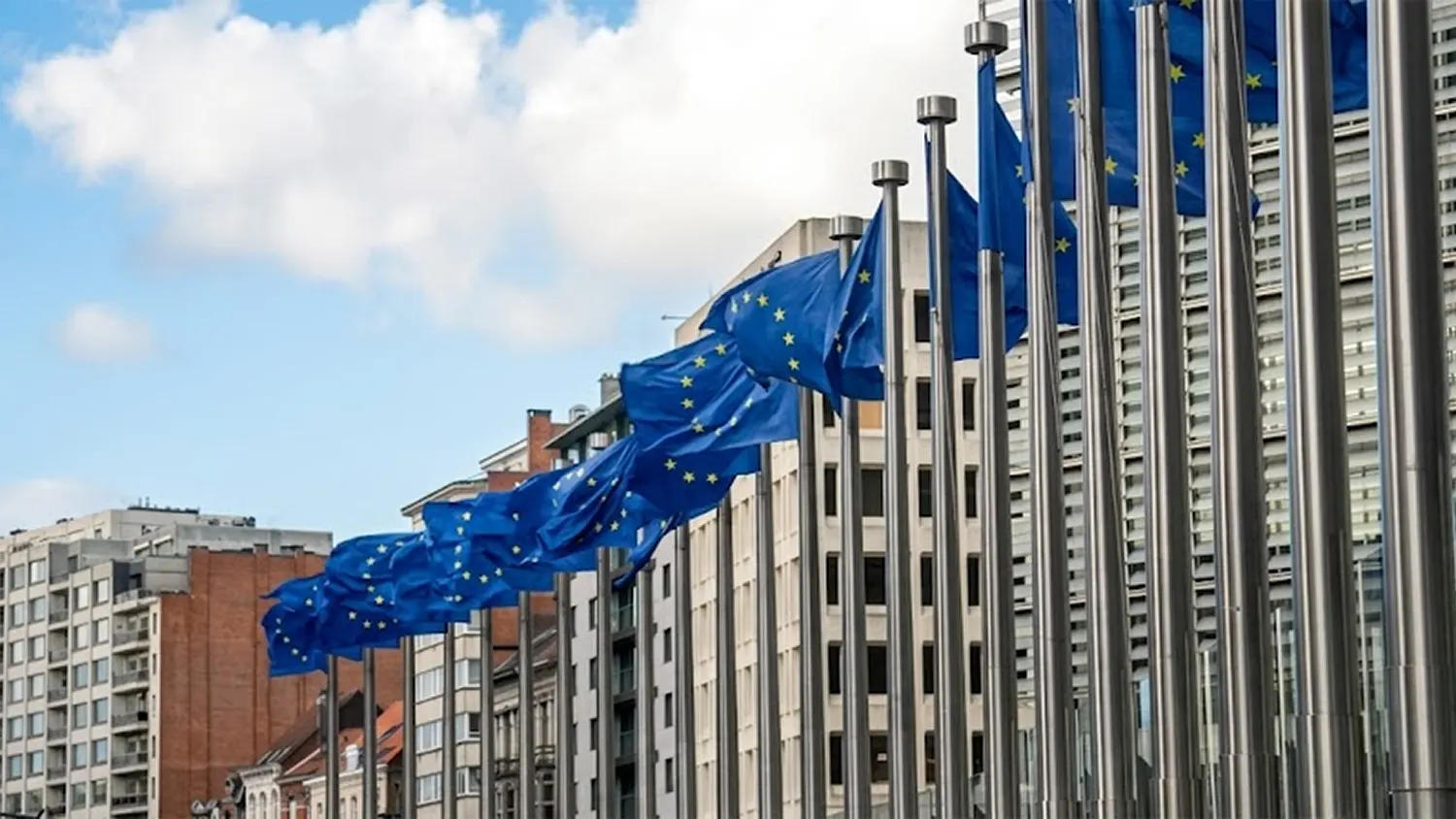
For months, the European Union’s response to the crisis in Gaza and the West Bank amounted to strongly worded statements and failed votes. Then, on May 9, 2026, a political earthquake in Budapest changed the math entirely and within 48 hours, the EU did something it hadn’t been able to do in over a year.
It acted.
The Veto That Held Europe Hostage Until It Didn’t
The story of why the EU couldn’t move on Israel-related sanctions for so long begins and ends, in large part, with one man: Viktor Orbán.
For over a year, Hungary’s former prime minister used his country’s veto right to single-handedly block any sanctions targeting Israeli settlers, a move widely seen as part of his broader alignment with nationalist governments and his cultivated relationship with Benjamin Netanyahu.
That ended when Orbán lost the Hungarian election. His successor, Peter Magyar, leads a pro-EU government that took office on May 9, 2026. Within two days, the new Budapest had lifted the veto. And with that, the last obstacle to unanimity collapsed.
On May 11, 2026, all 27 EU foreign ministers reached a political agreement, the first unanimous action of its kind to impose targeted sanctions on several high-profile Israeli settler organizations and their leaders, alongside new sanctions on Hamas figures.
What Europe Actually Did and What It Deliberately Didn’t
The word “sanctions” carries enormous weight in geopolitics. But not all sanctions are created equal, and understanding exactly what the EU approved and what it consciously left off the table is essential to understanding where Europe actually stands.
What was approved targets four settler organizations by name: Amana, Nachala, Hashomer Yosh, and Regavim. These groups have been accused of promoting, financing, or leading what the EU describes as the “extremist and violent colonization” of the West Bank. Key individuals named include Daniella Weiss of Nachala and Meir Deutsch of Regavim.
The measures include asset freezes and travel bans across all 27 member states. But the most consequential element may be less obvious: because EU rules bar European entities from maintaining financial ties with sanctioned parties, major Israeli banks with European operations such as Bank Leumi and Bank Hapoalim face pressure to freeze the accounts of sanctioned individuals themselves, to avoid triggering penalties on their own European business. Diplomats in Brussels are describing this as a “legal landmine” quiet, but with a long reach.
What was not approved is equally telling. There is no SWIFT ban. No freeze on Israel’s central bank reserves. No energy embargo. No general trade restriction. The EU–Israel Association Agreement, the bedrock of over $40 billion in annual trade remains fully intact.
In the language of international relations, what Europe has deployed is sometimes called “smart sanctions”: targeted, precise, and designed to pressure specific actors without punishing an entire population or economy.
“Doing Europe’s Dirty Work” Israel Fires Back
The Israeli government’s response was swift and sharp and the language used by its leadership signals just how deep the diplomatic rupture now runs.
Prime Minister Netanyahu framed the sanctions not merely as unfair, but as a betrayal by an ally. In a statement issued on May 11, he argued that as Israel and the United States are “doing Europe’s dirty work” by fighting what he called jihadist threats in Iran and elsewhere, the EU had exposed its “moral bankruptcy” by drawing what he termed a false equivalence between Israeli citizens and Hamas terrorists.
Foreign Minister Gideon Sa’ar took a more legal approach, arguing the sanctions attempt to “impose political views” rather than punish criminal acts. He asserted that no other people has as documented and longstanding a claim to the land as the Jewish people, and that several individuals on the list have “no connection whatsoever to violence” suggesting the EU is targeting political ideology rather than specific illegal conduct.
The far-right members of the cabinet went further. National Security Minister Itamar Ben-Gvir labeled the EU “antisemitic”, while Finance Minister Bezalel Smotrich responded by calling for an immediate government expansion of settlements essentially treating the EU sanctions as a provocation to be answered with acceleration, not restraint.
At the center of Israel’s anger is the packaging of the announcement itself. By sanctioning settler organizations and Hamas figures in the same political agreement, the EU deliberately or inadvertently created what Jerusalem views as a moral equivalence between a designated terrorist organization and civilian groups an equation the Israeli government considers deeply offensive, regardless of how the international community views settlement activity.
Why This Is Nothing Like What Happened to Russia
The EU’s response to Russia’s invasion of Ukraine in February 2022 remains the benchmark against which every subsequent sanctions decision is measured and by that benchmark, what happened on May 11 looks modest.
When Russia invaded, the EU moved from political outrage to sweeping economic warfare in under 48 hours: SWIFT exclusions, central bank asset freezes, airspace closures, energy embargoes. The machinery of total economic isolation was deployed at a speed Europe had never managed before.
Against Israel, the EU has deployed none of those tools. The contrast is stark and intentional.
The reason isn’t indifference. It’s a fundamental disagreement about what Israel is. Russia was classified almost instantly and nearly unanimously as an existential threat to European security. Israel, by contrast, is still viewed by powerful member states like Germany and Italy as a strategic partner: deeply embedded in European technology supply chains, intelligence cooperation, and security architecture.
Germany’s position, articulated clearly by Foreign Minister Johann Wadephul, is that the Association Agreement and ongoing diplomatic engagement represent Europe’s only real leverage over Israeli policy. Tear up the contract, Berlin argues, and you lose the seat at the table and with it, any meaningful ability to push for a ceasefire or a two-state solution.
This is not a fringe position. It is the view that has, so far, held the line.
The Compromise Nobody Is Fully Happy With
With full suspension of the Association Agreement blocked and sweeping economic sanctions off the table, what has emerged in Brussels is something more cautious: a graduated response, a set of escalating measures designed to pressure without rupturing.
The first move, already underway, is a formal Article 2 review. Rather than canceling the trade agreement outright, the EU is officially documenting that Israel may be in breach of the human rights clause embedded in the agreement. It is, in diplomatic terms, a written warning significant in its formality, but not yet a consequence.
Beyond that, discussion is active on two additional tracks. France and Sweden are pushing for targeted tariffs on goods originating from West Bank settlements dates, wine, industrial components while keeping trade with mainland Israeli cities like Tel Aviv and Haifa fully open. This approach requires only a qualified majority vote, making it more achievable than a full suspension.
A third option gaining traction among some member states is suspending Israel from Horizon Europe, the EU’s flagship scientific research funding program. The logic is pointed: hit the knowledge economy, where Israel punches well above its weight globally, without disrupting the flow of physical goods.
None of these represent the “Russia moment” that Spain, Ireland, and Slovenia have been calling for. But together, they sketch the outline of a Europe that is willing to escalate incrementally even if it is not yet willing to go all the way.
The Humanitarian Gap the Numbers Expose
One of the more uncomfortable dimensions of the EU debate is what it implies about how the bloc weighs different crises and the data makes that comparison difficult to ignore.
Since October 7, 2023, over 65,000 civilians are estimated to have been killed in Gaza, including more than 18,400 children. Roughly 90% of the population nearly 1.9 million people has been displaced, many of them repeatedly. Parts of Gaza have reached IPC Phase 5, the UN’s classification for famine. Between 80 and 90% of buildings have been damaged or destroyed. The UN has described Gaza’s development as having been set back by 77 years.
Ukraine, whose suffering under Russian bombardment is also severe and real, presents a different picture by comparison. Verified civilian deaths stand at roughly 14,000 to 15,000. Millions were displaced, but into a large country with functioning western regions, and across open borders into Europe. Food stress is real, but there is no famine. Infrastructure damage is significant but partial. The economy, devastated as it is, still functions and receives billions in international support.
The UN Secretary General’s description of Gaza as a “graveyard for children” reflects a per-capita intensity of civilian suffering that few modern conflicts have matched. The geography makes it worse: Gaza is a sealed, densely populated strip with no hinterland to flee to unlike Ukraine, where distance itself offered a form of protection.
None of this makes one war more legitimate than another, or one people’s suffering more worthy of attention. But it does sharpen the question that critics of EU policy keep returning to: if the scale of humanitarian catastrophe is one measure of urgency, what is Europe waiting for?
A Bloc Still Searching for Its Own Red Line
The events of May 11 are genuinely significant. A year of gridlock broke. Unanimity that rarest of EU achievements on contested foreign policy was reached. Specific organizations and individuals now face real legal and financial consequences across 27 countries.
But the EU–Israel Association Agreement remains untouched. Germany hasn’t moved. The “Russia-style” response that some member states are demanding remains, for now, a political ceiling that the bloc has not come close to breaching.
What May 11 revealed is not a Europe that has resolved its internal contradiction, it is a Europe that has found a narrow lane of agreement and moved within it carefully. The harder question, the one about what Europe truly values and how far it is willing to go to enforce those values, remains unanswered.
Spain, Ireland, and Slovenia are expected to raise suspension of the Association Agreement again at the June summit. Without Germany, the outcome is predictable.
The EU has found its floor. Its ceiling is still very much in question.