A Fragile Calm Masking a Growing Confrontation
A tense and fragile ceasefire between Iran and the United States is now hanging by a thread after high level negotiations collapsed in Islamabad following 21 hours of continuous talks. What was intended to be a pathway toward stabilizing one of the world’s most dangerous geopolitical flashpoints has instead hardened divisions over nuclear policy, maritime control, and regional military activity.
At the center of the crisis is a simple but explosive reality: Washington and Tehran are no closer to agreement on Iran’s nuclear future, while military and naval operations in the Strait of Hormuz are escalating in parallel. As a result, the Middle East has entered a highly unstable phase where diplomacy, deterrence, and direct military signaling are now unfolding at the same time.
The Root of the Conflict: A Nuclear Divide That Won’t Close
The failed Islamabad summit exposed a deep structural disagreement over Iran’s nuclear program, which remains the core issue driving the crisis.
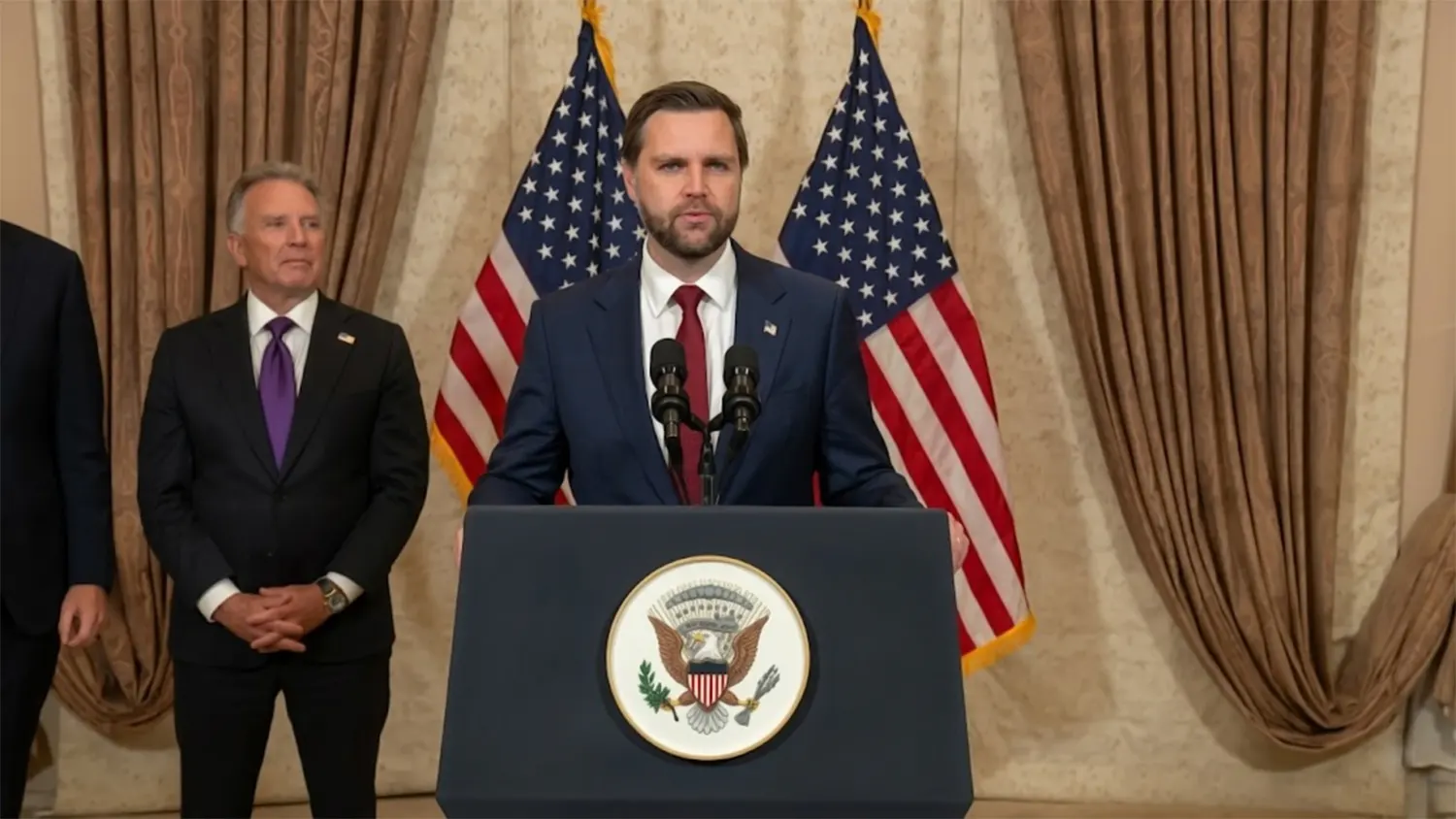
On the American side, Vice President JD Vance reiterated a hard line position that Iran must not only avoid building a nuclear weapon but must also dismantle the infrastructure that could enable rapid nuclear breakout. This includes centrifuges and enrichment facilities, which Washington sees as essential to eliminating future risk.
However, Iran has rejected these demands as “excessive” and “unlawful,” arguing that its nuclear program is a sovereign matter. Iranian officials emphasized that while minor technical understandings were discussed, the gap on core principles remains too wide to bridge in a single negotiation round.
As a result, what emerged from the talks was not progress, but confirmation that both sides are locked into fundamentally incompatible definitions of security and sovereignty.
Diplomatic Breakdown in Islamabad: A Missed Turning Point
The Islamabad talks were intended to convert a temporary ceasefire into a longer political framework. Instead, they ended with no formal agreement and a clear warning from the US delegation that its terms represent a “final and best offer.”
Across the diplomatic table, Iranian officials attempted to downplay the collapse, signaling that future negotiations are still possible but not on Washington’s timeline. Yet behind this cautious language lies a harsher reality: neither side appears willing to compromise on the core issue that matters most to the other.
The result is a stalled diplomatic process at a moment when military activity on the ground and at sea is already accelerating.
The Strait of Hormuz: Where Diplomacy Meets Military Reality
If the nuclear dispute defines the long term conflict, the Strait of Hormuz has become the immediate flashpoint.
This narrow maritime corridor through which roughly one fifth of global oil shipments
pass has now become a contested strategic zone. Iran currently retains operational influence in the area, including the ability to regulate passage and, according to US claims, collect transit fees during the fragile ceasefire period.
Washington has sharply challenged this arrangement, with US officials arguing that freedom of navigation cannot be subject to unilateral control or toll collection in international waters.
At the same time, the United Nations maritime authorities have also warned against the imposition of transit fees, increasing international scrutiny of the situation.
As a result, the Strait has evolved into more than a shipping route, it is now a direct measure of strategic control and global economic stability.
Escalation at Sea: US Mine-Clearing Operations and Iranian Denials
Tensions escalated further when the United States Navy initiated mine clearing operations in the Strait of Hormuz, marking a significant operational shift.
Two US destroyers reportedly transited into the Arabian Gulf as part of an effort to establish a secure maritime corridor for global commerce. The mission includes deploying underwater drones to detect and remove mines allegedly placed by Iran’s Islamic Revolutionary Guard Corps (IRGC).
However, Iran has strongly denied these developments, calling reports of US naval transit and operations “fake news” and insisting it maintains full control over the waterway.
This has created what analysts describe as a “fog of maritime ambiguity,” where competing narratives from both sides make it difficult to verify real time control of the Strait.
Meanwhile, US political messaging has intensified. President Trump has publicly claimed that Iranian mine laying capabilities have been neutralized and described the situation as a military success even as diplomatic negotiations collapse.
Regional Reactions: Division and Escalating Rhetoric
The collapse of diplomacy has triggered strong and divergent reactions across the region.
Pakistan, which played a mediating role in the Islamabad talks, has urged both sides to maintain the ceasefire and avoid further escalation. However, the lack of a follow up framework has limited its ability to stabilize the situation.
Israel has taken a markedly different position. Prime Minister Benjamin Netanyahu has argued that the joint US-Israeli campaign has already significantly weakened Iran’s military capabilities, stating that Iran is now “fighting for survival” rather than strategic advantage.
Meanwhile, military activity continues in parallel theaters. Israeli operations targeting Hezbollah infrastructure in Lebanon have persisted, further complicating the already fragile regional ceasefire arrangement.
This divergence in regional positions highlights a broader reality: the ceasefire is not uniform across all fronts, making it structurally unstable.
Humanitarian and Economic Shockwaves
Beyond military and diplomatic developments, the crisis is producing severe humanitarian and economic consequences.
Reports from Iranian emergency services indicate thousands of civilian casualties from recent strikes, including over 2,000 children injured across multiple provinces. These figures underscore the growing human cost of sustained conflict even during periods of formal ceasefire.
At the same time, global energy markets remain highly volatile. Because the Strait of Hormuz handles a significant share of global oil and gas exports, even the perception of disruption has led to sharp fluctuations in prices and investor uncertainty.
This economic instability reinforces a key dynamic of the crisis: military tension in a narrow geographic corridor is now directly affecting global economic stability.
The Ceasefire Countdown: Nine Days of Uncertainty
The current ceasefire, established on April 8 and set to expire on April 21, leaves only nine days remaining in a rapidly narrowing window for diplomacy.
However, the timeline itself is secondary to the underlying instability. Several factors could collapse the ceasefire before its official expiration:
- Failed negotiations in Islamabad, which were intended to extend the truce into a longer framework
- Ongoing US naval operations, which Iran could interpret as a violation of ceasefire conditions
- Continued Israeli strikes in Lebanon, which remain outside the ceasefire’s agreed scope according to some parties but not others
As a result, the remaining days are less a period of peace and more a high risk countdown in which miscalculation could rapidly trigger renewed conflict.
Future Outlook: A System Built on Fragile Assumptions
The situation now hinges on a narrow set of unstable possibilities. If the United States succeeds in maintaining maritime access without escalation, the ceasefire may survive until its expiration date. However, if Iran attempts to contest US naval operations in the Strait, the ceasefire could collapse almost immediately.
More broadly, the failure in Islamabad has revealed a deeper structural issue: there is currently no agreed roadmap for de escalation beyond temporary pauses in fighting.
Without such a framework, the region remains locked in a cycle where military pressure substitutes for diplomacy, and diplomacy collapses under the weight of military realities.
Escalation Risks Ahead
The collapse of talks in Islamabad and the escalating tension in the Strait of Hormuz have pushed the Iran–United States confrontation into a dangerous interim phase. A ceasefire technically still exists, but its political foundation is weakening rapidly.
With nuclear disagreements unresolved, naval operations intensifying, and regional actors divided, the coming days are less about sustaining peace than about preventing a rapid return to open conflict in one of the world’s most strategically important waterways.