On March 13, 2026, a historic milestone in medical technology was reached. China’s National Medical Products Administration (NMPA) officially approved the world’s first invasive brain computer interface (BCI) medical device for commercial use.
For decades, brain computer interfaces systems that allow the brain to communicate directly with machines have existed mostly inside research laboratories.
Now, the technology has crossed a critical threshold: from experimental science to regulated medical treatment.
The newly approved device aims to help people with severe spinal cord injuries regain the ability to grasp and hold objects using only their thoughts. For many patients living with paralysis, that could mean a dramatic step toward independence.
What Is a Brain Computer Interface ?
A brain computer interface (BCI) is a technology that allows the brain to send signals directly to an external device without relying on the body’s normal nerve pathways.
In a healthy person, when the brain decides to move a hand, electrical signals travel down the spinal cord and activate muscles in the arm and fingers.
For people with spinal cord injuries, that communication pathway is broken. The brain still sends the signal but it never reaches the muscles.
A BCI solves this problem by capturing those brain signals and redirecting them around the injury, allowing thoughts to control machines instead.
Think of it as a wireless detour around a blocked road.
A Device Designed to Restore Hand Function
The system developed by Neuracle Technology is designed for a specific group of patients with severe spinal cord injuries.
Who qualifies for the treatment ?
To ensure safety and effectiveness, the eligibility criteria are strict:
- Age: 18–60 years old
- Condition: Quadriplegia caused by cervical spinal cord injuries (C2–C6)
- Injury duration: At least one year
- Stability: The condition must have been medically stable for six months
- Physical capability: Unable to grasp with the hands but retaining some upper arm movement
These patients typically still have healthy motor areas in the brain, meaning the brain can generate movement commands even though the spinal cord cannot deliver them to the body.
The BCI essentially bypasses the damaged spinal cord and reconnects intention with action.
How the System Works
The technology operates in several stages, converting a patient’s thoughts into physical movement.
1. Signal Acquisition: Listening to the Brain
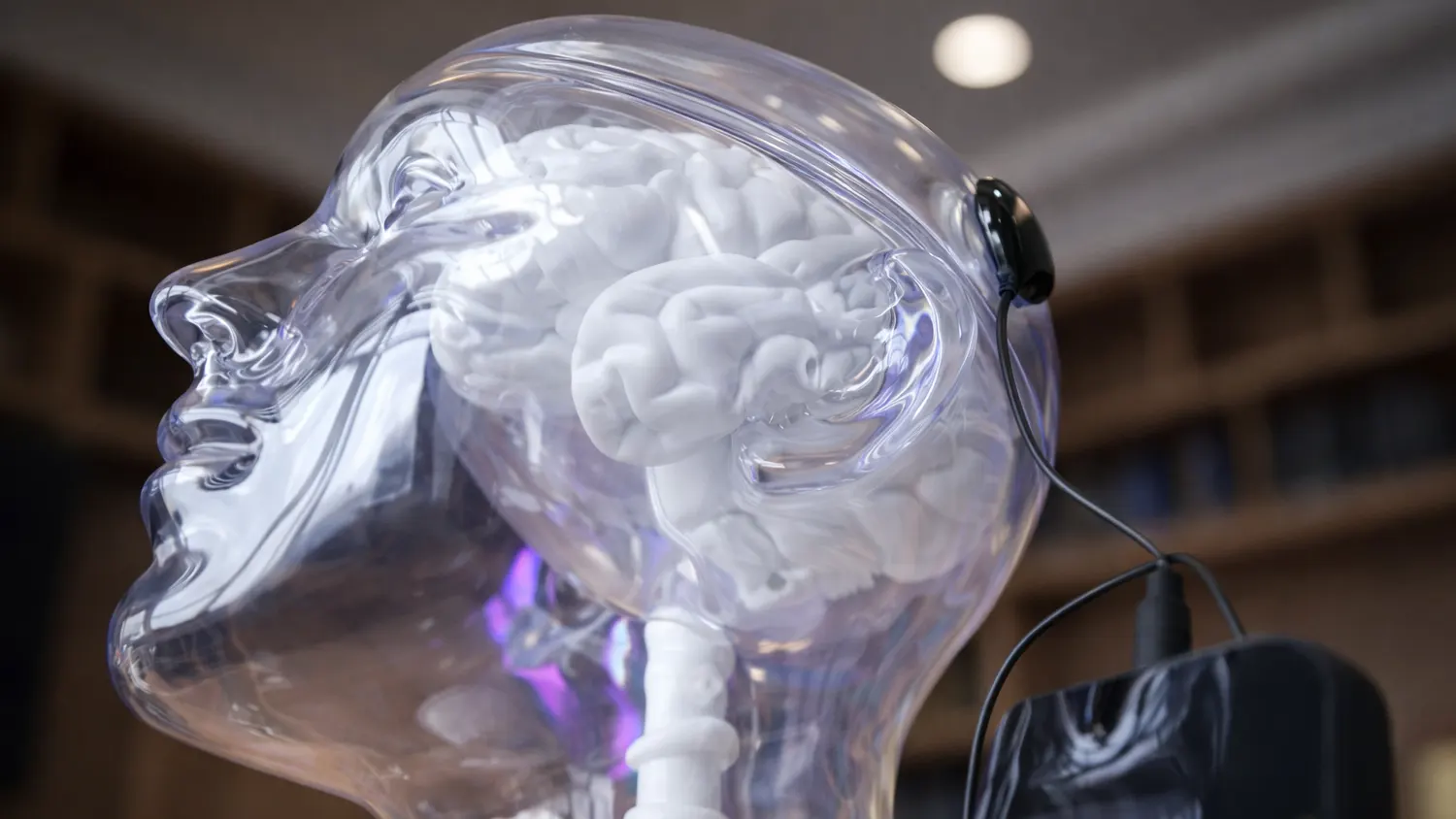
A coin sized wireless implant is placed in a small groove in the skull during a minimally invasive surgical procedure.
Unlike consumer brain sensing headsets that measure signals from outside the head using electroencephalography (EEG), this implant records high quality neural electrical activity directly from the brain’s surface.
The device uses an epidural placement, meaning the electrodes sit on top of the dura mater, the protective membrane that covers the brain.
Because it does not penetrate brain tissue, the system can capture detailed signals without directly touching or damaging the brain.
2. Decoding: Translating Thoughts into Commands
When a person intends to move their hand, the brain produces a distinct electrical pattern in the motor cortex.
The implant records these signals and sends them to specialized software that:
- Identifies the patient’s unique neural patterns
- Filters out background noise
- Converts the signal into a digital command
In simple terms, the system learns what the brain’s signal for “close hand” looks like.
3. Wireless Transmission
The decoded command is transmitted wirelessly through the skin to an external receiver.
This wireless design eliminates the need for cables leaving the head, making the system safer and more practical for everyday life.
It also allows the patient to operate the system independently at home.
4. Device Output: The Robotic Glove
The digital command is sent to a pneumatic robotic glove worn by the patient.
Using air pressure (pneumatics) to move the fingers, the glove can:
- Grasp a cup
- Hold utensils
- Pick up small objects
In effect, the patient’s thought directly controls the glove’s movement.
5. The Closed Loop: The Brain Learns
Perhaps the most impressive feature is the feedback loop.
When a patient thinks “close hand” and sees the glove respond, the brain receives visual feedback. This process encourages neural remodeling, where the brain reorganizes its connections and becomes better at generating the correct signals.
Over time, both the brain and the software improve leading to smoother and
more natural control.
Why the “Epidural” Design Is a Breakthrough
Earlier invasive BCIs often used intracortical electrodes, which are tiny needles inserted directly into brain tissue.
While this approach provides extremely clear signals, it also carries significant risks, including:
- Tissue damage
- Inflammation
- Scarring in brain cells
- Micro-bleeding over time
The new system avoids these risks by sitting outside the brain tissue.
Key differences
| Feature | Intracortical BCIs | Epidural BCIs |
|---|---|---|
| Placement | Inside brain tissue | On top of the dura mater |
| Tissue contact | Direct | Indirect |
| Risk profile | Higher | Lower |
| Signal quality | Very high | High (enhanced with advanced algorithms) |
Normally, signals recorded outside the brain are weaker. However, new AI driven signal decoding algorithms allow the system to clean and interpret those signals accurately.
This balance between signal quality and surgical safety is a major reason regulators approved the device.
Extensive Human Testing
The approval was supported by extensive human clinical testing.
Before receiving regulatory authorization, the system had already been used in 36 clinical procedures.
The trial program included:
- 4 feasibility trials to confirm basic safety and functionality
- 32 multi center trials conducted under Good Clinical Practice (GCP) standards
GCP trials represent the gold standard for medical device research, ensuring strict oversight and reliable data.
Patient outcomes
Participants with spinal cord injuries showed:
- Improved ability to grasp and hold objects
- Reliable wireless operation outside laboratory environments
- Evidence of neural adaptation and improved motor control
Many patients were able to operate the system independently about one month after surgery.
What Regulatory Approval Means
The approval from the National Medical Products Administration formally registers the device as a Class III medical device, the highest risk category for implantable technologies.
The approval specifically covers the medical use case of hand motor augmentation, meaning the system is approved to restore grasping ability in patients with cervical spinal cord injuries.
This certification confirms that the device has demonstrated:
- Clinical safety
- Proven effectiveness
- Standardized surgical procedures
- Long term patient monitoring protocols
Importantly, regulatory approval does not end oversight. The manufacturer must continue monitoring patients, and regulators retain the authority to intervene if any safety issues arise.
When Will This Technology Become Widely Available ?
Because the system requires neurosurgery, it will never be a consumer gadget like a smartphone. Instead, it will gradually become a specialized medical treatment.
The next 3–5 years
Deployment will likely focus on:
- Specialized neurosurgical hospitals in major cities
- Patients with severe spinal cord injuries
- Establishing insurance coverage and rehabilitation programs
The goal is to transition from clinical trials to standardized medical practice.
Around 2030 and beyond
As the technology matures, researchers expect expansion into other neurological conditions, including:
- Stroke rehabilitation
- Parkinson’s disease management
- Epilepsy monitoring
- Communication for locked in syndrome
In these cases, BCIs could either restore lost abilities or monitor brain activity in real time to prevent symptoms.
A Different Path for Consumer Brain Technology
While invasive BCIs remain strictly medical, non invasive brain interfaces could reach the consumer market much sooner.
Future products may include:
- Brain sensing headbands
- Smart earbuds that monitor focus and sleep
- Augmented reality glasses that respond to neural signals
Because these systems use external sensors instead of surgery, they can reach mass markets far more quickly.
A Turning Point for Brain Computer Interfaces
For decades, brain computer interfaces were the subject of science fiction and laboratory experiments.
Now, they are beginning to restore real physical abilities to people living with paralysis.
The approval of this device marks an important turning point: BCI technology has officially entered regulated clinical medicine.
We are still in the early stages of the field. But just as early computers once filled entire rooms before becoming everyday tools, BCIs may now be entering their own transformative era.
And for patients who have lost the ability to move, that transformation could mean something profoundly simple: the ability to reach out and hold something again.