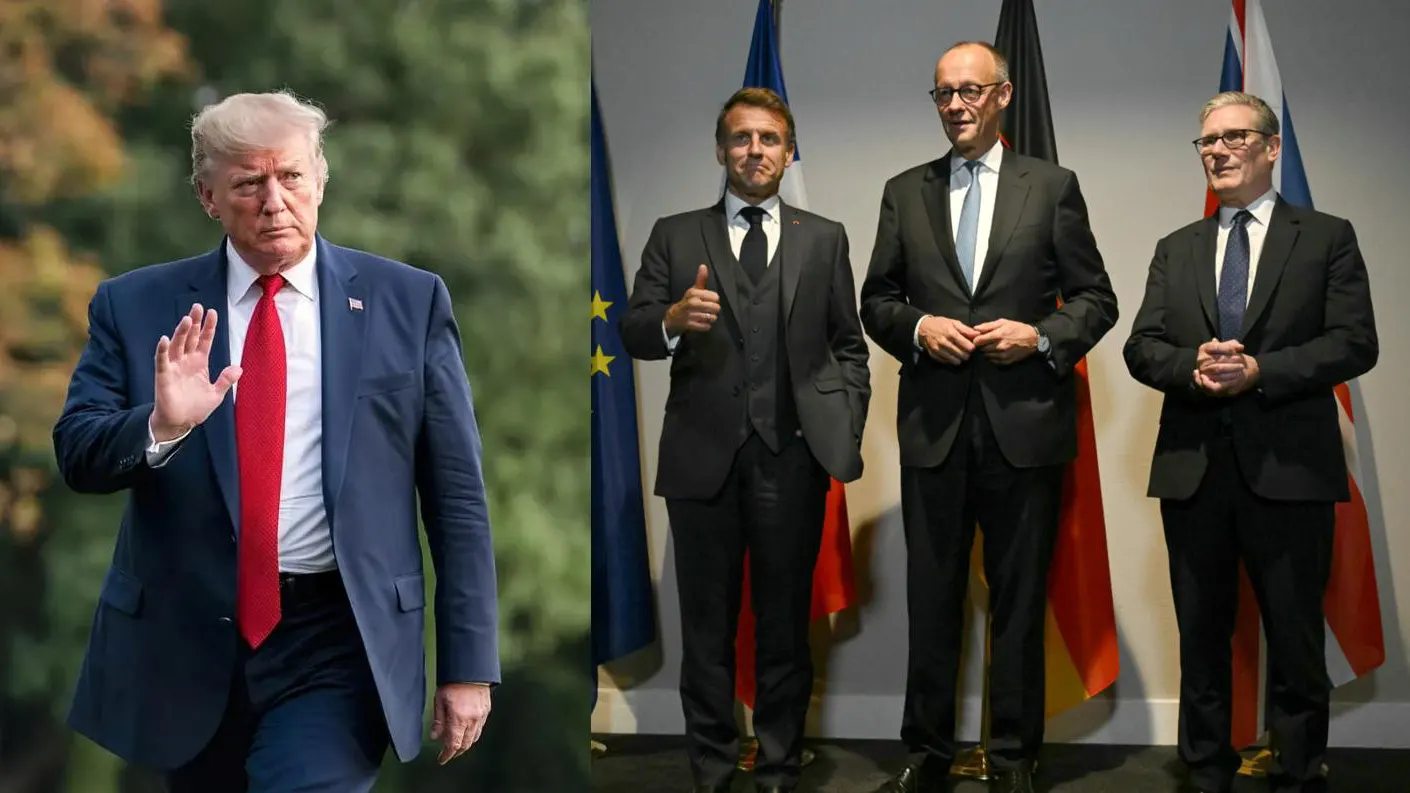
The war in the Middle East is no longer just a regional conflict. It is now exposing deep fractures inside NATO, one of the world’s most powerful military alliances.
As of March 18, 2026, key U.S. allies have refused to join a naval mission in the Strait of Hormuz, triggering one of the most serious transatlantic disputes in decades.
What began as a military crisis is quickly becoming a political one with long term consequences for global security.
The Root of the Conflict
At the center of the crisis is the Strait of Hormuz, a narrow but vital passage for global energy supplies.
Following U.S.-Israeli strikes on Iran, Tehran effectively shut down the waterway, turning it into a high risk conflict zone.
The impact has been immediate.
Shipping traffic has collapsed by nearly 90%, and global insurers have pulled coverage entirely.
Lloyd’s of London has now classified the entire Gulf as a “Listed Area,” its highest risk category.
At the same time, war risk insurance premiums have surged by over 1,200%, making commercial transit economically unviable.
The “Asymmetric Kill Zone”
While the U.S. maintains that the strait is “technically open,” the operational reality is far more dangerous.
Iran has transformed the region into a layered threat environment designed to deter even advanced navies.
According to military assessments, Iran is deploying:
- Jet powered Shahed-238 drones
- Coastal missile batteries
- Sea mines across key shipping lanes
- Al-Ghadir stealth submarines operating in shallow waters
Together, these systems create what analysts describe as an “asymmetric kill zone”
a battlefield where smaller, harder to detect threats can neutralize larger naval forces.
As a result, even the U.S. Navy is reluctant to operate freely without a large, multinational minesweeping coalition.
The Catalyst: NATO Says No
In response to the blockade, Washington called on NATO allies to form a joint naval mission to secure the strait.
But the answer from Europe was clear and unified.
The United Kingdom, Germany, France, and Italy have all refused to participate in a NATO-led operation.
- The UK stated it “will not be drawn into the wider war”
- Germany declared: “This is not our war”
- France and Italy emphasized their missions remain strictly defensive
This moment is critical.
Major NATO powers are openly rejecting U.S. military leadership during an active global crisis.
Europe’s Alternative: Operation Sentinel II
Rather than escalating, European leaders are pursuing a different strategy.
The United Kingdom has launched a separate initiative “Operation Sentinel II.”
This coalition includes:
- The UK
- Norway
- The Netherlands
Notably, it excludes both the United States and the NATO label, a deliberate move to avoid triggering direct confrontation with Iran.
The mission is limited in scope:
- Protect shipping routes
- Deploy mine hunting drones
- Provide surveillance support
The objective is clear: contain the crisis without expanding the war.
Trump’s Response: Pressure and Warning
The reaction from Washington has been sharp.
President Donald Trump has framed the refusal as a failure of allied responsibility.
“If there’s no response… it will be very bad for the future of NATO.”
Behind this statement is a deeper strategic shift.
Trump is increasingly treating NATO as a transactional alliance where support must be earned, not assumed.
He argues that:
- The U.S. has spent trillions defending Europe
- Allies benefit from American security
- But are unwilling to act during crises
This marks a clear break from traditional alliance norms.
A “Transactional NATO”
What is emerging is a redefinition of NATO itself.
The alliance is shifting from collective defense toward a conditional, “pay to play” model.
In this framework:
- Military support becomes conditional
- Cost sharing becomes central
- Strategic cooperation becomes negotiable
As a result,
the trust that underpins NATO is beginning to erode.
The Strategic Stakes
The consequences of this divide could be far reaching.
Analysts warn the current crisis could lead to:
- A reduction of U.S. troops stationed in Europe
- Limits on intelligence sharing between allies
- Growing uncertainty around NATO’s core defense commitments
Most critically,
it raises doubts about whether NATO would respond as a unified force in a future conflict.
The Strait Remains at a Standstill
While diplomacy falters, the situation on the ground remains unchanged.
The Strait of Hormuz is effectively closed to Western shipping.
Even where waters are technically navigable,
the combination of military risk and insurance collapse has halted movement almost entirely.
This creates a dangerous feedback loop:
- No ships → rising energy prices
- Rising prices → increased political pressure
- Increased pressure → greater risk of escalation
Where the Conflict Is Headed
As tensions deepen, the crisis is entering a new phase.
This is no longer just a military standoff, it is a test of alliance cohesion.
If divisions persist:
- The U.S. may act independently
- Europe may pursue parallel security frameworks
- Global coordination may weaken
At the same time,
prolonged disruption in Hormuz could trigger wider economic instability.
What’s at Stake
This moment represents more than a policy disagreement.
It is a turning point for NATO and the future of Western cooperation.
For decades, the alliance has been built on shared risk and collective defense.
Now, those principles are being challenged in real time.
If the divide continues to widen,
the consequences could extend far beyond the current conflict reshaping global power structures for years to come.