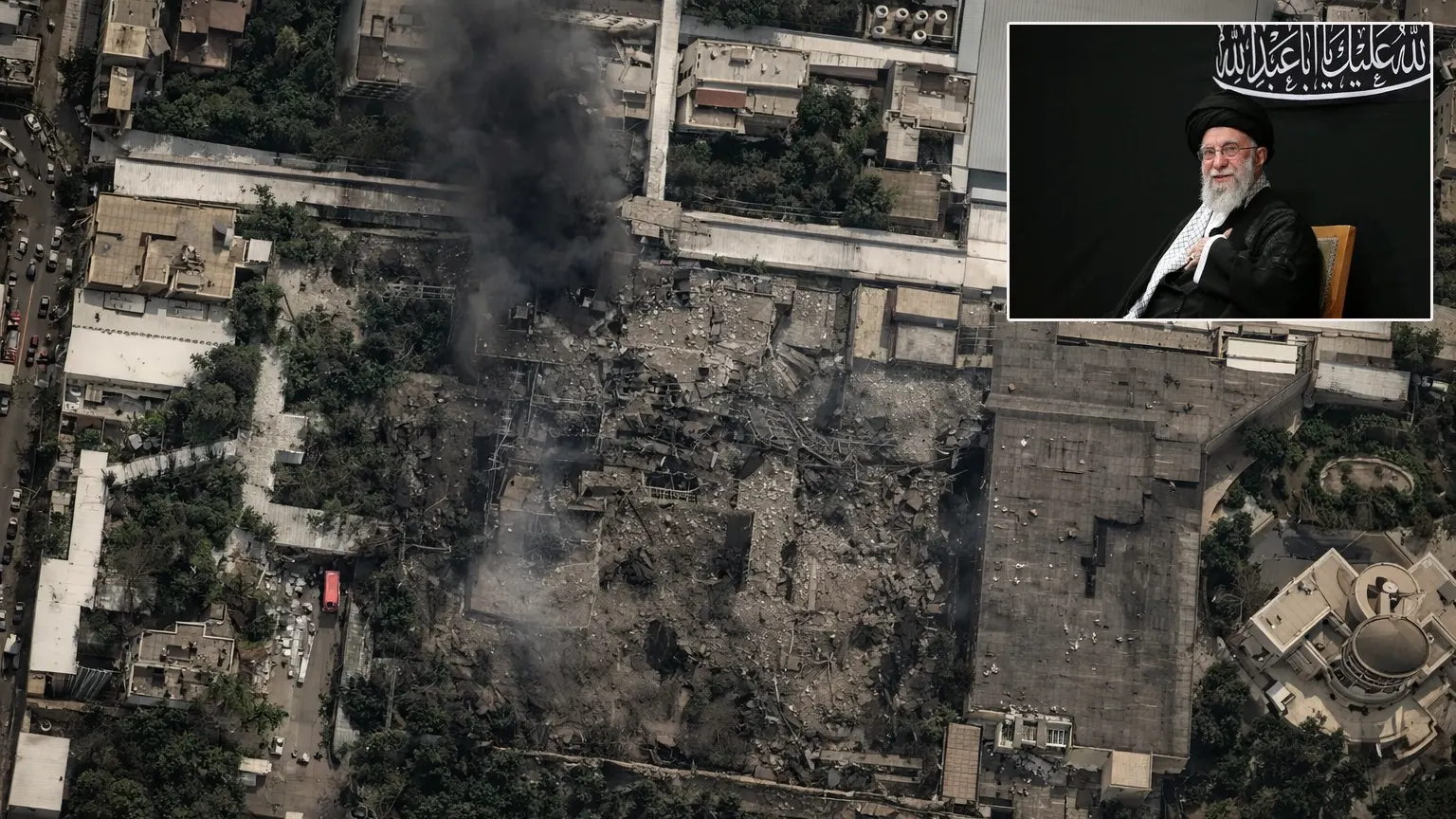
Iran has entered one of the most volatile moments in its modern history. On March 1, 2026, Iranian state media confirmed that Supreme Leader Ayatollah Ali Khamenei was killed in a coordinated U.S.–Israeli strike on his compound in central Tehran, triggering immediate regional retaliation and a profound domestic leadership crisis.
What follows is not just a military escalation but a struggle over
the future of the Iranian state itself.
Operation “Epic Fury” and the Decapitation Strike
U.S. President Donald Trump and Israeli Prime Minister Benjamin Netanyahu confirmed the joint operation, reportedly involving more than 30 bunker busting munitions in broad daylight.
Among those confirmed killed:
- Ali Khamenei
- Gen. Mohammad Pakpour
- Ali Shamkhani
- Dozens of additional senior officials
Iran’s casualty figures across 24 provinces currently stand at:
- 201 confirmed dead
- 747+ injured
The Minab School Strike
One of the most controversial incidents involves a strike on a girls’ elementary school in Minab, Hormozgan province.
Iranian state media and the Iranian Red Crescent report at least 108 children killed. However, earlier international reporting cited lower figures ranging from 57 to 85 deaths. Independent verification is ongoing, and the discrepancy highlights the difficulty of confirming casualty numbers in real time during active conflict.
Iran’s Foreign Ministry has labeled the strike a war crime.
The Interim Leadership Council
With no formally declared successor, Iran has activated a constitutional emergency mechanism.
A 3 person interim council has assumed authority:
- Masoud Pezeshkian, President
- Gholam Hossein Mohseni Ejei, Head of the Judiciary
- A senior jurist from the Guardian Council
The Assembly of Experts now faces mounting pressure to appoint a new Supreme Leader. However, the succession process is clouded by uncertainty.
The Mojtaba Question
Mojtaba Khamenei long viewed as a potential successor was reportedly present at the compound during the strike. His status remains unconfirmed, with some sources describing him as missing. Other family members, including a sister and close relatives, were confirmed killed.
If Mojtaba is incapacitated or deceased, it would dramatically alter succession calculations and remove one of the most controversial continuity candidates.
The government has declared:
- 40 days of national mourning
- A 7 day public holiday
- Elevated security presence across major cities
The “Sixth Wave”: Regional Retaliation
Within hours of the strike, the Islamic Revolutionary Guard Corps (IRGC) launched what it calls the “Sixth Wave”, a large scale missile and drone retaliation against U.S., Israeli, and Gulf targets.
Gulf Impact
Missiles targeted:
- Dubai and Abu Dhabi (UAE)
- Doha (Qatar)
- Manama (Bahrain)
The UAE reports intercepting the majority of 137 missiles and 209 drones, though debris caused a major fire at Jebel Ali Port and temporary paralysis at Dubai International Airport.
Casualty summaries so far:
- UAE: 2 dead, 8 injured
- Qatar: 8 injured, including one critical
- Kuwait: 15 injured
- Israel: 1 dead in Tel Aviv; dozens injured
Iran claimed heavy U.S. casualties, but U.S. Central Command reported zero American service member deaths and minimal installation damage.
President Trump warned that further escalation would be met with
“force that has never been seen before.”
A Direct Appeal to the Military
In a dramatic escalation of rhetoric, President Trump posted:
“Now they can have Immunity, later they only get Death!”
The statement is widely interpreted as a direct appeal to Iran’s security apparatus particularly the Artesh (regular military), which has historically been viewed as less ideologically rigid than the IRGC.
The strategy appears designed to trigger internal defections and weaken regime cohesion from within. Whether senior officers break ranks remains unclear.
Energy Markets and the Strait of Hormuz
The IRGC has reportedly declared the Strait of Hormuz
“unauthorized for transit,” threatening one of the world’s most critical energy chokepoints.
Even the possibility of disruption has sent oil prices sharply higher. Analysts warn that a sustained closure could cause a structural shock to global energy markets and supply chains.
Regional airspace remains heavily restricted, and foreign embassies have issued emergency shelter advisories to their citizens.
A Divided Nation: Mourning and Celebration
Inside Iran, reactions are sharply split.
State Led Mourning
Large, organized gatherings have filled public squares with chants against the U.S. and Israel. Security forces maintain a visible presence in Tehran, Isfahan, and Mashhad to prevent unrest.
Celebration and Resistance
Simultaneously, reports from Tehran, Shiraz, and Isfahan describe rooftop chants, honking car horns, and small street celebrations.
Students at major universities have reportedly removed portraits of Khamenei during demonstrations. Many citizens are bypassing internet restrictions using satellite terminals to coordinate and share footage.
This moment follows a brutal January 2026 crackdown that reportedly left thousands dead, leaving the public both traumatized and defiant.
Organized Opposition Steps Forward
Two prominent factions are positioning themselves to shape a post Khamenei future.
The NCRI
The National Council of Resistance of Iran, led by Maryam Rajavi, has called the event the “death of religious tyranny.” The group proposes
a 6 month provisional government followed by free elections.
The Monarchists
Reza Pahlavi has called for a national referendum to determine the country’s future political system and urged security forces to abandon the regime.
Risks of Fragmentation
With central authority weakened, attention has turned to Iran’s ethnic minority regions including Kurdish, Azeri, and Baloch areas.
Without a credible and rapid transitional framework, analysts warn of potential internal fracturing or civil conflict. The durability of Iran’s territorial integrity may depend on how quickly political legitimacy can be reestablished.
A Pivotal Moment
Iran stands at its most consequential crossroads since 1979.
The death of its Supreme Leader has triggered:
- A regional military escalation
- A global energy shock
- A contested succession battle
- A renewed internal resistance movement
The immediate questions are stark:
Will retaliation spiral further ?
Will the military fracture ?
Can a legitimate transitional authority emerge before instability deepens ?
The answers will shape not only Iran’s future but the strategic balance of the entire Middle East.