The widening conflict in the Middle East is now drawing in countries far beyond the immediate battlefield.
On March 10, 2026, Australia announced a military deployment to the Persian Gulf, sending advanced surveillance aircraft and air defense missiles to the United Arab Emirates (UAE). The move places Australia among a growing list of nations responding to the escalating regional crisis.
Yet Canberra is carefully framing the mission in narrow terms.
Prime Minister Anthony Albanese has stressed repeatedly that
Australia is “not a protagonist” in the war. Instead, the government
says the deployment is strictly about protecting civilians and supporting regional defense.
The announcement highlights a delicate balancing act: helping stabilize a volatile region without becoming directly involved in combat operations against Iran.
A Region Under Heavy Missile and Drone Threat
The conflict that has engulfed the Middle East has increasingly spilled beyond its initial flashpoints.
Across the Gulf, countries such as the UAE have faced waves of missile and drone attacks, forcing governments to expand their air defense networks. According to regional officials, UAE air defenses have intercepted more than 1,500 rockets and drones since the conflict began.
That constant barrage has heightened concerns about the safety of civilians and foreign residents across the region.
For Australia, the numbers are significant.
Approximately 24,000 Australians live in the UAE, and more than
115,000 Australian citizens are spread across the wider Middle East.
As the conflict intensified, protecting those nationals quickly became a central priority for Canberra.
This concern ultimately led to a formal request from the UAE’s leadership for defensive support.
What Australia Is Deploying
Following a request from UAE President Mohamed bin Zayed Al Nahyan, the Albanese government approved a targeted military deployment designed specifically for air defense and surveillance.
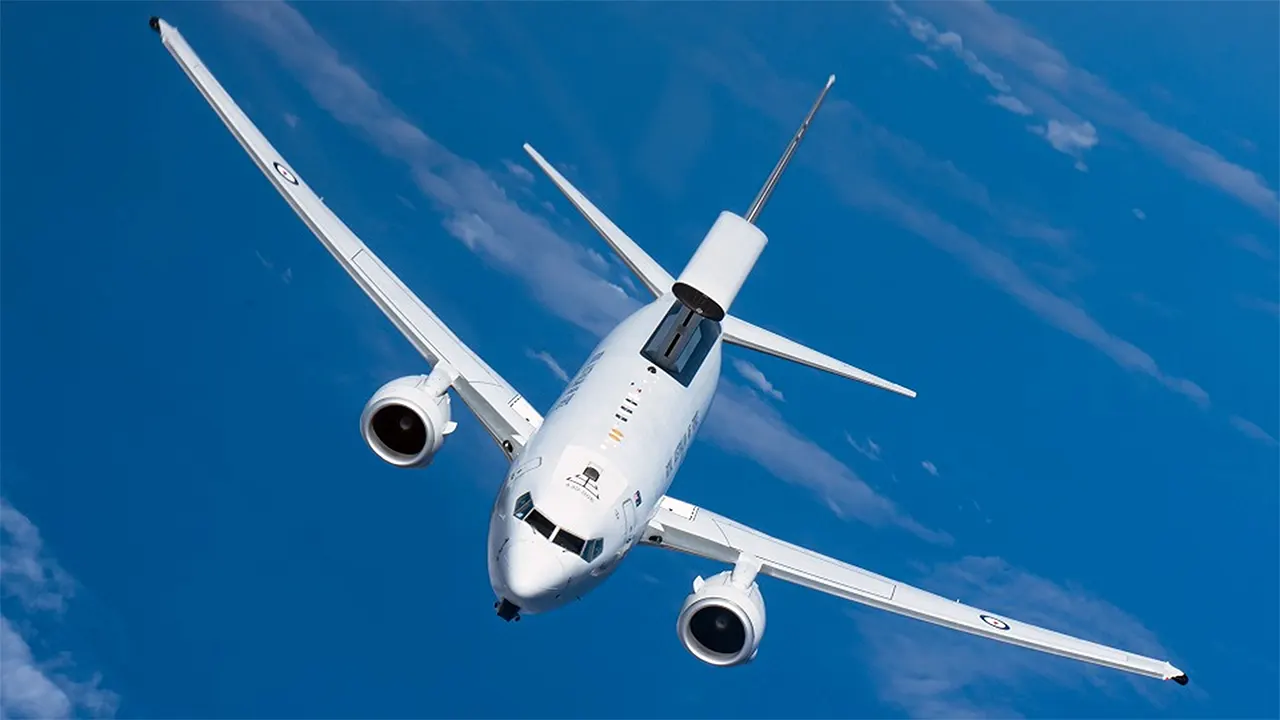
The centerpiece of that mission is one Royal Australian Air Force E-7A Wedgetail aircraft.
Often described as a “flying radar,” the Wedgetail provides advanced airborne early warning and command capabilities. Its powerful sensors can monitor large sections of airspace simultaneously, identifying incoming missiles, drones, and aircraft from long distances.
Alongside the aircraft, Australia will also provide Advanced Medium Range Air to Air Missiles (AMRAAMs) requested by the UAE to
strengthen its defensive systems.
In practical terms, the mission includes:
- 1 E-7A Wedgetail airborne surveillance aircraft
- A shipment of AMRAAM air to air missiles
- Approximately 85 Australian Defence Force personnel
- An initial deployment period of four weeks
Together, these assets are intended to help Gulf partners detect threats earlier and intercept attacks before they reach civilian areas or critical infrastructure.
Why Canberra Calls the Mission “Purely Defensive”
Despite deploying military equipment into an active conflict zone, the Australian government has gone to great lengths to define the mission carefully.
Prime Minister Anthony Albanese and Defence Minister Richard Marles have repeatedly described the deployment as “purely defensive assistance.”
The distinction is important.
Australia is not participating in airstrikes or offensive military operations against Iran. Instead, the Wedgetail aircraft will focus on surveillance, reconnaissance, and coordination helping regional defenses track incoming threats.
The AMRAAM missiles serve a similar purpose.
These weapons are designed to intercept hostile aircraft, cruise missiles, or drones, strengthening the defensive shield protecting cities, infrastructure, and airspace across the Gulf.
By limiting its contribution to surveillance and interception capabilities, Canberra argues that it is supporting collective self defense rather than joining the offensive military campaign.
The “Non Protagonist” Strategy
A central theme in Australia’s messaging has been its insistence that it is not becoming a combatant in the war.
Government officials have repeatedly emphasized that Australia is
“not a protagonist” in the conflict between Iran and the coalition conducting military operations in the region.
This distinction serves two purposes.
First, it signals to domestic audiences that Australia is not entering another overseas war. Second, it helps maintain diplomatic distance from the broader U.S. and Israeli military campaign targeting Iranian assets.
To reinforce that stance, the government has been clear about several limits:
- No Australian ground troops will be deployed.
- Australia will not conduct offensive strikes against Iran.
- The mission is focused exclusively on defensive surveillance and airspace protection.
This careful framing reflects Canberra’s effort to support regional stability without crossing the threshold into active combat.
Protecting Australians in the Region
While strategic alliances are part of the equation, the government’s primary justification has centered on protecting its own citizens.
More than 115,000 Australians currently live across the Middle East, including tens of thousands in Gulf states. In the UAE alone, the Australian community numbers around 24,000 residents.
With missile and drone strikes continuing across the region, officials say the deployment is a contingency measure to ensure that those citizens are not caught in the crossfire.
At the same time, Australia’s diplomatic services are focusing on consular support and evacuation planning for citizens who may wish to leave the region if the situation worsens.
A Conflict With Global Ripples
Australia’s deployment is also a sign of how widely the current crisis is spreading.
What began as a regional conflict has increasingly drawn in international partners seeking to protect shipping lanes, energy infrastructure, and civilian populations.
As more countries provide defensive support to Gulf states, the region’s airspace is becoming an increasingly complex network of allied surveillance systems, missile defenses, and command platforms.
The arrival of Australia’s Wedgetail aircraft adds another layer to that defensive network, bolstering security near critical chokepoints like the Strait of Hormuz, the artery for one fifth of the world’s oil where disruptions are already driving global market volatility.
At the same time, the deployment underscores a broader reality: the consequences of this conflict are no longer confined to the battlefield.
Energy markets, global shipping routes, and expatriate communities across the region are all now tied to the trajectory of the crisis.
The Strategic Calculations Ahead
For now, Australia’s deployment is scheduled to last four weeks, though officials have left open the possibility of adjustments depending on how the situation evolves.
Much will depend on whether missile and drone attacks across the Gulf continue at their current pace or whether diplomatic efforts manage to reduce tensions.
If the conflict escalates further, additional defensive deployments from allied nations could follow, expanding the network of surveillance and interception systems now forming across the region.
For Canberra, the challenge will remain the same: supporting regional stability while avoiding deeper involvement in the war itself.
Why This Moment Matters
Australia’s decision to deploy military assets to the Gulf underscores how quickly the Middle East conflict is drawing in partners from around the world.
By sending a Wedgetail surveillance aircraft and air defense missiles to the UAE, Canberra is strengthening regional defenses without formally joining the war.
At the heart of the decision lies a careful strategic balance.
Protect Australian citizens, support a key regional partner, and help stabilize Gulf airspace while stopping short of direct combat.
Whether that balance can hold will depend on how the conflict unfolds in the weeks ahead