A Capital at Breaking Point
Tirana is facing one of its most volatile political moments in years.
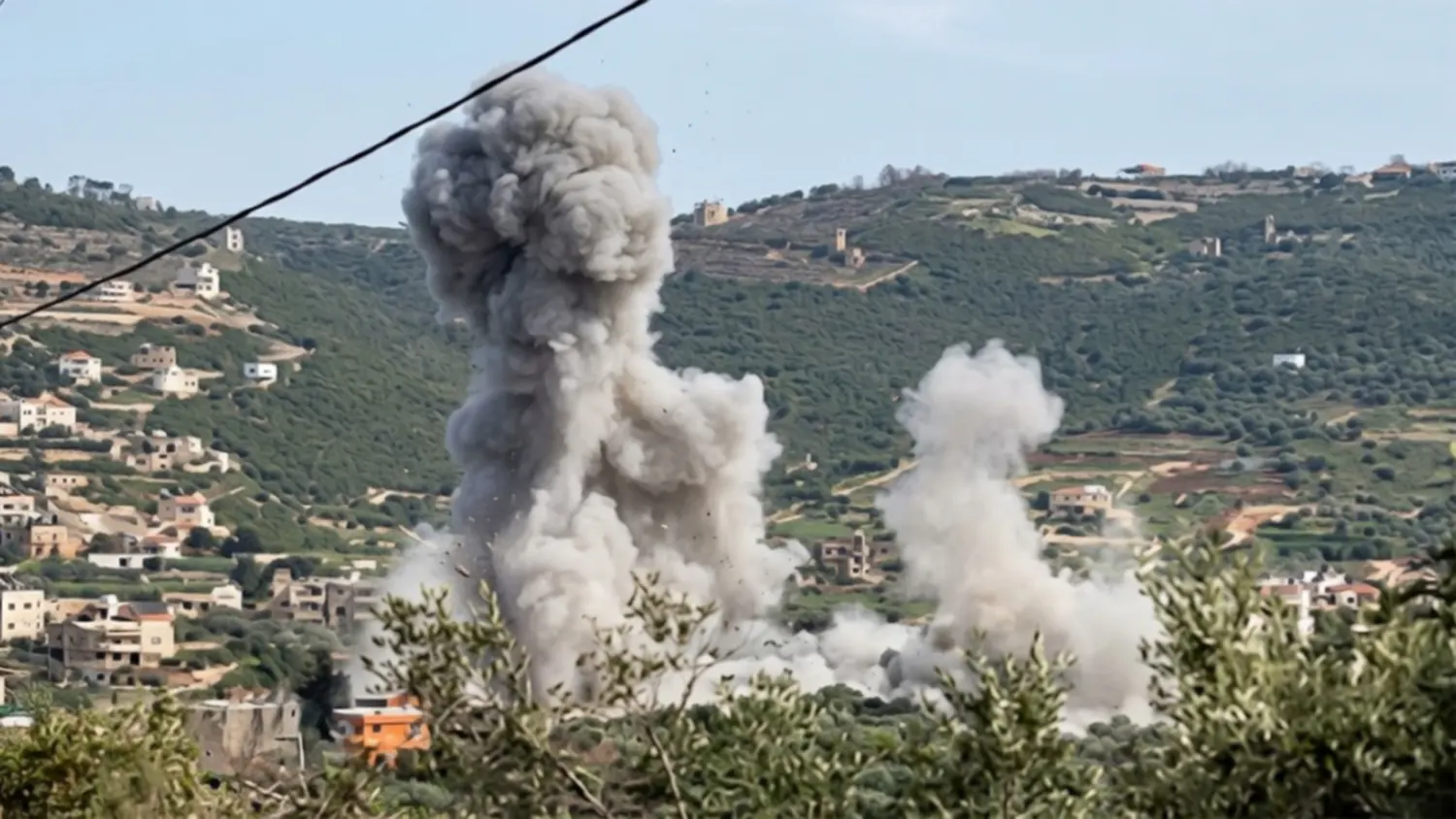
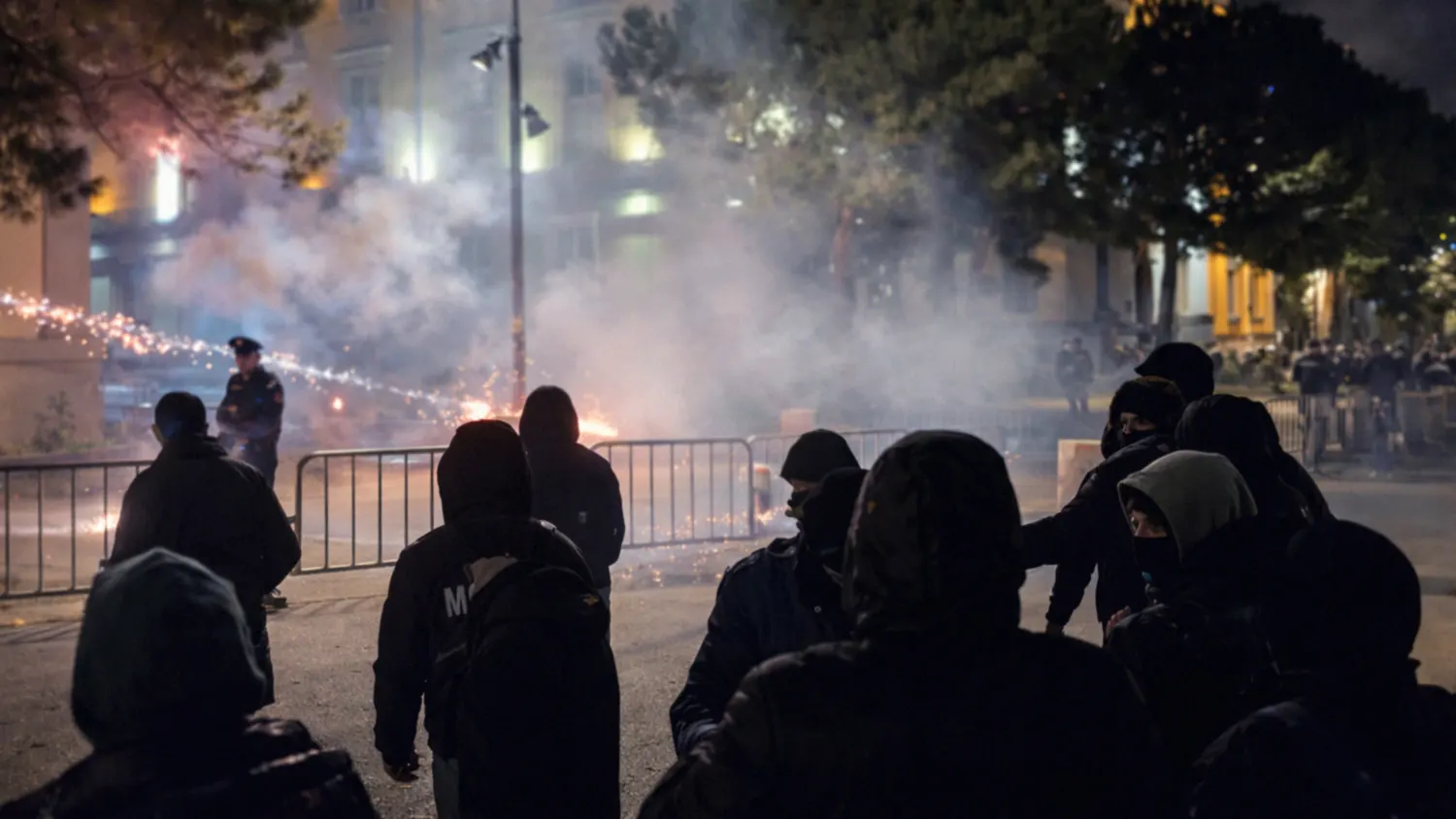
Over the past 48 hours, Albania’s capital has descended into violent unrest, as anti government protests turned into street clashes between demonstrators and security forces. What began as a political rally has evolved into a broader confrontation over corruption, accountability, and the country’s future in Europe.
At stake is more than political leadership. This crisis is testing the strength of Albania’s democratic institutions and its path toward the European Union.
A Protest That Turned Violent
On March 22, thousands of opposition supporters gathered in central Tirana, led by Democratic Party leader Sali Berisha, who positioned himself at the forefront of the march.
Within hours, the situation escalated into violence.
Protesters threw Molotov cocktails, flares, and pyrotechnics at key state targets, including:
- The Prime Minister’s Office
- The Ministry of Infrastructure
- The Socialist Party headquarters
- The AKSHI (National Agency for Information Society) building
In response, riot police deployed tear gas and water cannons, sealing off large sections of the city.
The confirmed toll highlights the intensity of the clashes:
- 5–6 police officers injured, treated at Tirana’s Trauma Hospital
- Dozens of protesters affected, primarily by tear gas
- 14 individuals arrested on the spot, with 23 escorted or detained for questioning
- Significant damage to buildings, vehicles, and public infrastructure
Berisha himself was forced to leave the scene after suffering respiratory distress from tear gas, reinforcing his visible role in the protest.
“The capital resembled a battlefield,” local reports noted, an unusually stark description for a country seeking EU membership.
The “Balluku Shield” Vote
The current wave of unrest can be traced directly to a single political decision.
On March 12, 2026, Albania’s parliament controlled by Prime Minister Edi Rama’s
Socialist Party voted to block a request from the Special Prosecution (SPAK) to lift the immunity of Deputy Prime Minister Belinda Balluku.
This decision, widely referred to as the “Balluku Shield,” became the immediate trigger for the March 22 protests.
The allegations are serious:
- Balluku is accused of interfering in public procurement contracts worth over €210 million
- Investigators reportedly uncovered encrypted communications suggesting tender manipulation
What made the vote even more controversial is that Balluku had already been dismissed from her cabinet role earlier in 2026.
For critics, this raised a fundamental question: why block prosecution if she was no longer in office ?
The opposition’s answer is clear: because the system protects itself.
A Pattern of Corruption Cases
The Balluku case is not happening in isolation. It fits into a broader pattern that has fueled public anger.
- Former President Ilir Meta has been in custody since 2024
- Tirana Mayor Erion Veliaj was arrested in 2025
- Multiple senior officials have faced investigations
Together, these cases have reinforced a growing perception of systemic corruption.
The opposition has seized on this narrative, describing Albania as a “mafia state” where political power shields elites from accountability.
Government vs Opposition: A Deepening Divide
At the core of the crisis are two competing visions of reality.
Government Position
Prime Minister Rama has taken a firm stance, rejecting calls for resignation or early elections.
He has:
- Described the protests as a “disgrace” and politically motivated
- Defended the handling of corruption cases as independent judicial processes
- Proposed legal changes to prevent ministers from being suspended during investigations
The government’s central argument is stability: Albania must avoid chaos to stay on track for EU accession.
Opposition Position
The Democratic Party, led by Berisha, sees the situation as fundamentally illegitimate.
Their demands include:
- A caretaker (technical) government
- Early elections under international oversight
- Full judicial accountability for senior officials
Berisha has escalated rhetoric further, calling for civil disobedience and framing the protests as a continuation of Albania’s democratic struggle after communism.
The EU Is Watching Closely
The crisis has immediate international implications especially for Albania’s
EU ambitions.
The country aims to join the European Union between 2027 and 2030, but progress depends heavily on rule of law reforms.
Recent developments are raising concerns:
- The Balluku immunity vote is seen as undermining judicial independence
- EU officials have signaled this could affect accession talks
- Neighboring countries like Montenegro are moving ahead faster
In practical terms, the current unrest risks delaying or even derailing
Albania’s European path.
Escalation on the Ground: Policing and Pressure
The government’s response has become increasingly forceful.
Authorities have deployed over 1,300 police officers, including specialized riot units, to secure key institutions.
Their strategy includes:
- Tear gas and water cannons to disperse crowds
- Mass detentions and legal action against protesters
- Criminal charges ranging from assault to arson and illegal possession of explosives
Interior Minister Albana Koçiu has argued that “the right to protest was abused.”
But critics warn that heavy handed policing could deepen public anger and prolong unrest.
A Fragile Political Moment
Albania now stands at a crossroads.
Several developments will shape the next phase:
Sustained Protests
The opposition is likely to continue demonstrations, especially as momentum builds from recent events.
Political Stalemate
Neither side shows signs of compromise, increasing the risk of a prolonged crisis.
Internal Opposition Moves
The Democratic Party has scheduled a leadership vote on May 23, 2026, signaling an attempt to convert street energy into political consolidation.
EU Pressure
Brussels may intensify scrutiny, particularly around judicial independence and corruption cases.
The Stakes for Albania
This is more than a protest movement, it is a systemic test.
At its core, Albania’s crisis is about trust in institutions, accountability of power, and the rule of law.
The outcome will determine not only who governs but how the country is governed.
And perhaps most importantly:
Whether Albania’s long journey toward Europe continues forward or begins to stall.