China will grant 30 day visa free entry to citizens of the United Kingdom and Canada starting February 17, 2026, marking a significant diplomatic and economic gesture following January visits by Prime Ministers Keir Starmer and Mark Carney.
The move expands China’s visa free list to 79 countries and leaves the United States as the only member of the Five Eyes intelligence alliance still requiring a traditional visa for standard entry.
What Changes on February 17
Beginning at 00:00 on February 17 and running through December 31, 2026, British and Canadian passport holders may enter China without a visa for stays of up to 30 days per visit.
The waiver applies to tourism, business meetings, family visits, cultural exchanges, and transit. Travelers must hold an ordinary passport valid for at least six months, along with proof of onward or return travel. Border officials may also request confirmation of accommodation.
While the visa requirement is lifted, one legal obligation remains: visitors must register their place of residence within 24 hours of arrival. In 2026, that process has been streamlined through China’s new “Digital Arrival Card” app, which allows most travelers to complete registration electronically. Hotels handle the process automatically, but visitors staying with family may still need to confirm registration through the app or local authorities.
Tourism Recovery and Economic Strategy
Beijing’s decision forms part of a broader strategy to restore inbound travel to pre pandemic levels. Officials report more than 30 million visa free entries in 2025. By adding the UK and Canada two markets that generated roughly
1.1 million visitors in 2019. China is accelerating its push toward a full tourism rebound by 2027.
The timing is notable. The policy launches during the Lunar New Year travel surge, positioning it to generate immediate economic impact.
In late 2025, China extended many earlier 15 day waivers to 30 days, allowing longer business stays and extended tourism visits. The UK and Canada now join countries such as Australia, Japan, France, Germany, Italy, Spain, and the Netherlands under the same 30 day framework.
Trade, Diplomacy, and New Friction
The visa expansion follows a series of high level meetings framed as a diplomatic reset.
During his January visit, Prime Minister Carney secured a trade arrangement reducing Chinese tariffs on Canadian canola from 84% to 15%, effective March 1. In return, Canada agreed to admit 49,000 Chinese electric vehicles at a preferential 6.1% tariff, reversing the 100% rate imposed in 2024.
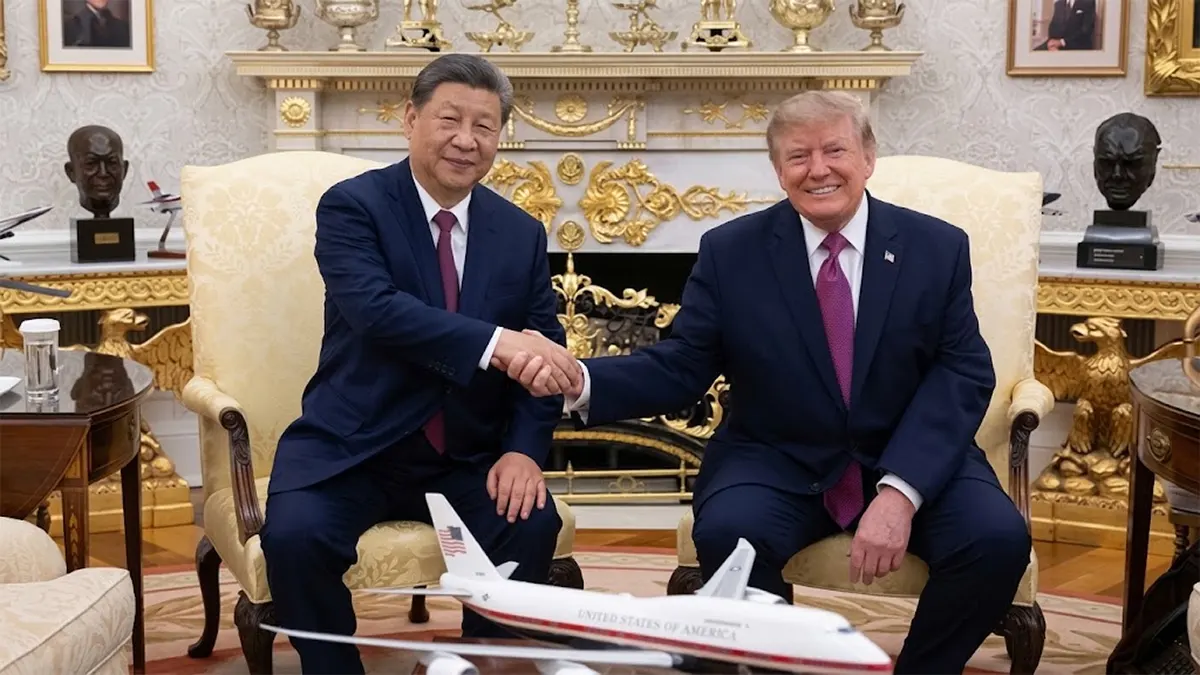
That shift has not gone unnoticed in Washington. Officials in the administration of Donald Trump have warned that if Canadian imports are viewed as a “backdoor” for Chinese EVs entering the USMCA market,
the United States could respond with reciprocal tariffs on Canadian goods. The comments underscore the delicate balance Ottawa faces as it deepens trade ties with Beijing while remaining economically integrated with the United States.
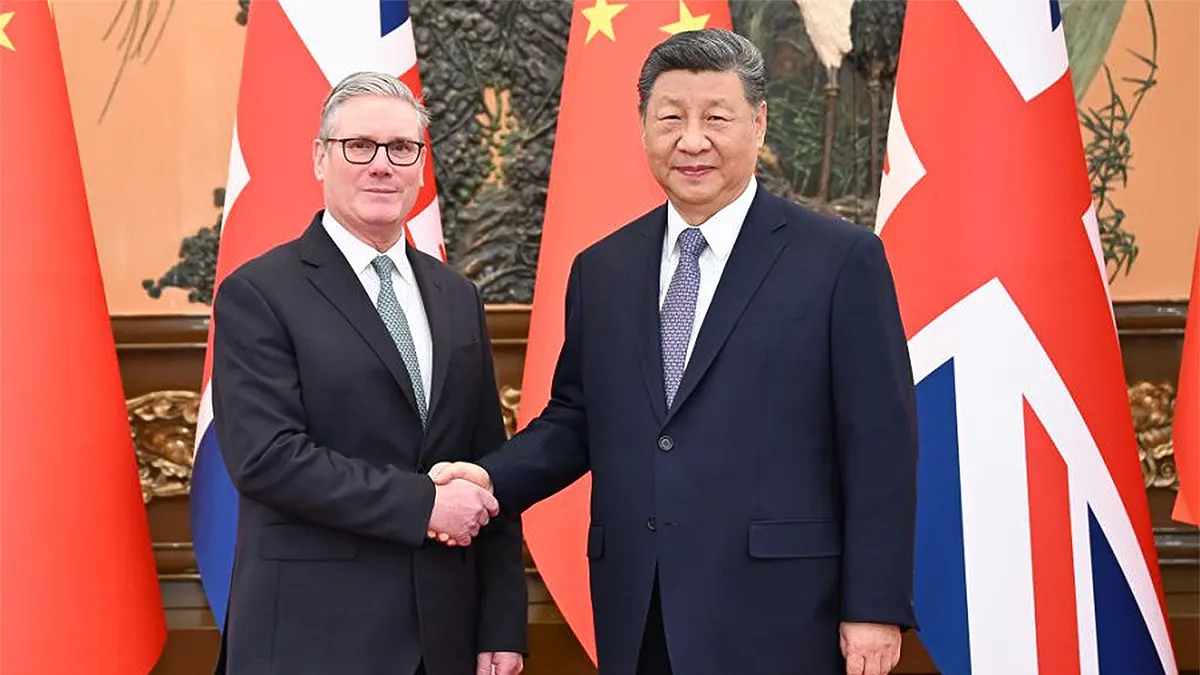
In London, Prime Minister Starmer has presented the visa waiver as an economic boost for Britain’s services sector, which exports approximately
£13 billion annually in legal, financial, and educational services to China.
Easier short term travel addresses long standing business concerns over project oversight and client engagement.
President Xi Jinping has described expanded mobility as the “quickest way to rebuild trust,” highlighting the political intent behind the travel policy.
The Five Eyes Divide
The expansion also reshapes the internal dynamics of the Five Eyes alliance, which includes the United States, United Kingdom, Canada, Australia, and New Zealand.
Australia and New Zealand secured 30 day visa free access in late 2025.
With the UK and Canada now added, the United States stands alone within the alliance without equivalent access.
American travelers remain limited to the 240 hour (10 day)
Transit Without Visa program, which requires proof of onward travel to a third country and restricts stays to designated regions.
The distinction is more than symbolic. For business travelers and multinational firms, Canada and the UK now offer smoother entry points into the Chinese market.
The 79 Country Framework
China’s visa free policy now covers 79 countries under two categories.
47 nations participate in the unilateral pilot program, including most
European Union members, Japan, South Korea, Australia, New Zealand, Canada, and the UK. This program runs through December 31, 2026.
Another 32 countries operate under permanent mutual exemption agreements, including Singapore, Malaysia, Thailand, and the United Arab Emirates. Some, such as Argentina and San Marino, allow longer 90 day
stays under reciprocal terms.
The United States and Indonesia remain eligible only for the 10 day transit scheme rather than full visa free entry.
A Calculated Opening
By expanding visa free access to key Western economies while maintaining restrictions on the United States, Beijing is aligning travel policy with broader diplomatic and trade strategy.
For the UK and Canada, the immediate impact is practical: fewer administrative barriers and faster business mobility. For the United States,
the shift highlights widening trade and policy differences within a longstanding intelligence alliance.
As flights depart under the new rules, the message from Beijing is clear: access is now a strategic tool and it is being deployed selectively.