The financial world is abuzz with what traders are calling the “China Shock.” What began as a quiet whisper on February 9 has now become a confirmed directive: Beijing is pushing commercial and private banks to reduce their exposure to U.S. Treasuries.
For analysts, this move also described as “Beijing’s balance sheet pivot” is rattling markets, influencing the U.S. dollar, gold, and global investment flows.
Beijing’s Advisory: Not About Official Reserves
China’s official holdings of U.S. Treasuries currently stand at $683 billion, an 18 year low. These state reserves remain untouched by the recent directive. The real pressure comes from commercial and private banks, which hold an estimated $298 billion in dollar denominated bonds. Forcing these banks to reduce their positions has triggered waves of selling, surprising a market that had not anticipated such aggressive action this week.
Timing Matters: The “Trump-Xi” Factor
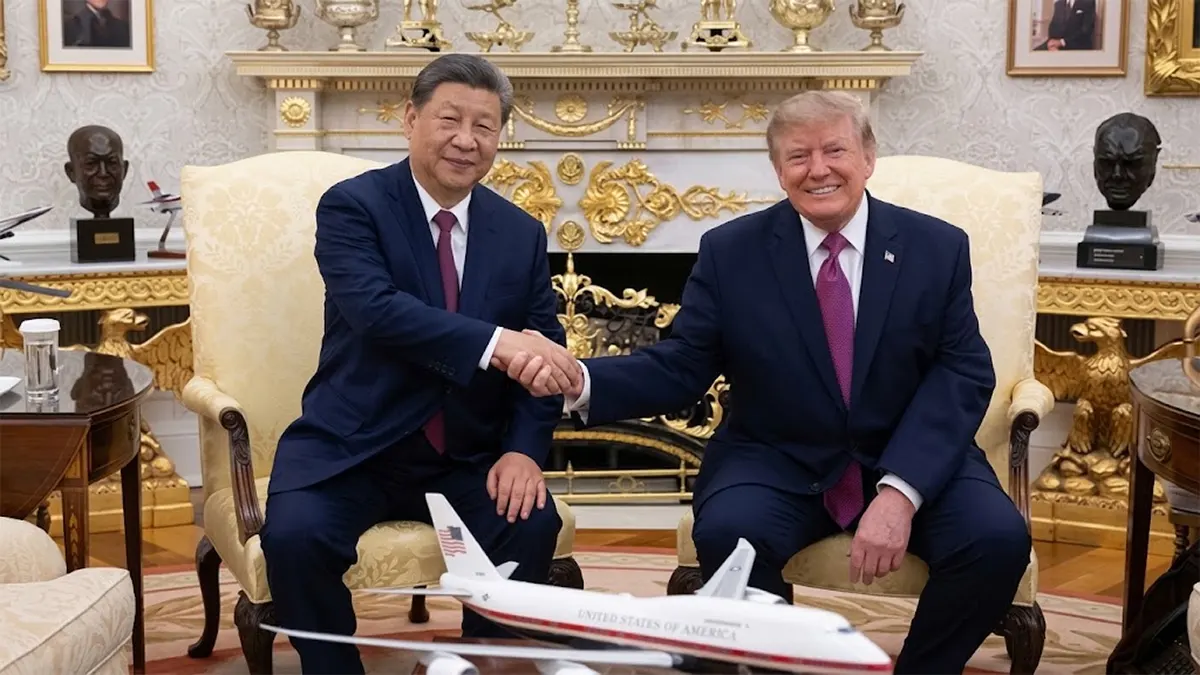
The directive arrives months before President Trump’s planned visit to Beijing in April 2026. Analysts suggest China is using this timing as a bargaining chip. By signaling a reduced appetite for U.S. debt now, Beijing can influence upcoming trade negotiations, particularly concerning tariffs and global supply chains.
Market Fallout: De-Dollarization in Action
The U.S. Dollar Index (DXY) dropped 1% to 96.82 following the news. Treasury yields rose modestly as China stepped back from being the “reliable buyer” of U.S. debt. Investors reacted quickly, moving into gold and silver, with bullion holding above $5,000
a psychological floor reflecting the search for hard assets amid uncertainty. This reaction highlights the global impact of China’s financial strategy.
From Peak to Decline: China’s Treasury Holdings
China’s holdings of U.S. Treasuries once peaked at $1.317 trillion in November 2013, during the era often called “Chimerica,”
when the two economies were deeply interconnected.
Since then, China has steadily reduced its stake:
- 2014–2018: Diversified into gold and European bonds.
- 2019: Japan overtook China as the largest foreign holder.
- 2022: Holdings dropped below $1 trillion for the first time in over a decade.
- 2025: The UK moved past China, pushing it to the third spot.
Today, China has halved its stake since the peak, and the new directive signals a more aggressive acceleration of this exit.
The Three Step Strategy: Quiet, Controlled, Strategic
China is reducing its exposure through a sophisticated, three pronged approach:
- Run Off: Letting bonds mature and reinvesting elsewhere rather than repurchasing.
- Direct Selling: Gradual secondary market sales to avoid market shocks.
- Custodial Shifting: Using accounts in Belgium and Luxembourg to move assets without overtly selling, creating the appearance of a market transfer rather than a liquidation.
This careful approach avoids crashing bond prices while freeing capital for other assets.
Where the Money is Going
China isn’t holding the cash; it is moving it into:
- Gold: The People’s Bank of China (PBOC) has been a net buyer for 15 months straight, now holding over 74.19 million ounces.
- Hard Assets: Mines, ports, and infrastructure across Africa and South America.
- Other Currencies: Euro and Yuan denominated assets to reduce reliance on the U.S. dollar.
Gold and the Yuan: A “Synthetic Backing”
China’s gold buying strategy is not only protecting its reserves but also stabilizing the Yuan. While selling Treasuries typically weakens a currency, China’s simultaneous accumulation of gold is creating what analysts call a “Synthetic Gold Backing.”
- The Yuan has strengthened 5.4% against the U.S. dollar over the last year.
- Rumors of an Offshore Golden Yuan are pushing investors to trust the currency more than ever.
- Gold reserves of over 2,300 tonnes are giving the Yuan credibility as a semi sovereign safe haven currency.
Global Implications: Allies and BRICS
As China reduces its U.S. Treasury holdings, other major holders are stepping in:
- Japan, UK, and Canada are increasing their stakes, acting as a “firewall” for the dollar.
- Canada now holds over $472 billion, a record high.
- BRICS nations like Brazil and India are reducing dollar exposure, accelerating the de-dollarization trend.
The result: a market recalibration where the U.S. debt mountain ($38.5 trillion, growing roughly $6 billion per day) remains stable, but the players holding the boulders are shifting.
Why This Matters
It’s no longer a matter of “if” China will decouple, but at what speed. This isn’t just about a market dip, it’s a strategic rebalancing:
- Sanction Proofing: Gold cannot be frozen by foreign governments, unlike Treasuries.
- Wealth Protection: Long term insurance against U.S. dollar debasement.
- Portfolio Realignment: China aims to increase gold reserves to 15% of total holdings, aligning with global central bank averages.
Retail Gold Fever
Even ordinary Chinese investors are participating:
- Bar and coin purchases up 35% in 2025.
- Families in cities like Shanghai are moving savings into gold as a hedge against local economic uncertainties.
Together with state actions, this is helping China “un hitch” from the American economy, swapping paper for hard assets while stabilizing the Yuan.
The “China Shock” Performance (Feb 11, 2026)
- USD/CNY: 6.91
- Gold: Holding above $5,000 per ounce
- PBOC Gold Holdings: 74.19 million ounces (~2,300 tonnes)
- China Treasury Holdings: 18 year low at $683 billion
- Global Foreign Holdings: $9.4 trillion, with China at lowest share since 2008
Conclusion
China’s recent directive marks a critical moment in global finance. By actively reducing dollar exposure, increasing gold reserves, and strengthening the Yuan, Beijing is reshaping how central banks, investors, and markets approach U.S. debt and safe haven assets. For businesses and retail investors alike, understanding this Beijing balance sheet pivot is crucial to navigating 2026’s financial landscape.