Investment Deal Meets Legislative Gridlock
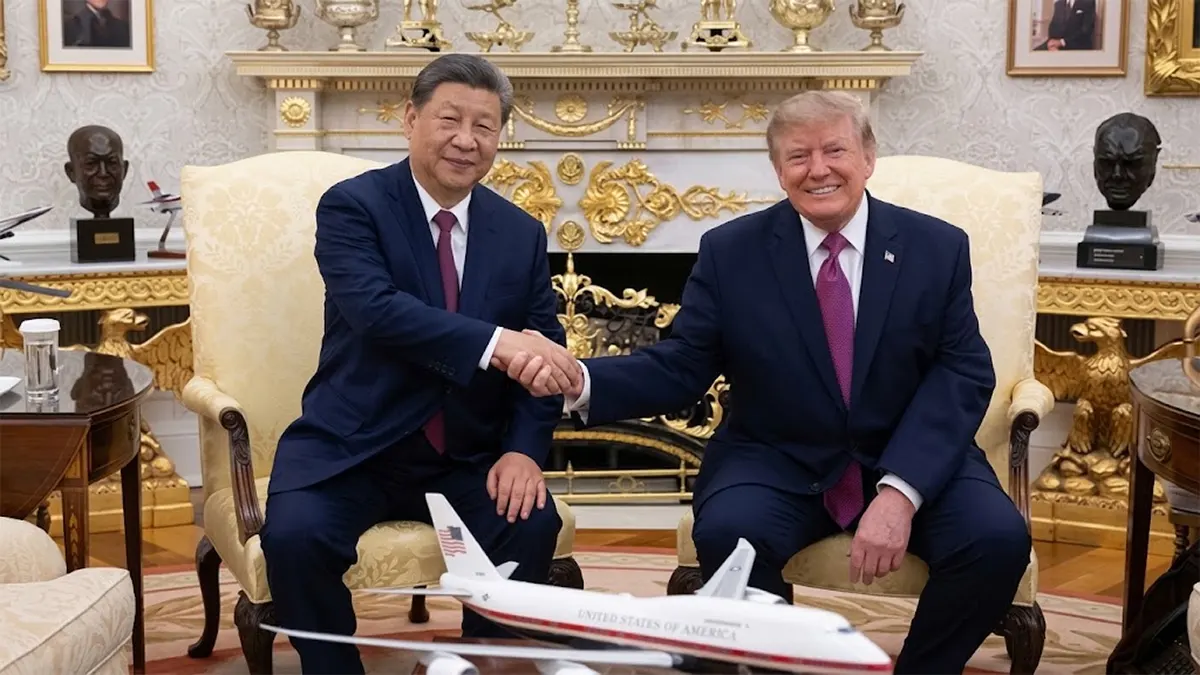
As of January 27, 2026, economic analysts across the Asia-Pacific are closely monitoring a sharp escalation in U.S.-South Korea trade relations. The catalyst: President Trump’s overnight Truth Social post, which effectively cancels the preferential 15% tariff rate on South Korean exports, reverting it to 25%.
The friction originates with the “Investment-for-Tariffs” deal, formalized in October 2025 between Trump and South Korean President Lee Jae-myung. South Korea pledged $350 billion in U.S. investments, including $150 billion for shipbuilding, $100 billion in LNG imports, and substantial semiconductor commitments. The exchange was codified in the “Special Act on Managing Korea-US Strategic Investments.” While President Lee’s Democratic Party holds the majority, the bill is stalled in the finance committee over concerns that using South Korea’s foreign exchange (FX) reserves while the Won is at a record low could destabilize the domestic economy.
Importantly, the U.S. had been applying the 15% tariff retroactively since December 4, 2025.
Trump’s move is not only a future hike, it cancels that retroactive benefit, immediately affecting all exports.
Coupang Controversy Adds Hidden Pressure
Secondary tensions center on Coupang, South Korea’s NYSE-listed e-commerce giant. A 2025 data breach exposed 33.7 million accounts, nearly 60% of the population, far exceeding initial estimates. Seoul’s aggressive regulatory response has drawn U.S. scrutiny, with investors alleging discriminatory treatment of American firms. This incident has likely accelerated the tariff action.
The dual pressure of legislative limbo and corporate scrutiny explains the timing of the tariff hike, highlighting how policy, technology, and trade enforcement intertwine in today’s global economy.
Impact on Automotive Sector
South Korean automakers are acutely affected. On January 27, Hyundai shares initially fell 4–5%, and Kia nearly 6%, demonstrating a “Trump volatility premium” as the KOSPI ultimately rallied on AI-driven optimism.
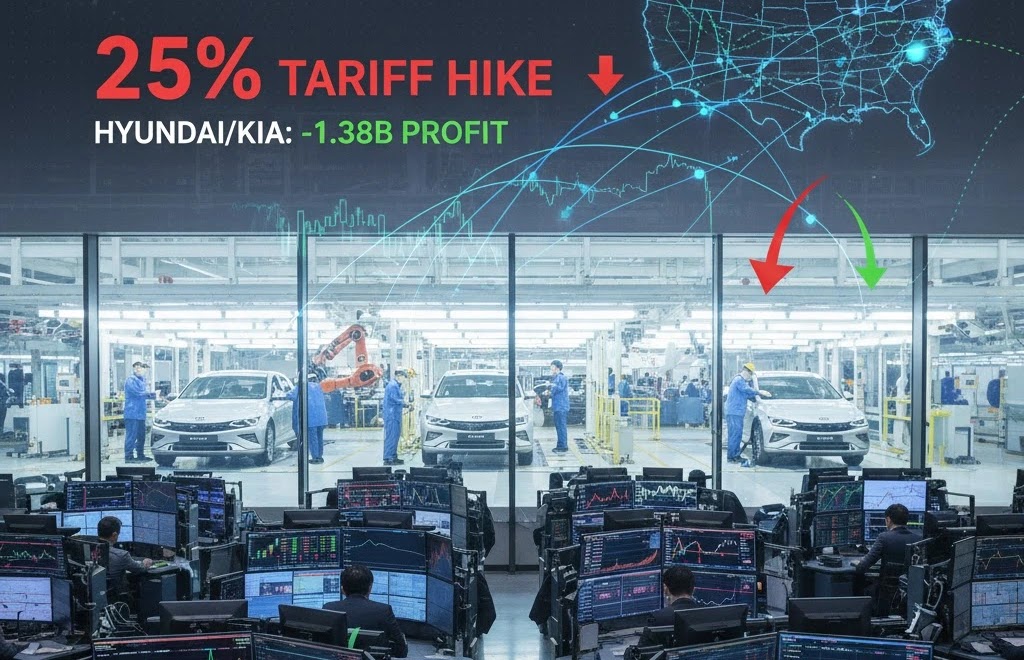
Analysts at KED Global estimate a 10-percentage point tariff increase could slash operating profits by $1.38 billion annually, placing South Korean cars at a 10-point disadvantage versus Japanese rivals. Consumers may face $2,500–$4,000 price increases on models like the Hyundai Ioniq 6 or Kia EV9 unless production is shifted abroad. With the auto sector accounting for roughly 7% of GDP, the human impact on employment and regional economies is significant.
Looking ahead, a U.S. Supreme Court decision expected mid-February 2026 may clarify whether a President can unilaterally use the International Emergency Economic Powers Act (IEEPA) to impose country specific tariffs, adding another layer of uncertainty.
Diplomatic “Firefighting” in Motion
South Korea’s government has mobilized a rapid diplomatic response. Trade Minister Kim Jung-kwan cut short a Canadian industrial mission and is en route to Washington to meet U.S. Commerce Secretary Howard Lutnick, while Trade Minister Yeo Han-koo engages the U.S. Trade Representative Jamieson Greer. Their primary objective: verify whether an official administrative directive exists and prevent the 25% rate from taking effect.
Seoul is pursuing a dual-track strategy: publicly “calming the waters” while privately considering a formal complaint to the World Trade Organization (WTO) should the tariff hike be officially published in the Federal Register.
Officials emphasize that the $350 billion investment pledge remains valid, though timing and market stability particularly the historically weak Won are delicate. The episode highlights the digital-age speed of diplomacy, where social media announcements can immediately ripple through global markets and policy channels.
Market and Policy Implications
Investors are treating the tariff spike as a potential negotiation tactic, dubbing it the “Trump volatility tax.” The KOSPI rebound and partial recovery in auto stocks suggest that markets may expect a diplomatic resolution, though uncertainty persists. Analysts caution that prolonged tariff exposure could exacerbate inflation, disrupt U.S.-South Korea interdependence, and pressure policymakers to balance trade, investment, and job security.
Conclusion: A Fragile Equilibrium
The January 27, 2026 developments underscore a precarious balance in U.S.-South Korea relations. A multi-hundred-billion-dollar investment deal hangs on legislative approval and corporate diplomacy, while the ripple effects on the automotive sector, e-commerce firms, and currency markets illustrate the tangible stakes of policy inaction. Ministers shuttling across continents, social media-driven policy announcements, and looming Supreme Court decisions combine to shape a future-facing narrative of global trade strategy, risk, and opportunity.