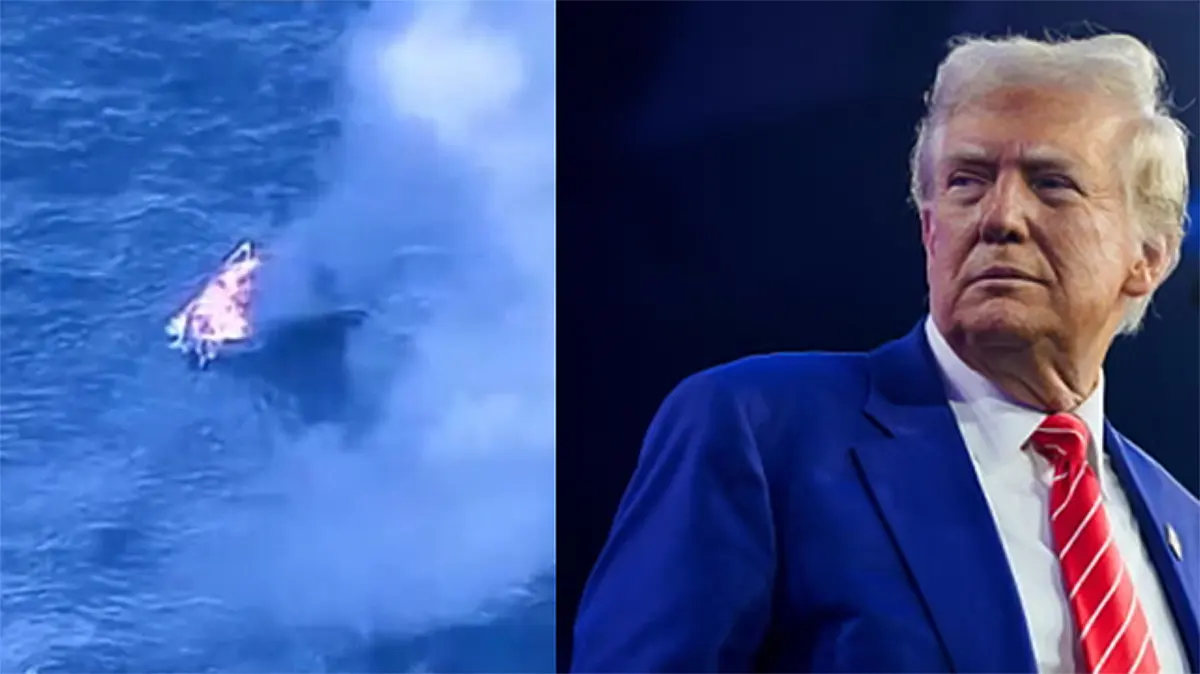
The United States has intensified its fight against international drug trafficking networks after carrying out a deadly military strike on a vessel allegedly linked to narcotics smuggling near Venezuela.
According to U.S. officials, the operation targeted a boat suspected of transporting large quantities of drugs destined for the United States. Four people were reportedly killed during the strike, making it one of the deadliest anti-narcotics operations conducted by the U.S. military in recent months.
The incident highlights a growing shift in Washington’s approach to combating drug cartels, one that increasingly relies on military force rather than traditional law enforcement methods.
Military Action Signals a Tougher Approach
U.S. Defense Secretary Pete Hegseth described those killed in the operation as “narco-terrorists,” arguing that criminal organizations involved in large-scale drug trafficking pose a serious threat to national security.
The Pentagon stated that the strike occurred in international waters, emphasizing that the operation was conducted outside the territorial jurisdiction of any nation.
While U.S. authorities have carried out similar missions before, the latest strike reflects a broader effort to disrupt drug-smuggling routes that connect South America to North America. The Caribbean region has become a key focus of these operations as authorities seek to curb the flow of illegal narcotics into the United States.
A New Legal Framework for Fighting Cartels
What makes the operation particularly significant is the legal justification behind it.
The U.S. administration recently informed Congress that it considers itself engaged in a “non-international armed conflict” with certain designated drug cartels. This classification is typically used in conflicts involving organized armed groups rather than criminal organizations.
Under this framework, suspected cartel members can be treated as unlawful combatants, potentially allowing the military to use lethal force beyond traditional battlefields.
Supporters of the policy argue that modern cartels possess resources, weapons, and operational capabilities comparable to those of paramilitary groups. They believe existing law enforcement tools are often insufficient to combat organizations with such extensive reach.
However, critics warn that the policy could blur the distinction between criminal justice and military warfare. Legal experts have raised concerns that expanding wartime authorities to target criminal networks may create legal and ethical challenges, particularly regarding oversight and accountability.
Venezuela Condemns the Operation
The Venezuelan government responded swiftly, accusing Washington of carrying out an act of aggression near its territory.
President Nicolás Maduro’s administration argued that the operation threatens regional stability and undermines national sovereignty. Officials also suggested that further military actions in nearby waters could prompt stronger defensive measures from Caracas.
Although the strike reportedly took place in international waters, its proximity to Venezuela has added another layer of tension to an already strained relationship between the two countries.
For years, Venezuela and the United States have clashed over sanctions, diplomatic disputes, and broader geopolitical disagreements. The latest incident is likely to deepen those divisions.
From Drug Enforcement to Military Conflict
The strike appears to be part of a larger transformation in how the United States approaches transnational criminal organizations.
Rather than viewing cartels solely as criminal enterprises, policymakers increasingly describe them as security threats that require military responses. The strategy has drawn comparisons to elements of the post-9/11 War on Terror, where non-state actors became targets of military operations.
Supporters believe this approach could weaken powerful trafficking networks by directly targeting their operations and leadership structures.
Critics, however, argue that military force alone is unlikely to solve the drug trade. They point to underlying issues such as poverty, corruption, weak institutions, and continued drug demand as factors that help sustain cartel activity across the region.
Questions Raised by the Strike
Beyond the immediate loss of life, the operation has sparked debate over its long-term implications.
Several key questions remain:
- International law: Does the new policy stretch the legal definition of armed conflict?
- Regional relations: Could other Latin American nations view these operations as a precedent for unilateral military intervention?
- Civilian safety: How can future missions avoid unintended casualties if military actions become more frequent?
As the United States expands its campaign against drug trafficking organizations, these concerns are likely to remain at the center of international discussions.
A Defining Moment in America’s Anti-Cartel Strategy
The deadly strike near Venezuela marks another step in the evolution of America’s war on drug cartels.
Whether viewed as a necessary response to powerful criminal networks or a controversial expansion of military authority, the operation signals a significant shift in U.S. policy.
As Washington continues to increase pressure on trafficking organizations, countries across Latin America will be watching closely to see how far this new strategy goes and what consequences it may bring for the region.