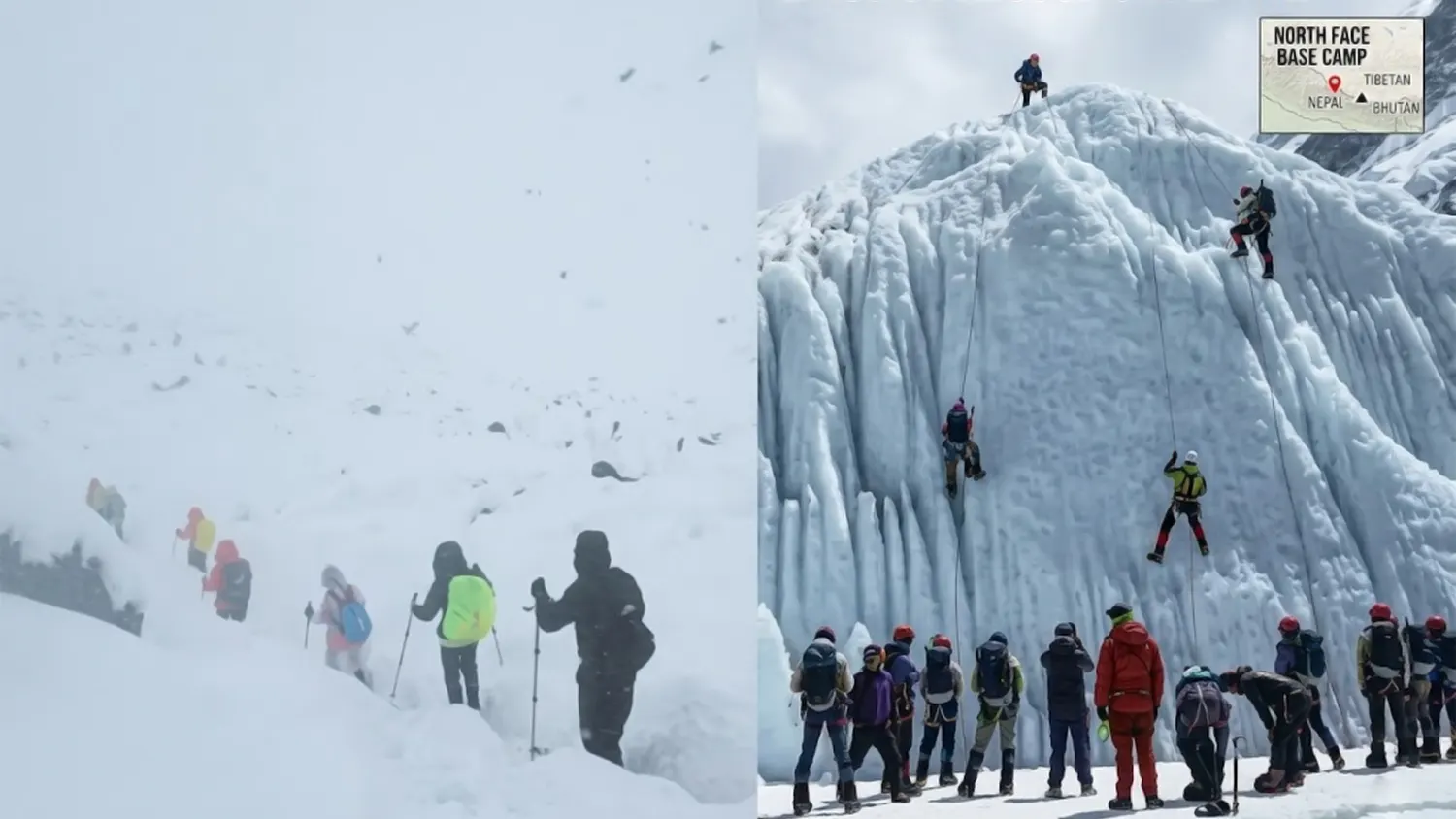
A powerful blizzard on the Tibetan side of Mount Everest has left hundreds of trekkers stranded, triggering one of the largest rescue operations the region has seen in years.
The sudden storm swept through the Everest Scenic Area on Friday evening, catching nearly 1,000 trekkers, guides, and tourists by surprise. Heavy snowfall, freezing temperatures, and strong winds quickly turned what began as a routine trekking experience into a dangerous fight against the elements.
Severe Weather Shuts Down Trails and Communications
Authorities in Tingri County, Tibet, reported that the blizzard dumped large amounts of snow and ice across mountain trails, making travel nearly impossible in some areas.
The extreme weather buried access routes, disrupted communications, and left many trekking groups isolated. Local media described the storm as one of the most severe weather events to hit the region in more than a decade.
As conditions deteriorated, emergency teams launched an urgent search and rescue mission across the affected areas.
Hundreds Reached Safety as Search Operations Expand
Rescue crews have been working continuously since the storm struck, navigating difficult terrain and dangerous weather conditions to reach stranded trekkers.
Officials said that approximately 350 people have already been escorted to safety in the high-altitude township of Qudang, located around 4,900 meters (16,000 feet) above sea level.
Meanwhile, another 200 trekkers have managed to contact authorities through satellite communication devices and radios. However, many remain stranded as deep snow and damaged pathways continue to block access.
The large-scale operation includes local residents, tourism workers, emergency personnel, and members of the People’s Armed Police, all working together to locate those still trapped on the mountain.
Extreme Conditions Complicate Rescue Efforts
The rescue mission faces significant challenges due to the harsh environment.
Heavy snow has caused tents to collapse and erased many established routes. At such high elevations, exposure to freezing temperatures can quickly lead to hypothermia, frostbite, and altitude-related illnesses, increasing the urgency of evacuation efforts.
Authorities have deployed drones and experienced mountaineers to search for isolated groups. Bulldozers are also being used to clear roads buried beneath snow and ice.
Despite these efforts, ongoing snowfall and poor visibility continue to slow progress.
Everest Scenic Area Temporarily Closed
In response to the emergency, officials have suspended all visitor access to the Everest Scenic Area on the Tibetan side of the mountain.
Ticket sales have also been halted until weather conditions improve and rescue operations are completed.
Authorities are urging travelers to stay away from the region to avoid interfering with emergency response efforts.
The incident occurred during China’s busy National Day Golden Week holiday, a period that typically attracts large numbers of tourists. The seasonal surge in visitors likely contributed to the unusually high number of trekkers present when the storm arrived.
Himalayan Weather Disruptions Extend Beyond Tibet
The severe weather impacting Everest comes as neighboring Nepal faces its own challenges.
Recent heavy rainfall has triggered floods and landslides across parts of the country, causing fatalities and widespread disruption. Weather experts believe these events may be connected to increasingly unstable weather patterns affecting the Himalayan region.
Scientists and meteorologists have observed a rise in sudden and unpredictable storms in recent years, raising concerns about safety for both trekkers and local communities.
Changing Climate Raises New Safety Concerns
October is traditionally considered one of the more favorable periods for trekking in the Himalayas as monsoon conditions begin to fade.
However, this latest storm highlights how quickly conditions can change at high altitude.
Local guides reported that snowfall arrived earlier and with greater intensity than expected, leaving many visitors unprepared for the rapid deterioration in weather.
Experts warn that climate change may be contributing to more erratic weather patterns, bringing stronger storms, heavier precipitation, and greater uncertainty to mountain environments once considered relatively predictable.
Rescue Teams Remain Hopeful
Despite difficult conditions, rescue teams remain focused on reaching everyone still stranded.
Emergency shelters, food supplies, and hot meals are being provided to those who have already descended safely from higher elevations.
While helicopter operations remain limited because of strong winds and low visibility, ground teams continue to advance from lower camps whenever conditions allow.
Officials say improving weather forecasts could help accelerate rescue efforts in the coming days.
Everest’s Power and Unpredictability on Full Display
For generations, Mount Everest has symbolized determination, adventure, and human achievement. Yet the mountain also serves as a reminder of nature’s immense power.
The sudden blizzard has shown how rapidly conditions can shift in the Himalayas, even during seasons generally considered favorable for trekking.
As rescue operations continue, attention remains focused not on summit attempts or climbing records, but on the ongoing effort to bring every stranded traveler safely back down the mountain.