The United States has sharply escalated its economic pressure campaign against one of its most important strategic partners and the fallout is only beginning.
What Washington Just Did
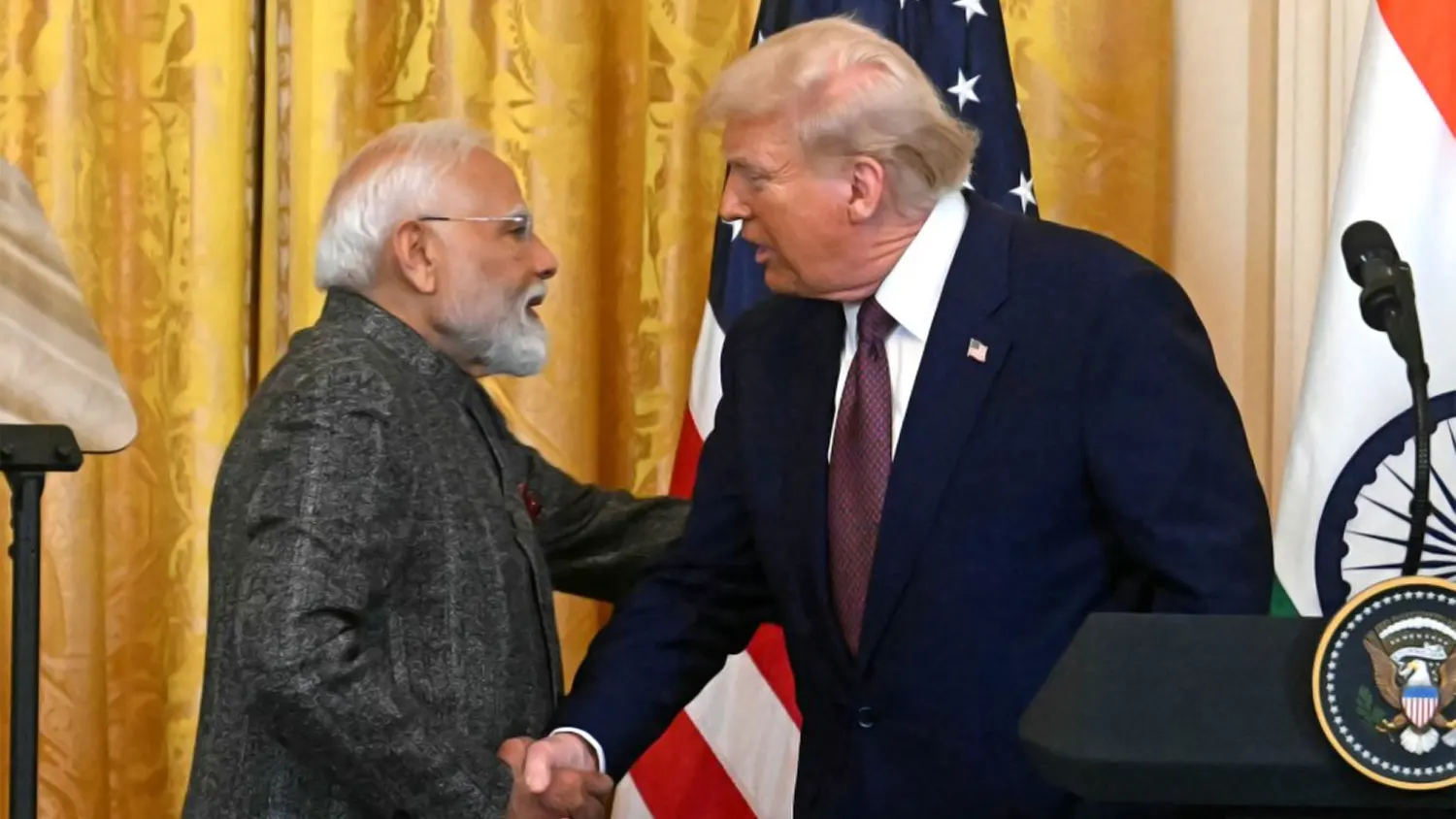
Effective August 27, the Trump administration has raised total duties on a range of Indian exports to 50%, stacking a new 25% penalty on top of an existing 25% levy. The target isn’t India’s trade practices in general. It’s one specific behaviour: New Delhi’s continued purchase of discounted Russian crude oil, which Washington says is quietly keeping Moscow’s war economy afloat.
Senior officials have been blunt about the reasoning. “Every barrel of Russian oil sold helps fund the Kremlin’s military operations,” Treasury Secretary Scott Bessent said. White House trade adviser Peter Navarro echoed the same logic, framing the tariffs as both an economic measure and a geopolitical signal, one directed not just at India, but at every major economy still doing business with Russia.
India, U.S. officials argue, isn’t just buying Russian oil for domestic use. It’s refining it and reselling the finished products to third countries that have formally sanctioned Russia effectively acting as a pass-through that blunts the impact of the entire Western sanctions architecture. That’s the allegation that has made this more than a routine trade dispute.
India’s Answer: This Is Our Call to Make
New Delhi has pushed back hard and without apology.
External Affairs Minister S. Jaishankar made India’s position plain: these are sovereign economic decisions made to fuel a 1.4 billion-person economy, not acts of political solidarity with Moscow. India’s energy needs are pressing, its import sources deliberately diversified, and the suggestion that it alone should bear the cost of sanctions it never agreed to is, in New Delhi’s view, simply unfair.
“It is neither practical nor fair to single out India when other nations including China and European economies continue buying Russian energy in substantial volumes,” Jaishankar said.
Indian officials have also raised a pointed legal argument: Western sanctions on Russia were never mandated by the United Nations. India, therefore, is under no binding international obligation to comply. The message coming out of New Delhi is unusually direct for a government known for its measured diplomatic tone and that directness is itself a signal of how seriously this is being taken.
The Industries That Will Feel It First
The 50% tariff isn’t abstract. It lands on some of India’s most labour-intensive export sectors textiles, gems, jewellery, and engineering goods, all of which depend heavily on the U.S. market.
Trade analysts are projecting export declines of 40 to 45% in affected categories. For the small and medium sized enterprises that form the backbone of India’s export economy, that’s not a manageable headwind. It’s a potential collapse of their primary market. Job losses are expected to follow, concentrated in the manufacturing clusters that have built their entire business model around American demand.
Supply chains will be disrupted. Some exporters will scramble to pivot toward Southeast Asia, the Middle East, and Africa markets that can absorb some of the volume, but not all of it, and not at the same margins.
A Partnership Being Put to the Test
The deeper problem is what this tariff does to a relationship that both countries have spent years carefully building.
The U.S.-India partnership has been constructed around a shared concern: China’s rising power. Defense co-production agreements, technology transfers, the Quad framework all of it rests on the assumption that Washington and New Delhi are moving in the same strategic direction. Slapping 50% tariffs on a partner while publicly accusing it of bankrolling a war it has studiously avoided taking sides in puts serious strain on that assumption.
India has always maintained what it calls strategic autonomy refusing to fully align with any single bloc, keeping its Russian relationships intact from the Cold War era while simultaneously deepening ties with the West. Washington has tolerated that balancing act for decades. These tariffs suggest that tolerance is wearing thin.
What India Does Next
For now, New Delhi has ruled out retaliatory tariffs, a deliberate signal that it wants to contain the damage rather than escalate it. But the government is actively working on cushioning the blow for affected industries through financial assistance, credit facilities, and export promotion schemes. Longer term, policy discussions are pointing toward accelerating market diversification building out trade relationships in Latin America, Africa, and ASEAN to reduce the exposure that made these tariffs so damaging in the first place.
Whether that’s enough depends on how long Washington keeps the pressure on and whether back-channel negotiations can find a resolution before the economic pain becomes permanent.
“This is a test of the resilience of the U.S.-India partnership,” said one New Delhi-based trade analyst. “Much will depend on whether both sides can compartmentalize trade friction while maintaining cooperation in other areas.”
That’s the optimistic read. The less optimistic one is that some fractures, once opened, don’t close easily and the world’s two largest democracies are now finding out which kind this is.