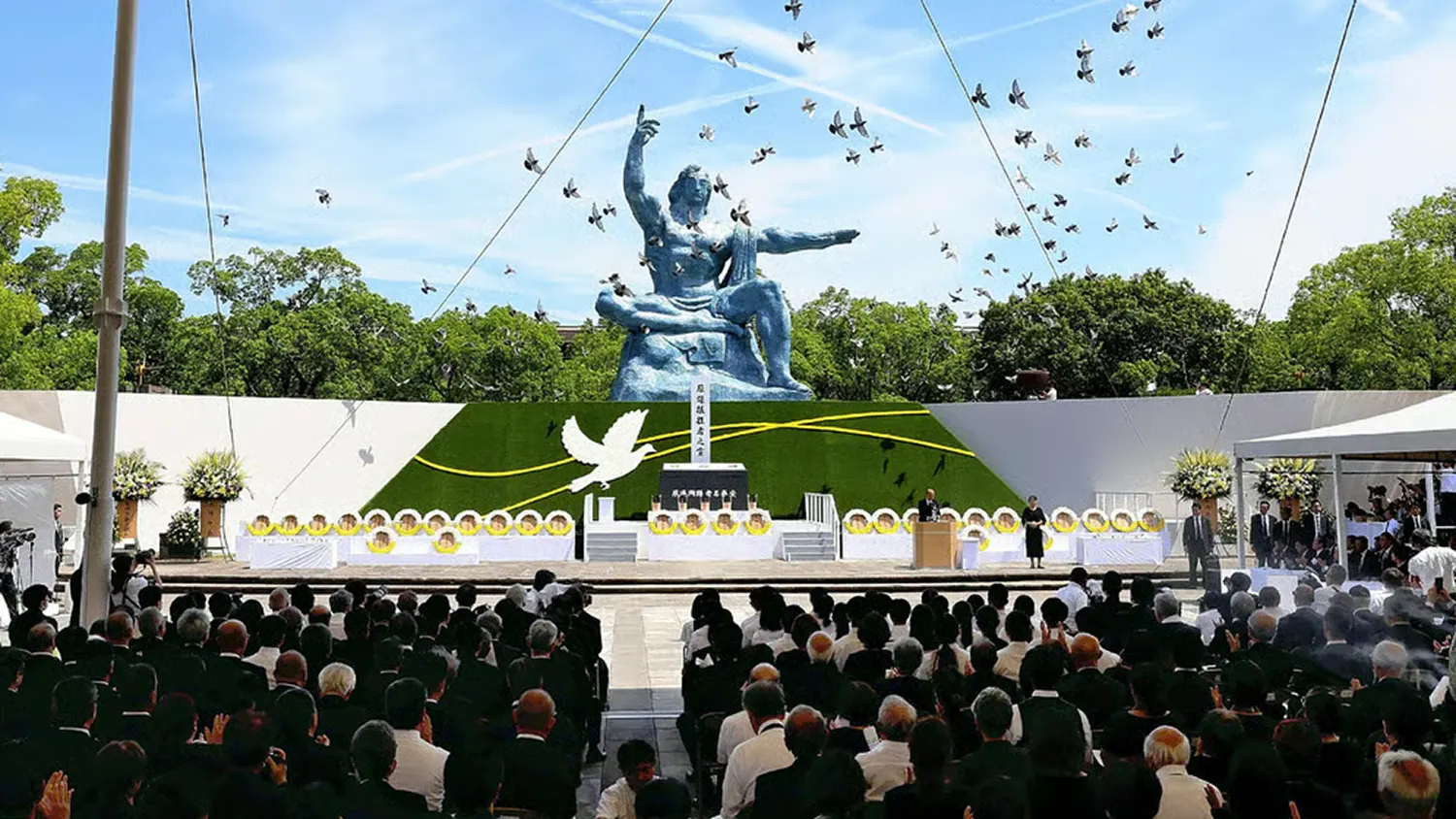
Under a quiet, reflective sky, Nagasaki marked a solemn milestone this week. The city commemorated 80 years since the atomic bombing, honoring the tens of thousands who lost their lives on August 9, 1945.
The annual ceremony at Peace Memorial Park was more than a remembrance. It served as a powerful reminder of nuclear devastation and a renewed call for a safer, nuclear free world.
As the world faces rising geopolitical tensions, the message from Nagasaki feels more urgent than ever.
Why the Memory of Nagasaki Still Matters Today
The ceremony brought together leaders and representatives from more than 90 countries. Japanese Prime Minister Shigeru Ishiba and Nagasaki Mayor Shiro Suzuki both stressed a critical point: history must not be forgotten.
This message carries added weight as the number of survivors known as hibakusha continues to decline. Today, their average age exceeds 86, making preservation efforts increasingly urgent.
To address this, new initiatives are emerging. Digital archives, social media storytelling, and global education campaigns aim to ensure that firsthand survivor testimonies remain accessible for future generations.
At the same time, global leaders are looking ahead. The upcoming nuclear non-proliferation talks in 2026 are seen as a key opportunity to push for meaningful disarmament progress.
A Ceremony Marked by Symbolism and Reconciliation
This year’s commemoration stood out for its powerful symbolism. For the first time in decades, two bells rang together at Urakami Cathedral, one that survived the blast and another recently restored.
The moment carried deep meaning. The project was led by an American academic whose family had ties to the Manhattan Project, with support from U.S. donors. Together, it became a symbol of healing, reconciliation, and shared responsibility.
Equally notable was the presence of diplomats from countries with strained relations. Representatives from Russia and Israel attended, signaling a rare moment of diplomatic inclusion during global conflict.
These gestures, though symbolic, reflect a broader desire for dialogue in a divided world.
Global Pressure Builds for Nuclear Disarmament
Beyond Japan, the anniversary sparked worldwide reflection. International organizations including the United Nations and the European Union reiterated the need for urgent nuclear disarmament efforts.
UN Secretary General António Guterres delivered a stark warning: the threat of nuclear weapons is rising again. Increased military spending and renewed tensions are pushing the world in the wrong direction.
At the same time, recognition continues for those advocating change. The Nobel Peace Prize awarded to Nihon Hidankyo highlights decades of survivor led activism and reinforces the global demand for a world without nuclear weapons.
This growing momentum raises an important question: will global leaders act before history repeats itself?
Preserving Legacy in a Changing World
As time passes, the responsibility to remember shifts to younger generations. Educational programs and digital storytelling are now essential tools in keeping these histories alive.
The goal is not just remembrance, but awareness. By sharing real human stories, advocates hope to inspire informed, responsible global citizenship.
This effort ensures that Nagasaki is not just a chapter in history but a lesson that continues to shape the future.
A Call That Still Echoes
Eighty years later, Nagasaki’s message remains clear and urgent. The echoes of the cathedral bells both old and new symbolize resilience, remembrance, and hope.
But they also serve as a warning.
In a world facing renewed tensions, the story of Nagasaki is not just about the past. It is a reminder that the choices made today will define the safety of tomorrow.
The path forward depends on one shared goal: preventing nuclear tragedy from ever happening again.