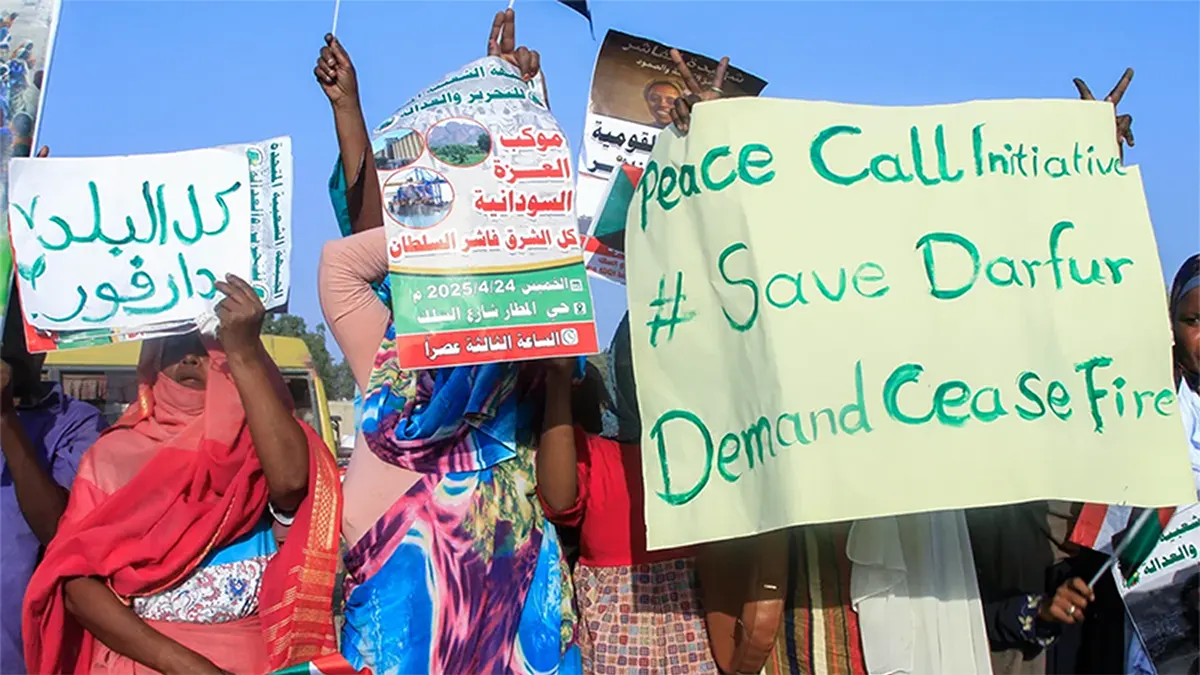
A deadly drone strike on a mosque inside a displacement camp in Sudan’s Darfur region has once again drawn attention to the country’s rapidly worsening humanitarian crisis.
At least 75 people were killed in the attack at the Abu Shouk Displacement Camp near El Fasher, according to local reports. Most of the victims were civilians seeking shelter from the ongoing civil war that has devastated large parts of Sudan since 2023.
The tragedy highlights how dangerous even refugee and displacement camps have become as violence continues to spread across the country.
Civilians Caught in an Expanding War
Sudan’s conflict began in April 2023 after tensions exploded between the Sudanese Armed Forces and the paramilitary Rapid Support Forces.
What started as a political and military power struggle has since evolved into one of the world’s largest humanitarian disasters.
Across Sudan, millions of civilians have been trapped between intense fighting, airstrikes, ethnic violence, and collapsing public services. Humanitarian groups increasingly describe the conflict as a “forgotten crisis” because global attention has remained limited despite the scale of suffering.
The attack in Darfur has intensified fears that no area is truly safe anymore, including camps built to protect displaced families.
Sudan Now Faces the World’s Largest Displacement Crisis
The war has forced an enormous number of people from their homes.
According to United Nations data, more than 14 million people have been displaced since the conflict began. Around 11 million remain displaced inside Sudan, while over 3 million have fled to neighboring countries such as Chad and South Sudan.
Women and children make up the majority of those displaced.
Many families have been forced to relocate multiple times as fighting spreads into areas that were once considered relatively secure.
The repeated attacks on displacement camps are creating an atmosphere of constant fear and uncertainty for civilians already struggling to survive.
Civilian Deaths Continue to Rise
The human toll of the conflict has increased sharply in 2025.
A recent UN human rights report documented at least 3,384 civilian deaths during the first six months of the year alone. That number represents a dramatic increase compared to previous periods and shows how quickly violence has escalated.
Human rights investigators have accused both sides in the conflict of committing serious abuses, including attacks on civilians and violations of international humanitarian law.
The RSF, which emerged from the former Janjaweed militias involved in earlier Darfur conflicts, has faced repeated allegations of ethnically motivated violence targeting non-Arab communities.
Hunger and Famine Conditions Spread
Beyond the violence itself, Sudan is also facing a severe food crisis.
The conflict has pushed approximately 24.6 million people into acute food insecurity, according to humanitarian agencies. Some areas in Darfur, including several displacement camps, are already experiencing famine conditions.
Aid organizations warn that access to food, clean water, medicine, and shelter is becoming increasingly difficult due to ongoing fighting and damaged infrastructure.
At the same time, humanitarian operations remain critically underfunded.
The United Nations has appealed for $4.2 billion in aid funding for 2025, but donations from the international community have fallen far short of what relief agencies say is needed.
Without additional support, humanitarian groups warn the situation could deteriorate even further in the coming months.
International Pressure Continues to Grow
The latest attack has renewed calls for stronger international action and accountability.
The UN and several human rights organizations are urging all parties involved in the conflict to protect civilians and allow humanitarian aid to reach affected areas without obstruction.
Investigators have also demanded independent probes into alleged war crimes and attacks targeting civilian populations.
Despite these appeals, Sudan’s crisis continues to receive far less international attention than many other global conflicts, even as conditions worsen across large parts of the country.
A Crisis the World Can No Longer Ignore
The strike on the Abu Shouk camp is another reminder of the devastating reality facing millions of Sudanese civilians every day.
As violence intensifies, displacement grows, and famine spreads, the humanitarian cost of the conflict continues to rise at an alarming pace.
For many families trapped inside war zones and overcrowded camps, survival has become increasingly uncertain.
The coming months may determine whether the international community steps up its response or whether Sudan’s humanitarian disaster continues to deepen with little global intervention.