The ongoing war in Sudan has pushed the city of El Fasher to the edge of catastrophe, with hundreds of thousands of civilians trapped amid fighting, hunger, and a worsening humanitarian crisis.
Since conflict erupted between the Sudanese Armed Forces (SAF) and the Rapid Support Forces (RSF) in April 2023, millions of people across Sudan have been affected. However, few places have suffered as severely as El Fasher, the capital of North Darfur, where residents continue to endure a prolonged siege and rapidly deteriorating living conditions.
Supplies Running Out as Siege Tightens
For more than a year, El Fasher has remained largely cut off from the outside world.
Residents and aid organizations say access to food, medicine, and essential supplies has become increasingly limited as supply routes remain blocked. Humanitarian agencies have repeatedly warned that relief deliveries are struggling to reach the city, leaving civilians with few options.
As shortages worsen, prices for basic goods have surged beyond the reach of many families. Aid groups estimate that around 260,000 civilians remain trapped inside El Fasher, unable to safely leave the city.
Hunger and Malnutrition Taking a Deadly Toll
The shortage of food has created a growing nutrition crisis, particularly among children and vulnerable groups.
Local medical networks reported that dozens of people, including children and pregnant women, died from acute malnutrition during recent months. Humanitarian organizations warn that many more lives could be at risk if aid access does not improve.
The situation has become even more alarming as nutrition centers struggle to operate due to a lack of supplies. According to international aid agencies, tens of thousands of children face the threat of severe malnutrition, raising fears of a larger humanitarian disaster.
Children Bear the Brunt of the Conflict
Children remain among the most affected by the fighting and siege.
Humanitarian organizations have documented numerous reports involving killings, injuries, abductions, and sexual violence against children since the conflict began. With nearly half of El Fasher’s trapped population believed to be children, aid agencies continue to warn that young people face some of the greatest risks.
The disruption of education, healthcare, and social services has also left many children without critical support systems.
Displacement Crisis Continues to Grow
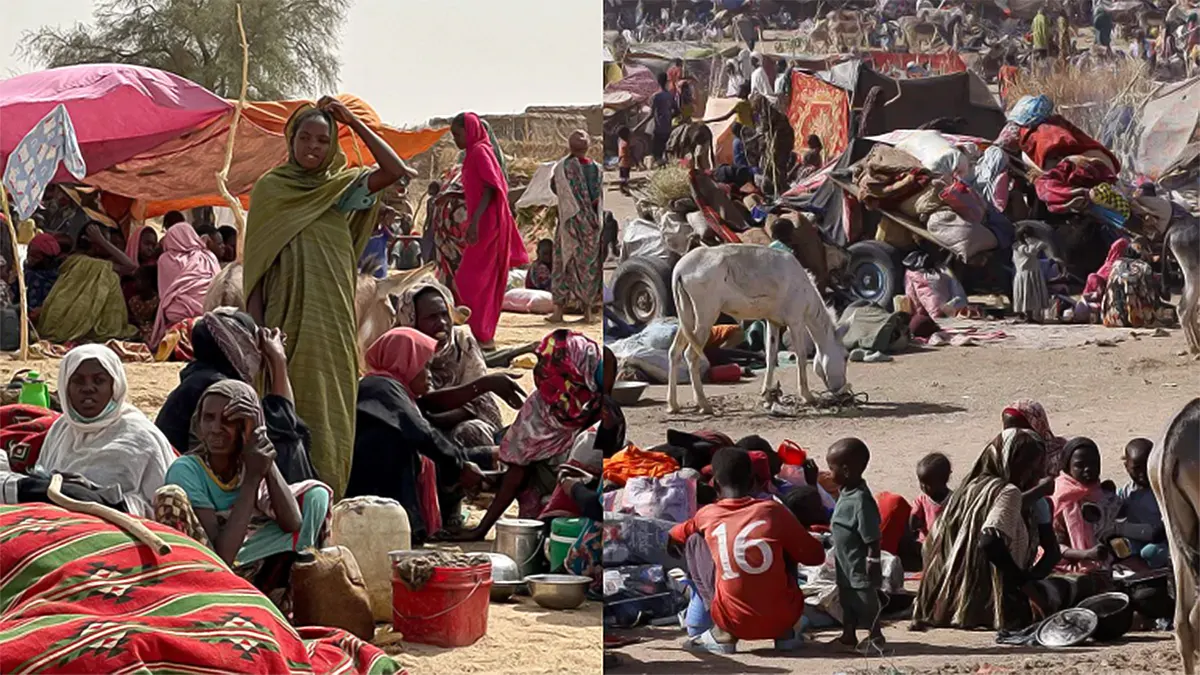
As violence intensifies, displacement across Darfur continues at an alarming pace.
Reports indicate that at least 600,000 people have fled El Fasher and nearby communities since the siege escalated. Many have sought shelter in overcrowded camps already struggling with limited resources.
The nearby Zamzam displacement camp has been identified as suffering from famine conditions, highlighting the broader food emergency affecting the region.
Military Advances Fail to Bring Relief
Despite the worsening humanitarian situation, both sides in the conflict continue to focus on military objectives.
The Sudanese Armed Forces have recently regained control of several areas in North Kordofan, while the RSF continues to maintain significant influence across much of Darfur and remains focused on capturing El Fasher.
The continued fighting has made humanitarian access more difficult and complicated efforts to protect civilians caught in the conflict.
Peace Efforts Struggle to Gain Momentum
International mediators have repeatedly attempted to negotiate ceasefires and humanitarian pauses.
Countries including the United States, Saudi Arabia, Egypt, and the United Arab Emirates have supported diplomatic efforts aimed at reducing violence and allowing aid deliveries. However, agreements have often collapsed quickly as both sides continue pursuing battlefield gains.
Meanwhile, reports of foreign fighters and external weapons supplies have added another layer of complexity to an already difficult conflict.
A National Crisis With No End in Sight
The fighting in Sudan has triggered one of the world’s largest displacement emergencies.
More than 12 million people have been forced from their homes, while nearly 25 million Sudanese face severe food insecurity, according to international estimates.
Humanitarian organizations warn that without immediate and sustained access to El Fasher, the city could face an even greater tragedy in the months ahead. As aid shortages deepen and fighting continues, concerns are growing that the situation could develop into a large-scale famine with devastating consequences for civilians.