A breakthrough agreement between Israel and Hamas has opened the way for a potential halt to the war in Gaza, following days of negotiations mediated by the United States, Qatar, Egypt and Türkiye.
Announced by U.S. President Donald Trump on Wednesday, October 8, the agreement covers the first phase of a broader plan intended to end the conflict. Negotiators reached the deal in Sharm el-Sheikh, Egypt, with provisions for a ceasefire, the release of Israeli hostages and Palestinian prisoners, an Israeli military pullback, and increased humanitarian assistance.
However, the announcement did not mean that fighting had already stopped. As of Thursday, October 9, the Israeli government still had to approve the agreement before the initial ceasefire arrangements could take effect.
What the First Phase of the Agreement Requires
The initial agreement focuses on immediate steps to reduce violence and secure the release of people held by both sides. It forms part of Trump’s wider peace framework, while leaving several major political and security questions for later negotiations.
A Ceasefire After Israeli Cabinet Approval
The agreement provides for a halt to fighting in Gaza following approval by Israel’s government and the initial redeployment of Israeli forces.
Israeli officials indicated that the military would move to an agreed withdrawal line inside Gaza within 24 hours of the government’s approval. The ceasefire would then take effect under the implementation schedule.
The distinction is important: Israeli military operations were still being reported in parts of Gaza on October 9, even after the agreement was announced. The deal therefore represented an agreed framework awaiting implementation, rather than an immediate end to all hostilities.
Release of Israeli Hostages and Palestinian Prisoners
One of the central elements is an exchange involving Israeli hostages held in Gaza and Palestinians held in Israeli prisons.
Under the first-phase arrangement:
- Hamas is expected to release all 48 remaining Israeli hostages, including approximately 20 believed to be alive.
- The release is expected to take place within 72 hours after the initial Israeli military withdrawal.
- Israel is expected to release around 2,000 Palestinians, including 250 prisoners serving life sentences and approximately 1,700 people detained in Gaza since October 7, 2023.
The exchange is intended to cover both living hostages and the remains of those who have died. The agreement also provides for coordination through mediators and the International Committee of the Red Cross.
The prisoner lists and practical arrangements remained part of the implementation process on October 9.
Israeli Troop Withdrawal
Israel has agreed to a partial withdrawal of its forces from Gaza as part of the first phase.
The military is expected to redeploy to an agreed line within the territory. This would reduce the areas under direct Israeli military deployment, but it does not amount to a complete withdrawal from Gaza.
The precise arrangements and boundaries are part of the implementation framework. Further withdrawals are tied to the wider peace plan and subsequent negotiations.
Humanitarian Aid and Civilian Needs
The agreement also calls for a substantial increase in humanitarian assistance entering Gaza.
The United Nations has emphasized the need for immediate and unimpeded access for food, water, medical supplies and other essential materials. Humanitarian agencies have warned that aid delivery must be sustained and large enough to address the needs of civilians after two years of war.
The agreement has raised hopes that displaced Palestinians could begin rebuilding their lives and, where conditions allow, return to areas from which they fled. However, the timing and practical conditions for civilian movement depend on security arrangements and the implementation of the deal.
UN Secretary-General António Guterres welcomed the agreement and called on all parties to comply fully with its terms. He also stressed that a permanent ceasefire and sustained humanitarian access were essential.
A First Step, Not a Final Peace Agreement
The agreement addresses urgent issues, but it does not settle the broader Israeli-Palestinian conflict.
The wider peace framework includes difficult questions that remain unresolved, including:
- The future governance of Gaza and who will administer the territory.
- Hamas’s future role and weapons, including proposals for demilitarization.
- Israel’s longer-term military presence and security arrangements.
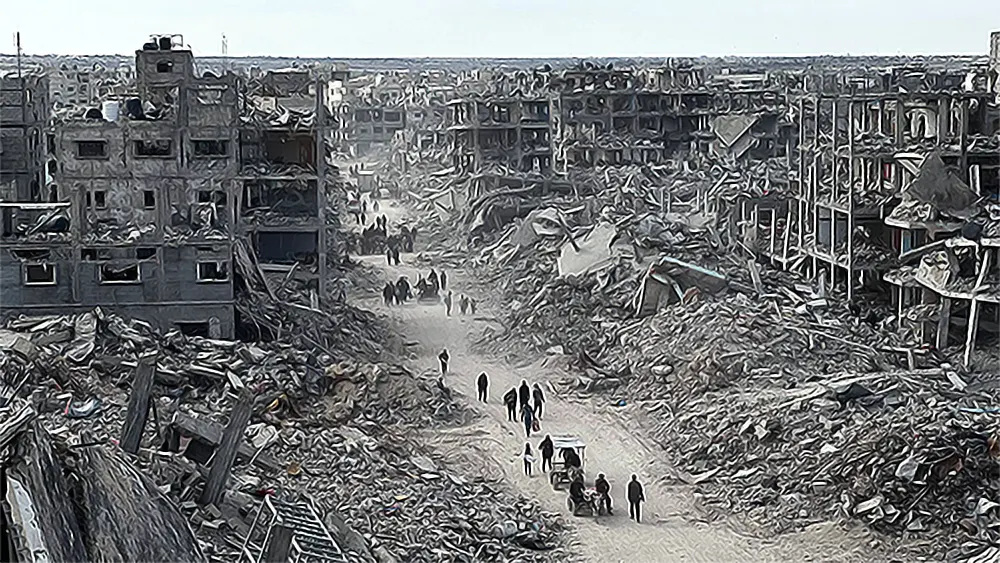
- Gaza’s reconstruction after extensive destruction.
- The prospects for Palestinian self-determination and a broader political settlement, including the possibility of a two-state solution.
These issues are expected to require further negotiations. The success of the first phase will depend not only on the initial exchange and ceasefire, but also on whether the parties can agree on the next steps.
What Happens Next?
As of October 9, Israeli Prime Minister Benjamin Netanyahu was preparing to bring the agreement before his Cabinet for approval.
Under the announced timetable, the initial Israeli military redeployment would follow government approval. The 72-hour period for the hostage release would begin after that withdrawal.
The agreement was reached in Sharm el-Sheikh, but the immediate priority was now to put its provisions into effect. The timing of the releases, the withdrawal arrangements and the arrival of additional humanitarian supplies all depended on the implementation process.
International Leaders Welcome the Agreement
The announcement prompted positive reactions from governments and international organizations, although many stressed that the agreement must be fully implemented.
U.S. President Donald Trump described the development as a historic event and said the release of hostages and Israeli troop withdrawal would mark the first steps toward a durable peace. He also thanked Qatar, Egypt and Türkiye for their mediation efforts.
UN Secretary-General António Guterres welcomed the agreement, urging all parties to honor its terms. He called for the release of all hostages, a permanent ceasefire and immediate humanitarian access to Gaza.
The European Union also welcomed the announcement. European Commission President Ursula von der Leyen said the agreement offered an opportunity to end the suffering and create a credible path toward lasting peace and security based on a two-state solution. Middle East, North Africa and the Gulf
Relief and Caution in Gaza and Israel
The announcement was met with celebrations in parts of Gaza and Israel.
In Gaza, residents expressed relief and hope that the agreement could bring an end to the bombardment and allow families to begin rebuilding their lives. But optimism was tempered by uncertainty: many people remained displaced, homes and infrastructure had been destroyed, and Israeli military activity had not yet fully stopped.
In Israel, relatives of hostages gathered in Tel Aviv and other locations to welcome the prospect of their loved ones returning home. Families expressed relief while continuing to wait for the release process to begin.
The reactions reflected the immense hopes attached to the agreement, but also the fear that previous ceasefire efforts could fail.
Major Challenges Remain
Despite the diplomatic breakthrough, implementing the agreement will be difficult. The parties have a history of deep mistrust, and disputes over military withdrawals, prisoner releases, humanitarian access and Gaza’s future could complicate later stages.
A temporary halt in fighting would provide urgently needed relief, but it would not by itself resolve the political and security issues at the heart of the conflict.
The immediate test is whether Israel and Hamas follow through on the commitments in the first phase. The release of hostages, the withdrawal of Israeli forces and the delivery of humanitarian aid will be key measures of whether the agreement can move beyond an announcement and become a sustained reduction in violence.
For civilians in Gaza and families of hostages in Israel, the stakes are immediate: whether this agreement can bring a lasting end to the suffering, rather than another temporary pause in the war.